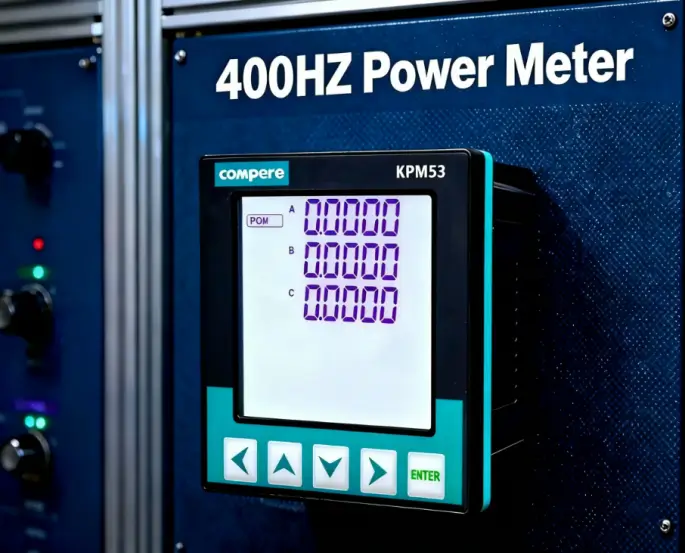
Want to measure power quickly and accurately? A 400Hz power meter is easy to operate and provides fast results, helping you achieve this goal effortlessly. Many aviation and military professionals rely on this tool. You don’t need to worry about complicated operating procedures or confusing readings. This power meter provides clear data, saving you valuable time.
Key Takeaways Of 400Hz Power Meter
A 400Hz power meter provides fast and accurate power readings, making it especially suitable for high-frequency systems and therefore crucial in the aircraft and military fields.
Using a 400Hz power meter avoids the errors that can occur with ordinary power meters. It not only provides accurate readings but also ensures equipment safety.
The 400Hz power meter’s easy-to-use screen helps you quickly navigate menus and find important data, saving inspection time.
Proper maintenance of your 400Hz power meter helps extend its lifespan and keep it in good working order, avoiding costly repair errors.
Many 400Hz power meters are portable, allowing you to check power in many places. You can use them in shops or outdoors.
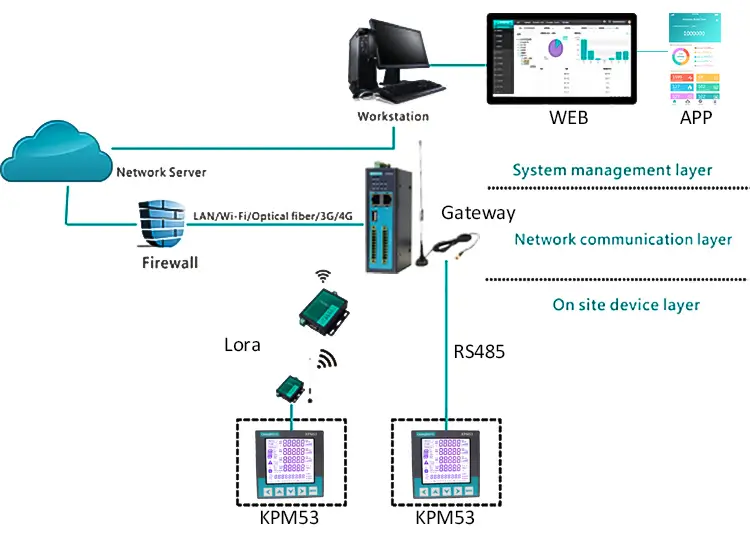
400Hz Power Meter Overview
What is a 400Hz Power Meter?
A 400Hz power meter is a device used to measure the electrical power in systems operating at a frequency of 400 Hz. You can check voltage, current, and sometimes other parameters such as frequency or power factor. This tool helps you check if your equipment is operating correctly and safely. You can get clear results quickly without wasting time guessing or repeating checks with other tools.
Tip: Using a 400Hz power meter, you can obtain readings that meet the specific needs of high-frequency systems. You don’t need to worry about the errors common in ordinary power meters.
Various models of 400Hz power meters are available on the market. Some use digital displays, while others use analog dials. Most models are portable, so you can use them in the field or workshop. No special training is required to use this type of power meter. It is simple to operate, and the display shows all the information you need.
Where is it suitable?
400Hz power meters are most commonly found in locations where equipment uses 400 Hz power. These locations include:
Aviation: Aircraft use 400 Hz systems for lighting, navigation, and communication. During maintenance or repair, you will need to use a 400Hz power meter to check these systems.
Military Use: Many military vehicles and bases use 400Hz power to power radar, radios, and other equipment. You can use the meter to ensure everything is functioning correctly.
Commercial Use: Some large buildings and factories use 400Hz power for specialized equipment. You can use a 400Hz power meter to ensure these devices are operating safely.
Why 400Hz Systems Require Dedicated Meters
Frequency Significance
You will see 400Hz power in many aircraft and military equipment. Compared to lower frequencies, 400Hz power offers many advantages. At 400Hz, electronic components respond much faster. Servo motors and small parts operate more efficiently due to rapid power changes. Furthermore, 400Hz power provides stable power, helping to prevent malfunctions during flight.
Here are some reasons why 400Hz is chosen for these applications:
Electrical components respond quickly, aiding in control and ensuring safety.
A stable power supply reduces the likelihood of power outages.
This results in better power quality and therefore less ripple in the DC power supply.
The electrical system becomes more reliable, which is crucial for avionics and flight control systems.
Aircraft manufacturers favor 400Hz because it allows for smaller and lighter engines and other components. Lighter aircraft consume less fuel and have a longer range. Military vehicles also use 400Hz because weight and reliability are critical.
Note: Military aircraft using 400Hz power supplies require three-phase power when the load exceeds 500VA or 500 watts. Designers typically use full-wave rectifiers or switching power supplies to avoid power supply issues.
Measurement Challenges
Standard multimeters cannot be used to test 400Hz systems. Standard multimeters often give incorrect results or miss crucial information. Specialized multimeters can solve these problems and help you obtain accurate values.
The challenges you will face include: Standard multimeters may not be able to accurately measure high-frequency power.
Military and aviation regulations require rigorous review.
The skin effect at 400Hz means you must choose appropriate wire sizes to handle resistance. A 400Hz power meter can solve these problems. It measures voltage, current, and power at a frequency of 400Hz. You can view the data in several ways, such as trend graphs or waveforms. These power meters can also test power quality according to military standards such as MIL-STD 1399.
How to Use a 400Hz Power Meter
Quick Setup
Do you want to quickly test power and get reliable results? Setting up your 400Hz power meter only takes a few steps. First, ensure the power meter is compatible with the system you plan to test. Plug the power meter into a power source and connect the test leads to the correct terminals. Turn on the power meter and select the desired measurement mode, such as voltage, current, or frequency. Observe the display for a clear reading. Many power meters can display results instantly without waiting. If your power meter has a data logging function, press the record button to track changes over a period of time.
Here is a simple step-by-step guide:
- Check that your meter is compatible with a 400Hz system.
- Connect the test leads to the device you want to measure.
- Turn on the meter and select the correct measurement mode.
- Read the value on the display.
- Record or save data if necessary.
Tip: Always carefully check connections before measurement. This helps avoid errors and ensures equipment safety.
Safety Tips
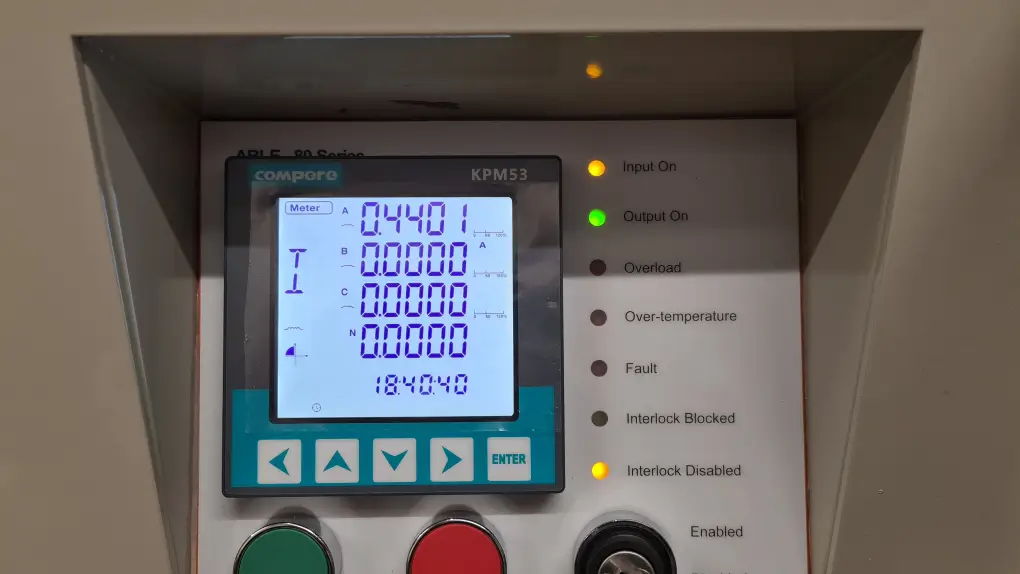
Safety is paramount when using a 400Hz power meter to ensure accurate measurements. Follow these best practices each time you use it:
Always install and ground the meter correctly. Follow the manufacturer’s instructions and local electrical codes. Ensure adequate ventilation around the meter.
Train yourself and others on how to use the meter. Understand hazardous situations and emergency response procedures. Understand the meaning of safety indicator lights and how to maintain the meter.
Inspect the meter regularly. Check for signs of wear or damage. Inspect all electrical connections and test safety features such as overload protection.
Some Safety Measures When Using a Meter
- Proper Installation
- Preventing Electric Shock
- Operator Training
- Reducing the Risk of Errors
- Regular Maintenance
- Ensuring Reliable Meter Operation
Note: Developing good habits protects you and your equipment. This leads to better results and avoids costly failures.
Application Scenarios and Techniques
Aerospace and Military
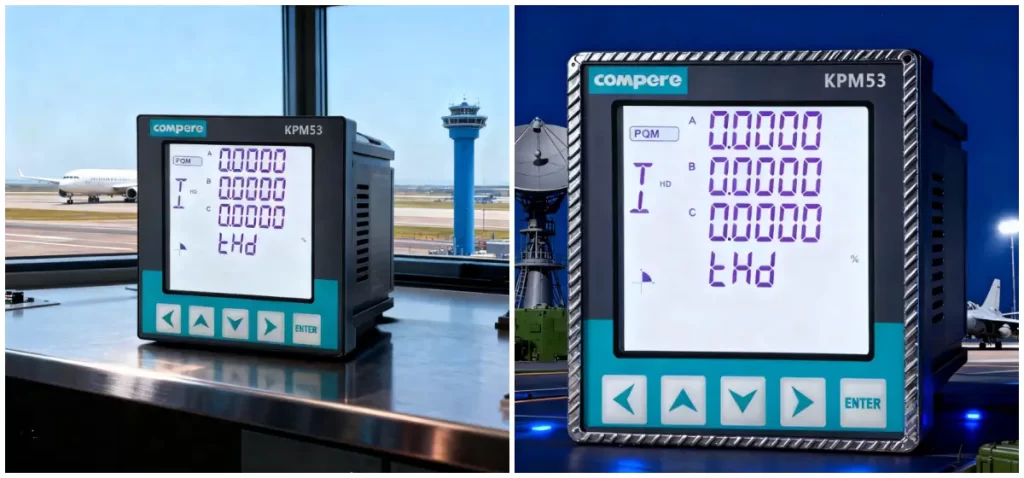
Your work environment demands extremely high time sensitivity. In the aviation industry, you’ll use a 400Hz power meter for pre-flight checks. This tool helps you quickly identify voltage drops or frequency problems. You can test navigation and communication equipment on the ground to ensure everything is functioning correctly before takeoff. In the military, you’ll use power meters to maintain the proper functioning of radar and radio systems. Quick checks prevent mission delays and ensure equipment is readily available. A robust housing and sealed cover effectively protect the power meter from dust and water, allowing for outdoor use even in harsh weather conditions.
Commercial and Field Use
You can use a 400Hz power meter in large buildings and factories. It helps you monitor specialized equipment requiring 400Hz power. The power meter’s fast sampling and large memory allow you to collect vast amounts of data. You can track energy usage and identify problems early. This not only saves money but also prevents equipment failure. The table below shows how these features can help your work:
Maintenance Recommendations
You certainly want your meter to last and function well. Proper maintenance helps achieve this. Please follow these tips: Regularly check and record voltage, frequency, and load. Store properly.
Be aware of harmonic distortion. Try to keep it below 3% to protect your equipment.
Regularly inspect and clean the meter. Check for loose wires, dust, or damage, paying particular attention to areas near vents and heat sinks.
Control the temperature. Ensure the fan and cooler are functioning properly. Keep the thermometer temperature between -10°C and 50°C.
Using a lithium battery provides better power and heat dissipation control.
Update the firmware whenever possible. This will bring you new tools and fixes.
Use a moving average display for smoother, easier-to-read readings.
Tip: Proper maintenance of your 400Hz power meter helps extend its lifespan. This prevents operational errors and ensures your system runs smoothly.
You’ll find that a 400Hz power meter helps you quickly check power. Readings are clear and easy to read, and operation is simple. Aerospace and military personnel report that using a 400Hz power meter results in more reasonable billing, better load management, and reduced maintenance.
Frequently Asked Questions(FAQ)
What is the difference between a 400Hz power meter and a standard power meter?
A 400Hz power meter is used to measure power in high-frequency systems. Standard power meters typically provide inaccurate readings at 400Hz. In aviation, military, or other 400Hz environments, you will need a dedicated power meter to obtain accurate measurements.
Can a 400Hz power meter be used with ordinary 50/60Hz systems?
You can use some 400Hz power meters to measure lower frequencies. Always consult the power meter’s instruction manual. Some models can measure both 400Hz and standard power, but not all models can.
How do I determine if my system needs a 400Hz power meter?
Check the device label or manual. If you see “400Hz,” you need a 400Hz power meter. This frequency is commonly used in aviation and military equipment.
Is it difficult to learn how to use a 400Hz power meter?
No, most 400Hz power meters come with simple control buttons and a clear display. You can learn to use them quickly. Many models come with a simple user guide or training video.
How to keep your 400Hz power meter in good working order?
Tips: Clean your power meter regularly. Store it in a dry place. Check for damage before each use. Update the firmware whenever possible. Proper maintenance will help extend the lifespan of your 400Hz power meter and maintain its accuracy.
Contact Us
Welcome to inquire about smart meter and IoT technology solutions! Our professional team will tailor a smart energy management solution for you!
📩 Email: [email protected]
📞 Phone: +86-15938727545
🟢 WhatsApp: +86-15938727545