1. Project File
Project Name: General Motors Energy Management System Project Case
Industry: Discrete Manufacturing Industry
Project Procurement Related Equipment: One energy management system, one batch of auxiliary materials
2. Project Overview
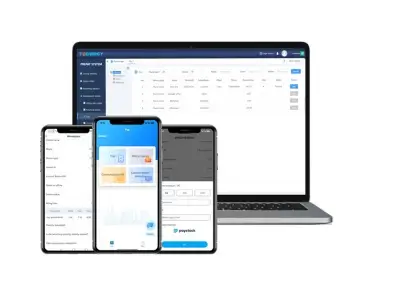
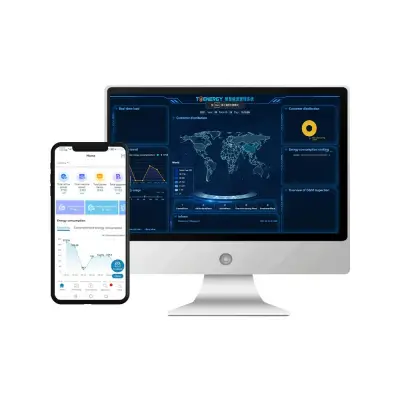
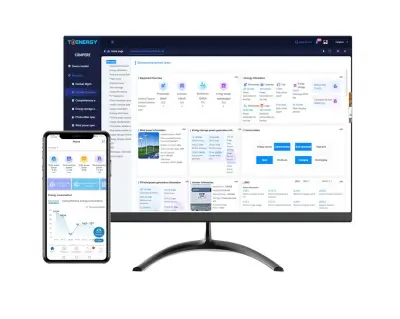
Shanghai General Motors Co., Ltd. was established on June 12, 1997, through joint investment by SAIC Motor Corporation Limited and General Motors. Currently, it operates four production bases in China and is a leading enterprise in the Chinese automotive industry. Compaq Intelligent’s T@Energy smart energy management system is being implemented at the General Motors Wuhan Branch.
3. Energy Management System Solution
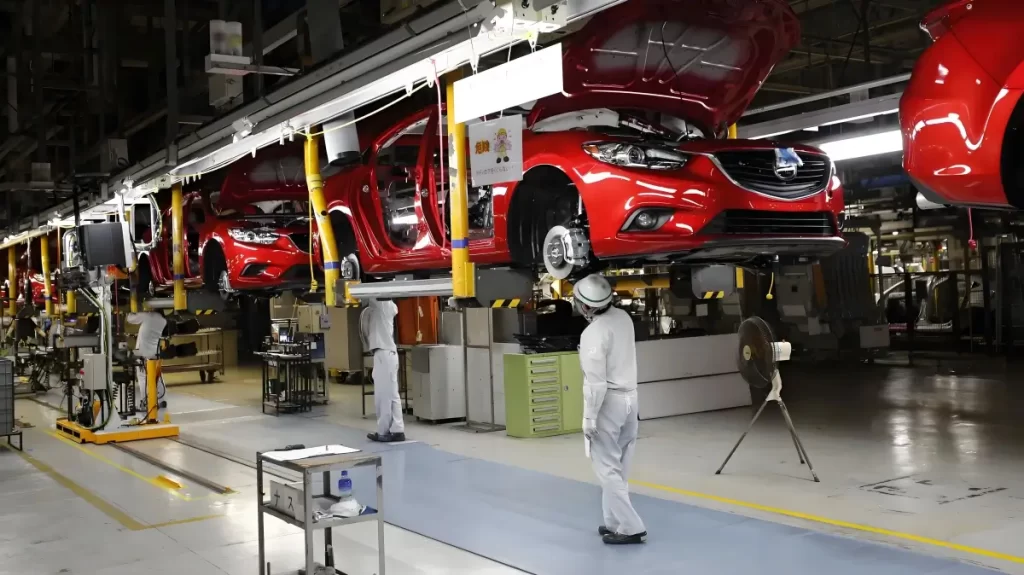
The automotive manufacturing industry is a high-precision manufacturing enterprise, with a large number of nonlinear devices in use. Power quality issues are becoming increasingly problematic, and General Motors is no exception. Power quality issues not only increase GM’s unit electricity costs but also lead to numerous production and manufacturing issues, including scrap losses, downtime, production losses, restart costs, and dramatically increased equipment costs. GM’s production process primarily encompasses four steps: stamping, welding, painting, and final assembly. These steps involve as many as 19 sensitive devices, including computers, programmable logic controllers (PLCs), AC contactors, DC power supplies, robots, laser welders, lighting, fieldbuses, and communications equipment. Any single step could potentially stall production and severely impact process quality. Therefore, the energy management system solution developed for Shanghai General Motors Co., Ltd.’s Wuhan branch focused on addressing the interference and impact of power quality issues in the automotive manufacturing workshop.
To address this issue, the T@ Energy energy management system monitors and analyzes power quality issues such as voltage deviation, harmonics, voltage sags, and short interruptions. GM’s operations and maintenance personnel can use smart devices to monitor equipment operating status at any time, predict abnormalities, and implement preventative measures to prevent failures. This significantly reduces equipment failure rates caused by power quality issues, improves production efficiency and quality, and reduces the increased electricity costs associated with power quality issues, saving expenditures and achieving a “win-win” approach to energy conservation management.
4. User Benefits
Short-term Benefits
(1) Safety Assurance
Strengthen the professionalization, standardization and regularization of the operation and maintenance management of energy-consuming equipment to avoid electrical accidents and personal safety accidents caused by improper operation and management.
(2) Decision Support
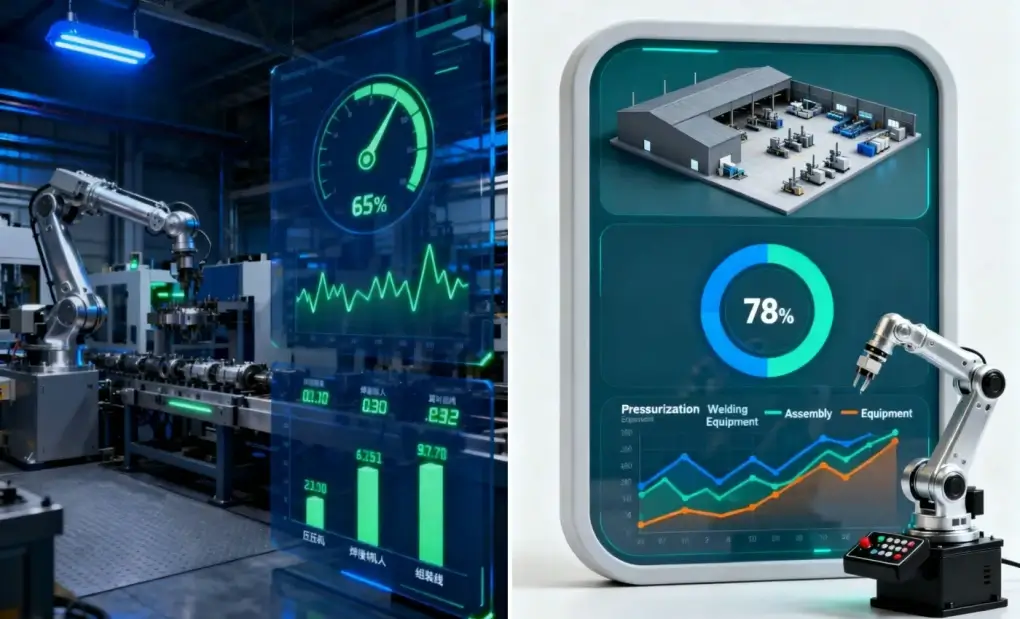
Through short-term data collection and analysis, determine the energy consumption trends and flows of energy-consuming areas, energy-consuming media, and energy-consuming equipment, and provide data models for overall energy-saving transformation, equipment energy consumption anomaly analysis, and department and regional energy consumption performance assessment.
Medium-term Benefits
(1) Improve electricity sales transaction strategy
Calculate and analyze the quarterly and annual year-on-year electricity consumption deviations, grasp the dynamics of corporate electricity consumption, participate in free electricity sales transactions, reduce the annual reported electricity consumption deviations, and reduce the unit price cost and overall electricity cost.
(2) Extend equipment life
Use the system to promptly detect equipment abnormalities, reduce equipment failure rate, and provide a judgment basis for maintenance and overhaul. Through targeted maintenance and management, extend the operating life of equipment and save equipment iteration costs.
Long-term benefits
(1) Unmanned operation
Full control of energy-consuming equipment and energy-consuming media, achieving unmanned operation, and helping operation and maintenance personnel improve operation and maintenance efficiency.
(2) Applying for policy subsidies
The government’s support for the construction of energy management systems is increasing. Enterprises that have passed the energy management system construction and certification will receive different levels of policy funding subsidies according to different regional policies. At the same time, it is also beneficial for enterprises to apply for scientific and technological projects in the future.