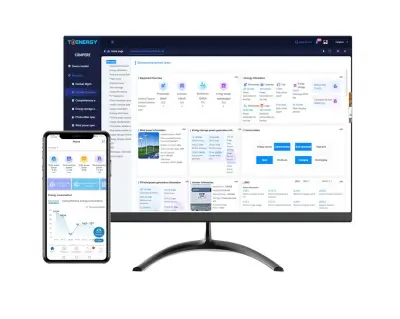
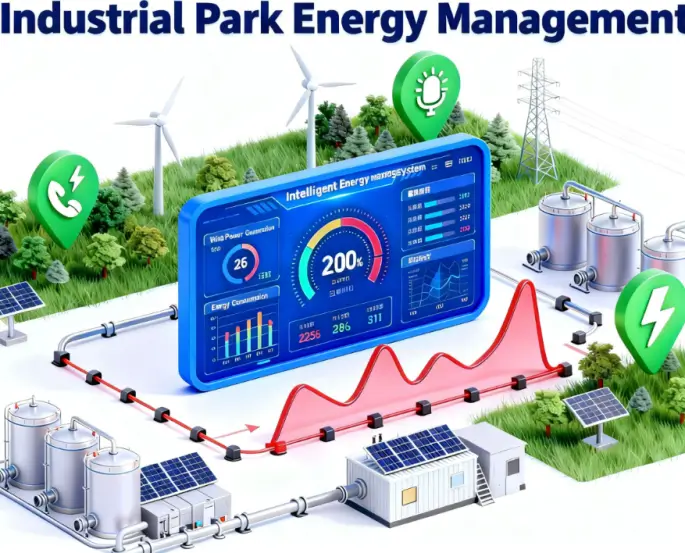
With industrial upgrading and rising energy prices, industrial parks (industrial parks, science parks, smart parks) face challenges such as complex energy consumption, high costs, and increased management difficulties. To improve energy efficiency, reduce operating costs, and meet policy requirements for energy conservation and carbon reduction, more and more parks are implementing Energy Management Systems (EMS).
This article will explain why industrial parks must establish an energy management system from multiple perspectives, including operation, cost, management, technology, and environmental protection.
1. Complex Energy Consumption in Industrial Parks Requires Centralized Management
Industrial parks typically encompass multiple enterprises, several buildings, and numerous public facilities. Their energy consumption structure has the following characteristics:
Multiple energy sources coexist (electricity, water, gas, air conditioning, steam, etc.)
Large load variations (factories, electromechanical equipment, chillers, building air conditioning)
Decentralized metering makes manual management difficult
Without a system, park operators struggle to understand:
Which enterprises consume the most electricity?
Are public facilities consuming excessive energy?
Are there any abnormal energy consumption issues with equipment?
An energy management system allows industrial parks to achieve centralized monitoring, unified management, and real-time access to all energy data, moving from chaos to precision.
2. Effectively Reducing Energy Costs Is The Most Direct Benefit For The Industrial Park
Energy has become one of the most significant operating costs for industrial parks.
EMS can help reduce costs in the following ways:
(1). Detecting abnormal energy consumption points
Real-time monitoring can quickly identify:
- Air conditioning in a building still consuming energy late at night
- Excessive standby power consumption of equipment in a factory
- Aging equipment leading to decreased energy efficiency
(2). Implementing demand management to avoid over-limit penalties
Many industrial parks incur hefty monthly penalties for exceeding demand limits. EMS can provide early warnings to prevent over-limit usage.
(3). Optimizing energy dispatch
Through data analysis, the system can assist industrial parks in implementing:
- Time-of-use electricity
- High and low load regulation
- Off-peak energy consumption strategies
- Achieving an average energy cost saving of 5%–15%.
3. Assisting Park Managers in Improving Operational Efficiency
Common management difficulties faced by park management units include:
- Reliance on manual meter reading, which is time-consuming and prone to errors
- Complex billing for multiple tenants
- Lack of energy consumption data for public facilities
- Large area, making it difficult to detect problems in a timely manner
EMS can make park management more efficient:
(1). Automatic Meter Reading and Accurate Billing
Avoids disputes, saves manpower, and is more suitable for multi-tenant parks.
(2). Real-time Alarm System
The system can monitor:
Voltage and current imbalance
High equipment load
Abnormal energy consumption
Sudden surges in energy consumption
Allows managers to handle problems promptly and reduce risks.
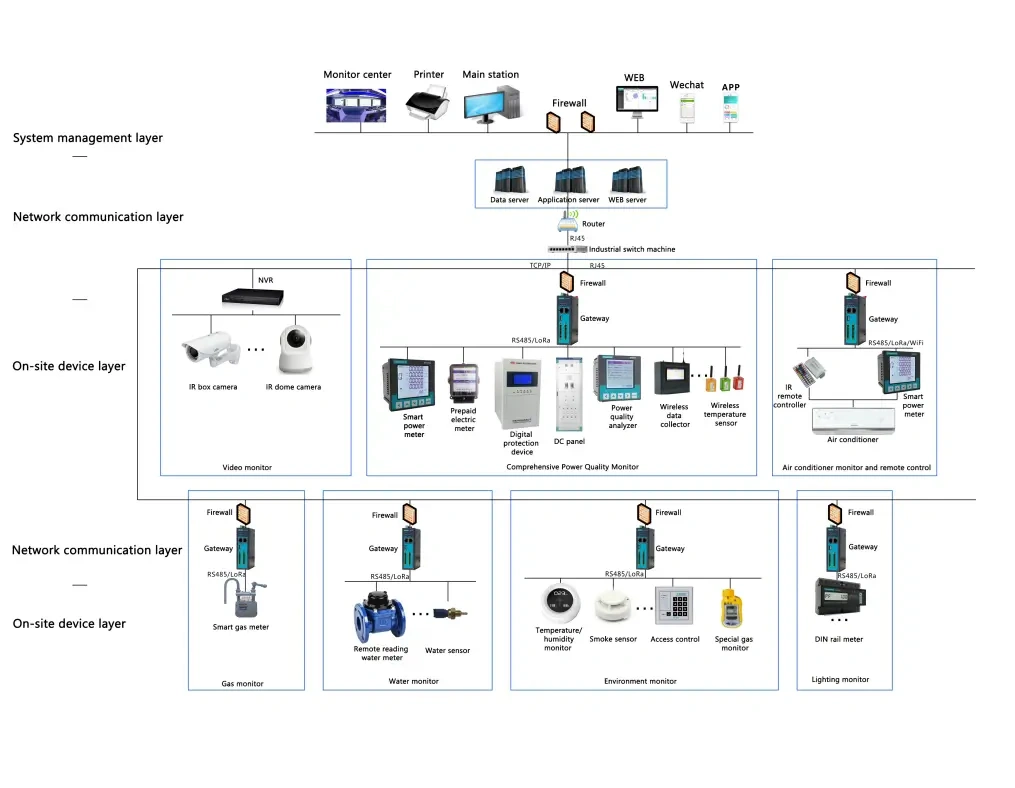
(3). Unified Platform Management of All Equipment
From substations to buildings, from chillers to smart meters, all equipment can be visualized on a single platform.
4. Enhancing Tenant Satisfaction and Strengthening Park Competitiveness
Modern enterprises increasingly value energy transparency and operational cost control.
Industrial parks equipped with EMS can provide:
Individual energy consumption reports for each enterprise
Energy saving recommendations
Enterprise electricity consumption analysis charts
Transparent monthly billing
These features significantly enhance the professionalism and service quality of the park, attracting higher-quality manufacturers.
5. Compliance with Policy Requirements, Promoting Green Transformation of the Park
Globally, energy conservation and carbon reduction are emphasized, and many regions are requiring industrial parks to conduct:
Carbon emission checks
Energy checks
Plant energy consumption reporting
Green transformation and ESG reporting
Energy management systems can automatically process this data, allowing the park to easily comply with government regulations and ESG trends, and strengthen its environmental image.
6. A Crucial Foundation for Smart Parks
The core of a smart park is data-driven operation.
EMS is the foundational platform for smart parks, capable of integrating with:
IoT systems
BMS building management systems
Smart meters
Prepaid systems
AI optimization algorithms
Energy Storage Systems (ESS)
to become the central hub of overall smart park management.
With an energy management system (EMS), industrial parks can further develop:
AI-driven energy-saving optimization
Automated energy dispatching
Intelligent operation and maintenance
Energy consumption prediction models
Truly ushering industrial parks into the era of smart technology.
Conclusion: The adoption of an EMS in industrial parks has become an inevitable trend.
The reasons why industrial parks need an EMS can be summarized as follows:
📊 Complex energy consumption necessitates centralized management
💡 Reducing overall energy costs
⚙️ Improving operational and maintenance efficiency
🏢 Enhancing tenant satisfaction
🌱 Meeting ESG and energy-saving policies
🔧 Promoting the development of smart parks
Whether it’s an industrial park, a technology park, or a comprehensive park, an EMS is an indispensable key system for the future.