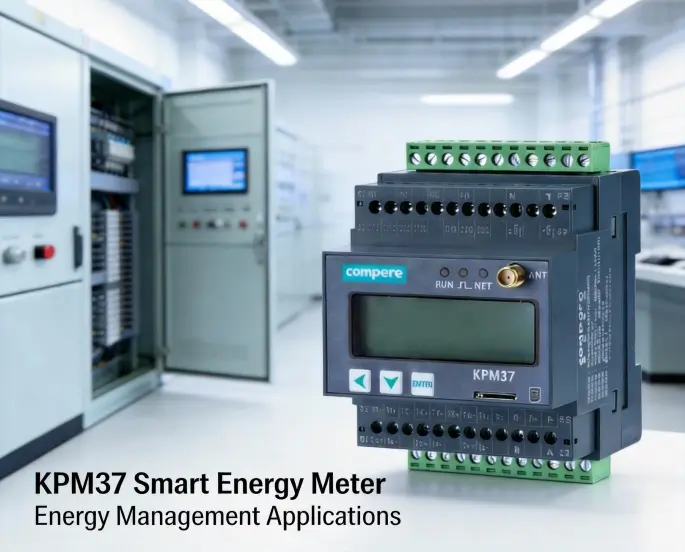
Against the backdrop of fluctuating energy prices and dual-carbon policies, electricity costs are no longer just a number on a financial statement, but a core cost directly impacting competitiveness. Whether it’s a planned new project or an existing infrastructure upgrade urgently needed, choosing a high-performance smart energy meter has significance far beyond simple “metering.”
Deep Cost Reduction: Ensuring Every Kilowatt-Hour is Spent Effectively
Customers often choose smart meters primarily to “save money.” Beyond eliminating the labor costs of traditional manual meter reading, smart meters deeply unlock cost-reduction potential in the following dimensions:
Refined Sub-metering, Identifying “Electricity Thieves”: Many businesses only look at the overall bill but don’t know where electricity is wasted. Smart meters support sub-metering by floor, workshop, or even individual device. Through data comparison, you can instantly discover air conditioners left on after get off work, motors running unloaded, and aging, leaky wiring.
Optimize peak-valley electricity usage and leverage price arbitrage: Smart meters possess powerful time-of-use rate setting capabilities. They automatically record and generate intuitive electricity consumption curves in the background. By analyzing these curves, managers can adjust production plans, shifting energy-intensive processes to off-peak electricity pricing periods at night, directly cutting substantial electricity costs without reducing output.
Demand monitoring to avoid hefty fines: For industrial customers, facing fines from power companies for exceeding their declared “maximum demand” is common. Smart meters have real-time early warning functions; once the load approaches a critical point, the system automatically alerts or triggers the unloading of non-critical loads, safeguarding against excessive electricity costs.
Ultimate Safety: From Passive Repair to Proactive Prevention
For project managers, electrical fires or unexpected power outages are the biggest risks. The safety improvements offered by smart meters are unmatched by traditional mechanical meters.
24/7 Electrical Health Monitoring: It not only records electricity consumption but also monitors voltage, current, frequency, power factor, and harmonics. When a circuit experiences overload, overvoltage, or even localized high temperatures due to loose connections, the smart meter can detect these events within seconds and push alarm information to the cloud.
Electrical Fire Warning: For renovation projects, aging insulation in older circuits poses a safety hazard. Smart meters with residual current monitoring (leakage current monitoring) can promptly cut off the power or issue a warning when the leakage current exceeds a safe threshold, nipping fire hazards in the bud.
Remote Diagnostics, Reducing Maintenance Risks: Maintenance personnel can view real-time parameters remotely via a management platform without frequent entry into high-voltage environments. This “non-contact” maintenance ensures personnel safety and significantly reduces troubleshooting time.
Selection Strategy Deeply Aligned with Customer Real-World Scenarios
1. New Projects: Pursuing a “One-Step” Systematic Approach
During the design phase, smart meters offer the advantage of full compatibility.
Simplified Wiring: Utilizing RS485 bus daisy-chain connections, it saves over 60% of wiring compared to traditional wiring methods.
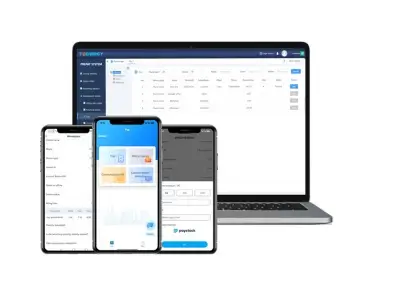
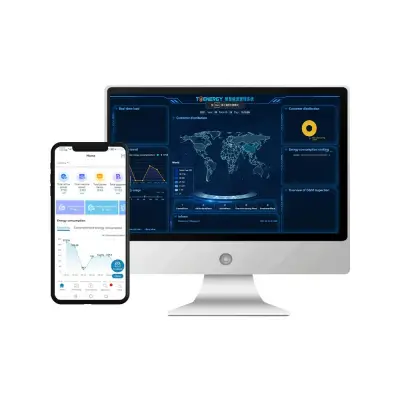
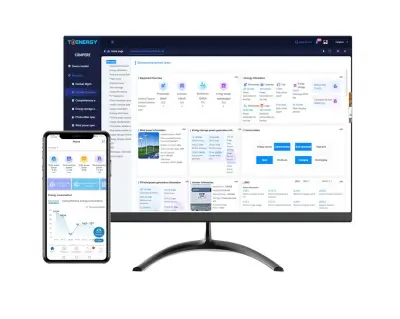
Cloud Integration: New projects can be directly connected to the smart energy management platform, enabling large-screen data visualization and enhancing the overall technological feel and evaluation level of the project.
Typical Applications
Individual metering in large shopping malls and office buildings.
Energy efficiency analysis in workshops of industrial parks.
2. Retrofit Projects: Pursuing High Efficiency with “Non-Destructive Upgrades”
Addressing the pain points of inconvenient power outages and limited space, modern solutions offer a near-seamless upgrade experience.
Wire-Free Installation: Utilizing open-type current transformers, construction workers do not need to cut cables; a simple snap-on installation is sufficient. This means production lines do not need to stop, and shopping malls do not need to close; the retrofit is completed quietly.
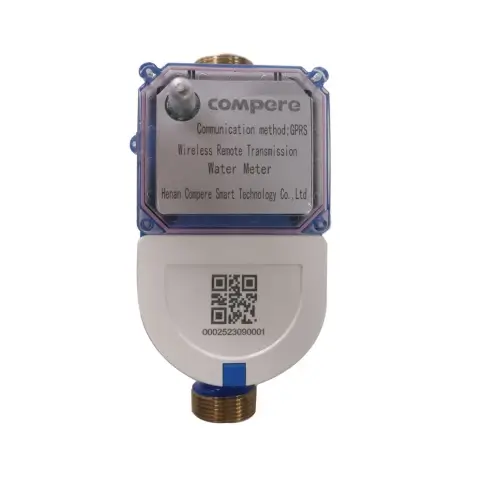
Wireless Coverage, Simplifying Complexity: Older buildings often face wiring difficulties. Smart meters using WiFi, 4G, LoRaWAN, or NB-IoT transmission methods can save on expensive network cabling costs.
Typical Applications
Single-unit power consumption monitoring in old factory equipment.
Energy management retrofitting in university dormitories and rental properties.
Conclusion: From “Expenditure” to “Investment”
Choosing smart meters should not be viewed as an infrastructure expenditure, but rather as a long-term energy investment.
New construction projects choose the foundation, determining the upper limit of energy management for the next decade.
Retrofit projects choose efficiency, focusing on gaining control over energy at low cost.