Contents
With the continuous growth of electricity demand in industrial and commercial sectors and the deepening of electricity price market reforms, traditional power management models are no longer sufficient to meet the needs of modern enterprises for cost control and energy security. Building an Energy Management System (EMS), combined with hardware facilities such as smart meters, has become the core of enterprises’ digital energy transformation.
Core Components: From Sensing to Decision-Making
Efficient electricity management is not simply about saving, but about precise control based on data. Its core hardware and software complement each other:
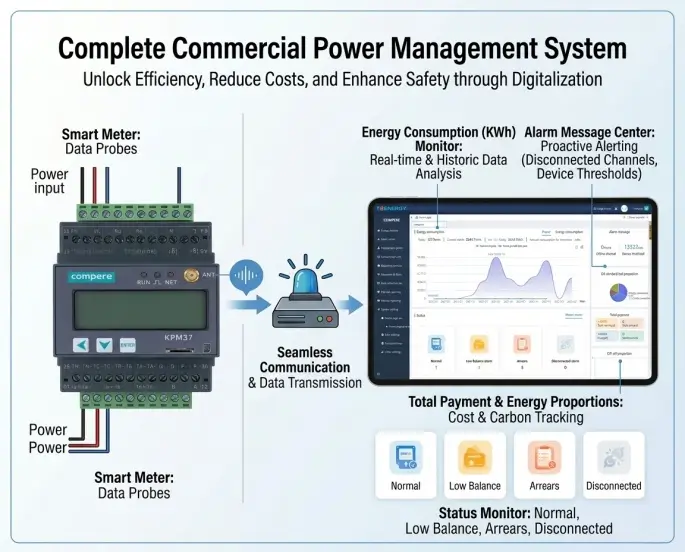
1. Smart Energy Meters: “Probes” for Energy Data
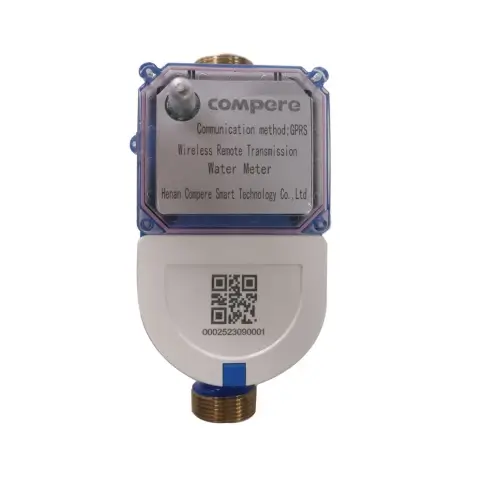
Smart energy meters differ from traditional meters; they are the nerve endings of the energy management system.
High-Frequency Acquisition: Real-time monitoring of current, voltage, power factor, and harmonics, capturing abnormal electricity usage.
Sub-metering: Supports metering by workshop, production line, and equipment, making every penny of electricity cost traceable.
Two-Way Communication: Supports real-time connection with the central system, providing a foundation for tiered pricing and peak/valley analysis.
2. Energy Management System (EMS): The “Brain” of Enterprise Electricity Consumption
The EMS system cleanses and analyzes massive amounts of collected data to provide decision support for managers.
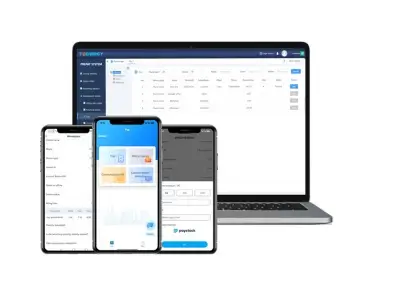
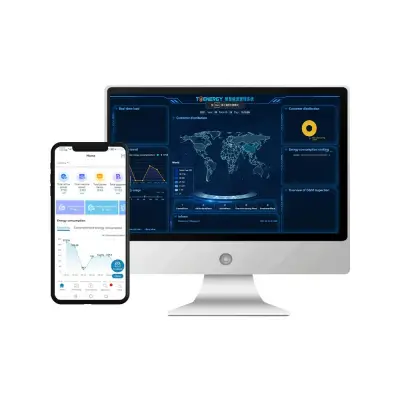
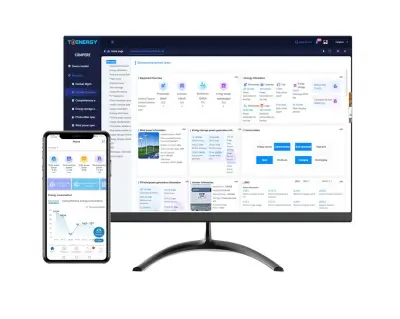
Real-time Monitoring and Visualization: View the entire plant’s energy consumption map in real time via large screens or mobile devices.
Load Forecasting and Alarms: Predict peak electricity consumption based on historical data to avoid hefty penalties for exceeding maximum demand.
Energy Efficiency Diagnosis: Automatically generate energy efficiency reports to identify inefficient equipment or no-load losses.
Four Core Values of Industrial & Commercial Electricity Management
1. Optimize Electricity Cost Structure and Reduce Operating Costs
By analyzing peak and off-peak electricity prices, enterprises can adjust production plans to achieve peak shaving and valley filling. Furthermore, regarding transformer basic electricity charges, the system helps enterprises choose the optimal solution between “capacity charges” and “demand charges.”
2. Improve Power Quality and Extend Equipment Lifespan
Unstable voltage and excessive harmonics can cause motor overheating and precision instrument malfunctions. The energy management system can monitor power quality in real time and provide early warnings of harmonic interference, thereby reducing equipment maintenance costs and extending asset lifespan.
3. Automated Early Warning for Safe Electricity Use
The system can be configured with early warning thresholds. In the event of overload, leakage, or abnormal temperature, alarm information will be pushed to management personnel’s mobile phones immediately, eliminating potential safety hazards such as fires in their early stages.
4. Facilitating Carbon Verification and Green Factory Application
In the context of carbon peaking and carbon neutrality, the energy consumption reports automatically generated by the system provide crucial data support for enterprises to trace their carbon footprint, respond to green electricity trading, and apply for “green factory” status.
How to Implement an Effective Energy Management Solution?
Needs Assessment: Analyze the plant’s power distribution circuits to identify high-energy-consuming equipment requiring key monitoring (such as air compressors and chillers).
Hardware Deployment: Install smart meters and gateways with communication capabilities at key nodes.
System Launch: Connect to a cloud or local energy management platform and configure customized dashboards and reports.
Continuous Optimization: Regularly adjust energy consumption strategies based on data analysis suggestions provided by the system.
Conclusion
Digital energy management is not only a shield for enterprises to cope with rising electricity prices, but also a powerful tool for improving production efficiency and fulfilling social responsibility. Through the combined approach of smart energy meters and energy management systems, enterprises can transform hidden energy consumption into visible management assets, gaining a cost advantage in a highly competitive market.