In large industrial enterprises or high-tech manufacturing parks, production facilities often span multiple floors or are scattered across multiple independent workshops. The traditional power distribution management model of “manual inspection + independent regional operation” faces significant efficiency and safety bottlenecks due to the complex low-voltage power distribution circuits, the large power consumption base, and stringent power supply continuity requirements.
To achieve cost reduction and efficiency improvement while ensuring production safety, it is imperative to construct a centralized power distribution monitoring and management solution covering multiple floors/workshops.
System Architecture Design: Three-Layer Distributed Network
Considering the characteristics of spatial dispersion and a large number of devices, the system adopts a typical distributed, networked architecture, typically divided into the following three layers:
1. Field Equipment Layer (Data Source)
Intelligent hardware deployed in distribution boxes (cabinets) on each workshop and floor.
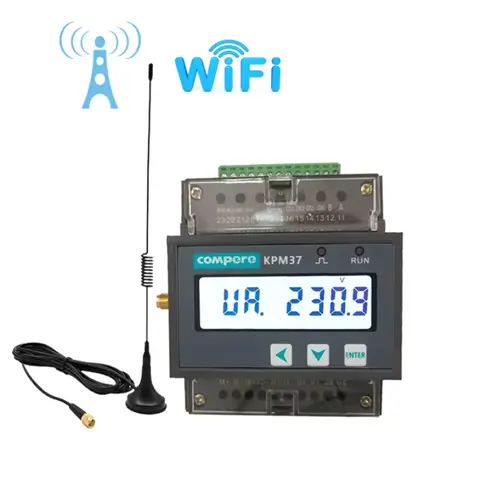
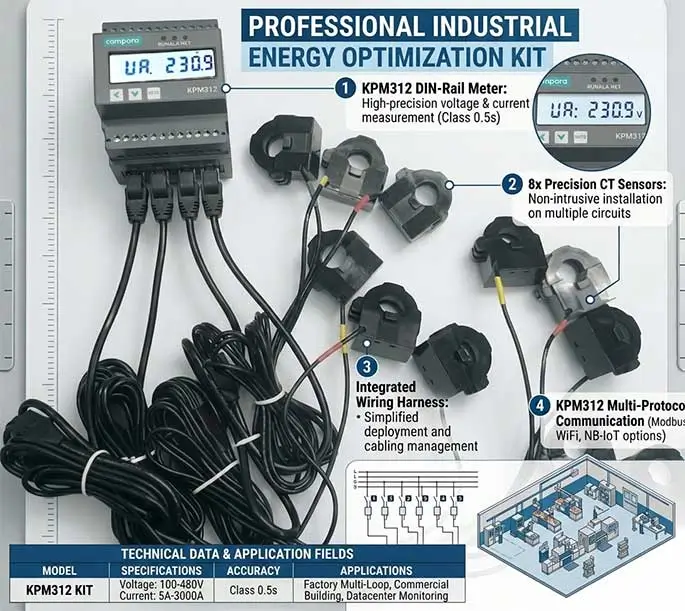
Low-Voltage Circuits: Deploying intelligent power meters and multi-circuit meter power monitoring devices to monitor voltage, current, power, energy, and harmonics.
Key Power Distribution and Transmission:Deploy microprocessor-based protection devices, transformer temperature controllers, and DC power supply status monitoring.
Environmental Safety:Deploy electrical fire monitoring detectors (leakage current, cable temperature) and environmental temperature and humidity sensors.
2. Network Communication Layer (Data Transmission)
This layer addresses the core challenges of multi-floor, long-distance, and cross-plant transmission.
Within a Floor/Single Plant:Field devices connect to the nearest intelligent communication gateway in the area via RS485 bus (Modbus-RTU protocol).
Across Floors/Plant:The intelligent gateway converts data to the MQTT protocol and uploads it to the central control room via existing wireless methods such as LoRa/4G/Wi-Fi.
3. Station Control Management Layer (Centralized Collaboration)
The system’s “brain” is typically located in the park’s main control room.
Configure high-performance system servers, data storage servers, and large-screen display terminals.
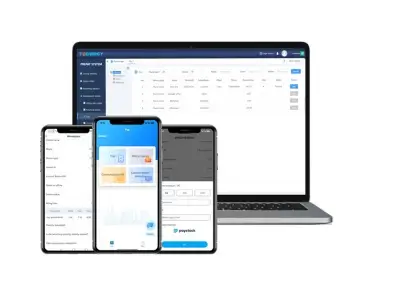
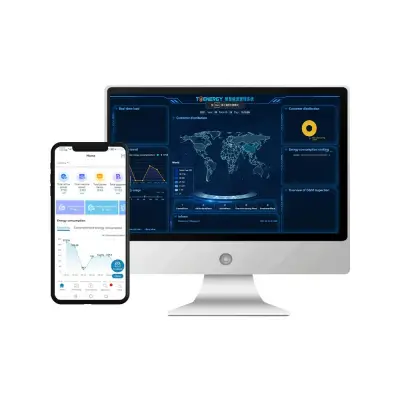
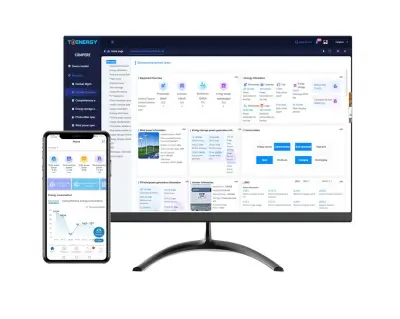
Run a centralized power distribution monitoring software suite to achieve unified cleaning, storage, analysis, and visualization of power distribution data across the entire park.
Core Functional Modules
A mature centralized monitoring solution should possess the following core capabilities to achieve unified management across the entire plant:
1. Global View and Digital Twin (Visualization)
Campus Geographic Overview:Provides a 3D/2D floor plan of the park on the main interface, intuitively displaying the operational status of each factory (normal, alarm, power outage).
Hierarchical and Regional Topology:Clicking on a corresponding factory allows drilling down to view the power distribution floor plan of each floor, and further drilling down to the primary system diagram of a specific distribution cabinet.
Real-time Dynamic Updates:Switch opening and closing status, circuit breaker position changes, and real-time electrical parameters are dynamically updated on the interface.
2. Multi-dimensional Energy Consumption Analysis (Cost Reduction)
Metering by Area/Floor:Automatically calculates electricity consumption in different physical areas such as Factory 1, Factory 2, and the 3rd floor of Building A.
Amounting by Production Line/Work Group:Binds power distribution circuits to production operations, calculating energy consumption indicators (KPIs) per unit of output value, providing accurate data for cost accounting. Energy Consumption Dashboard: Automatically generates daily, weekly, monthly, and yearly energy consumption reports, supporting year-on-year and month-on-month analysis to quickly identify leaks and high-energy-consuming equipment.
3. Millisecond-Level Fault Warning and Alarm (Efficiency Enhancement)
Tiered Alarm Mechanism: Alarms are categorized into abnormal (e.g., slight voltage fluctuations), minor faults (e.g., excessive temperature rise), and emergency faults (e.g., tripping, overcurrent protection activation).
Multi-Channel Notification: When an alarm is triggered, the system not only displays a flashing notification on the main screen and issues an audible and visual alarm, but also accurately pushes notifications to the responsible maintenance personnel in the relevant area via SMS, WeChat, DingTalk, or WeChat Work.
Fault Tracing and SOE: Records Sequence of Events (SOE) with millisecond-level resolution, helping engineers accurately pinpoint the source of the incident and avoid shifting responsibility across multiple plants.
4. Power Quality and Equipment Health Management (Safety)
Harmonic Monitoring: Addressing harmonic pollution from the widespread use of frequency converters and precision electronic equipment in modern factories, real-time monitoring of harmonics from the 2nd to 63rd orders prevents transformer overheating and false tripping.
Equipment Lifespan Prediction: Statistical analysis of circuit breaker mechanical opening and closing times and cumulative operating current to assess contact wear, shifting from “reactive maintenance” to “predictive maintenance.”
Key Pain Points and Countermeasures in Multi-Floor/Multi-Factory Scenarios
In practical implementation, centralized management of multiple areas often faces the following unique challenges, requiring targeted optimization of the solution:
| Key Pain Points | Targeted Countermeasures |
|---|---|
| Dispersed spaces, high wiring costs, and difficult construction. | Countermeasure: Make full use of the factory’s existing backbone network by dividing VLANs for data transmission to avoid re-excavation and wiring across workshops. For local areas where wiring is impossible, adopt LoRa or 4G wireless gateways for transparent transmission. |
| Diverse equipment types and fragmented communication protocols. | Countermeasure: Deploy smart gateways equipped with protocol conversion capabilities. These gateways translate various local protocols into standardized MQTT at the edge before uploading data. |
| Massive data volume leading to potential system lag. | Countermeasure: Implement edge computing mechanisms. Smart gateways aggregate and filter data locally on-site (e.g., data is not reported if voltage remains unchanged). Data is sent to the central station only when status changes or a scheduled interval is reached, significantly relieving server load. |
| Diversified roles among O&M personnel resulting in chaotic permission control. | Countermeasure: Establish a strict Role-Based Access Control (RBAC) system. The administrator of Workshop A can only view and operate equipment within Workshop A, while the general director holds full visibility and control over the entire campus, minimizing operational risks. |
Benefits of Solution Implementation
From “Human Defense” to “Technological Defense”: Proactive alarm push notifications eliminate the need for maintenance personnel to periodically visit each floor and factory for meter reading and inspection, improving overall inspection efficiency by over 70%.
Double Increase in Electrical Safety: Online closed-loop management of electrical fire hazards (leakage, temperature rise) enables pre-accident warnings, reducing the rate of major power outages by 80% or more. Refined Cost Control: By thoroughly understanding the energy consumption of each factory building and floor, and optimizing equipment operation strategies and transformer demand reporting, it is estimated that the overall electricity cost of the factory can be reduced by 5% to 12%.
Conclusion
A centralized power distribution monitoring solution for multiple floors and factories is the infrastructure for industrial enterprises to move towards digital and green transformation. It not only shortens the spatial distance but also breaks down the “information silos” between various production units through centralized data management, providing strong digital and intelligent support for safe production and energy conservation in the factory.