In modern industrial park energy management, remote meter reading for water, electricity, gas, and heat is a necessity. However, traditional wired meter reading (such as RS485) is costly and difficult to maintain; while wireless meter reading relying on 4G/5G or NB-IoT consumes operating profits annually for each data SIM card.
Is there a solution that can eliminate cumbersome wiring and completely avoid expensive carrier data fees?
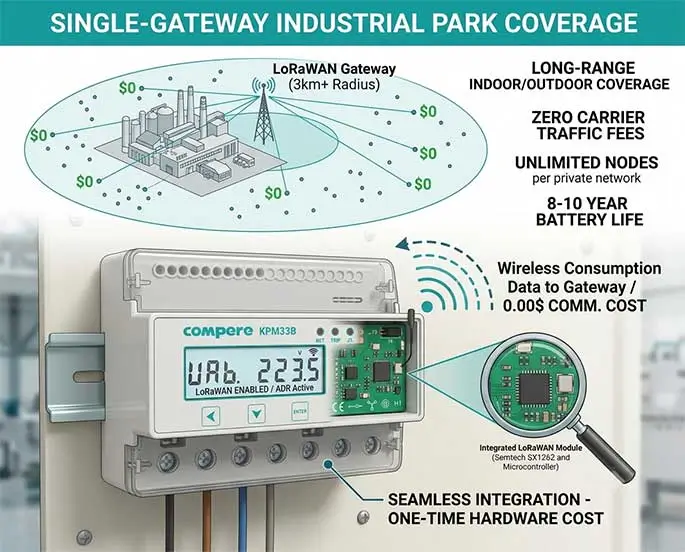
The answer is: LoRaWAN (Long Range Wide Area Network). Leveraging its superior penetration and unlicensed frequency bands, under ideal planning, deploying just one LoRaWAN gateway can provide free and stable coverage for all end meters throughout the entire industrial park.
Why a Gateway? LoRaWAN’s “Dimensional Reduction” Approach
Industrial park environments are complex, with dense reinforced concrete structures and strong electromagnetic interference from large machinery. Ordinary WiFi signals often dissipate after penetrating just two walls. LoRaWAN, with its unique Chirp Spread Spectrum (CSS) modulation technology, achieves a significant advantage over traditional wireless technologies.
Superior Penetration and Line-of-Sight Transmission: LoRaWAN operates in the unlicensed Sub-GHz band. Its longer wavelength provides exceptional diffraction and penetration capabilities. In open industrial parks, a single gateway can cover a radius of 3km to 5km; even in harsh environments with numerous factories and dense metal pipes, it can easily penetrate multiple walls.
Massive Capacity: A modern standard LoRaWAN gateway typically has 8 concurrent channels, capable of receiving tens of thousands or even hundreds of thousands of data reports daily. For meter reading services that only report data once per hour or even daily, the capacity of a single gateway is more than sufficient.
The Underlying Logic of “Free Coverage”
Here, “free” refers to the elimination of long-term network communication service fees (data charges).
While NB-IoT solutions are also wireless, each meter requires a carrier SIM card, and the annual data charges increase linearly with the number of smart energy meters. LoRaWAN, on the other hand, is a private network built by the enterprise:
Asset Ownership: The gateway and meter assets belong entirely to the park or enterprise.
Zero Data Charges: The gateway utilizes the park’s existing wired broadband (fiber optic/network cable) to upload data to local or cloud servers, bypassing the carrier’s billing channels. Whether connecting 100 meters or 10,000 meters, the wireless communication cost is always zero.
Extremely Low Power Consumption Reduces Maintenance Costs: Dynamic Rate Adjustment (ADR) technology allows meters near the gateway to transmit at extremely low power, extending battery life to 8-10 years, virtually eliminating the maintenance costs of manual battery replacement.
A Practical Deployment Guide for a Single Gateway Covering the Entire Park
To reliably support all the meters in a park with a single gateway, the gateway’s location and antenna gain are crucial.
1. The Core High Ground Principle (Antenna is the Soul)
Wireless signals are highly susceptible to damage at high altitudes. The gateway must be installed at a geographically high point within the park, such as the rooftop of the main office building, the top of the tallest factory building, or on the park’s water tower or communication tower.
Strive to ensure that the antenna forms a quasi-line-of-sight (LoS) transmission with the rooftops of most factory buildings within the park.
Use a high-gain fiberglass omnidirectional antenna and ensure proper waterproofing and lightning protection grounding.
2. Site-Specific Fine-Tuning for Meters
Above-ground Meters: For electricity or water meters located inside factory buildings or equipment rooms, their built-in spring antennas or suction cup antennas should be kept away from large areas of metal shielding as much as possible.
Underground or Well Meters: For water/gas meters buried underground or in deep wells, due to the significant signal attenuation caused by soil and manhole covers, a split design is recommended—the meter remains underground, and the LoRaWAN antenna is led out via a feeder to the edge of the manhole cover or into the ground green belt to ensure smooth communication with the rooftop gateway.
Simplified System Architecture: How Does Data Flow?
The architecture of a self-built LoRaWAN remote meter reading system is very flat, mainly divided into four layers:
| Layer | Components | Function / Role | Cost Attribute |
|---|---|---|---|
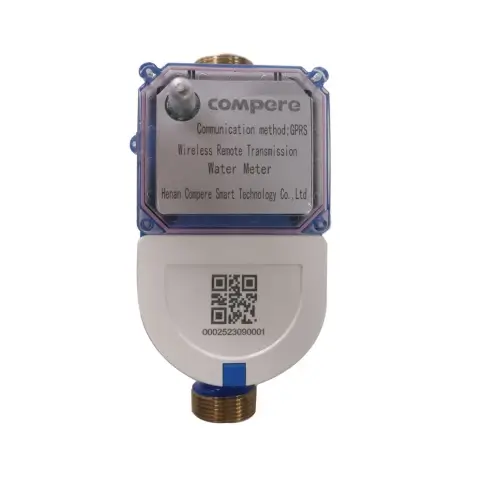
| Sensory Layer | Water, electricity, and gas meters integrated with LoRaWAN modules | Collects energy consumption data and transmits it wirelessly at scheduled intervals. | One-time Capex |
| Network Layer | 1 x Industrial LoRaWAN Gateway | Captures over-the-air signals and forwards them via TCP/IP (Ethernet/Wi-Fi). | One-time Capex |
| Control Layer | Network Server (NS) |
Handles device authentication, data deduplication, and Adaptive Data Rate (ADR) control. | Free & Open-Source (e.g., ChirpStack) |
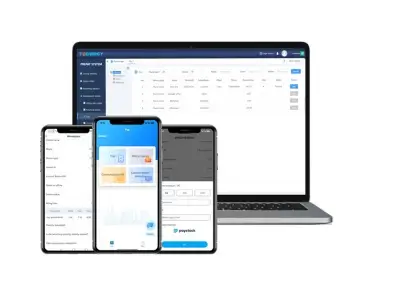
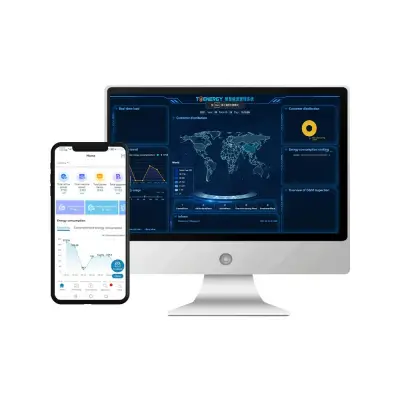
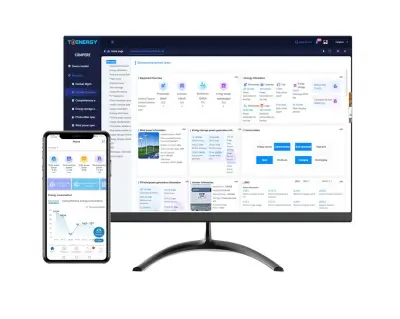
| Application Layer | Energy Management System (EMS) | Data visualization, automated billing, and energy efficiency analytics. | In-house / Commercial |
Return on Investment (ROI) Analysis: How Long Does It Take to Recover Costs?
Taking a medium-sized industrial park with 500 electricity/water meters as an example, comparing it with the NB-IoT solution:
NB-IoT Solution: Assuming an annual fee of 20 yuan per card, 500 meters would incur a fixed annual data usage cost of 10,000 yuan, increasing indefinitely over the years.
LoRaWAN Solution: A high-performance industrial gateway (including antenna and accessories) costs approximately 2,000-3,000 RMB. The network server uses an open-source and free system.
Conclusion: The saved traffic costs over just 3-4 months are enough to cover the hardware investment in the LoRaWAN gateway. For the next 5-10 years, the entire wireless communication network operates at “zero cost.”
Conclusion
In the wave of digital transformation in industrial parks, “cost” and “stability” are the core considerations for enterprises. The LoRaWAN remote meter reading solution, with its “self-built, secure, and self-controllable” characteristics, returns network control to enterprises.
A high-point gateway, a high-performance antenna—the interconnected smart green park is entering an era of “free communication.”