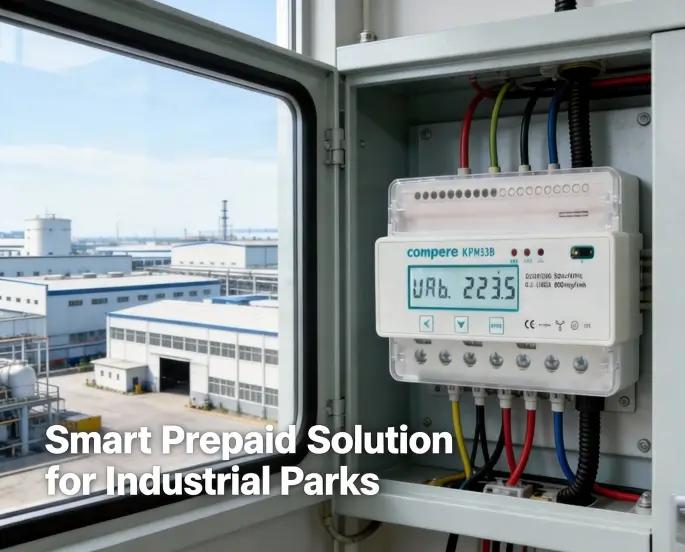
Amidst the wave of Industry 4.0 and smart city construction, the management model of industrial parks is undergoing a transformation from “extensive” to “intensive.” As the core energy source for park operations, electricity management is not only crucial for economic benefits but also for production safety.
The traditional electricity management model of “use electricity first, pay later, and manual meter reading” is gradually being replaced by a closed-loop solution of “smart hardware + prepaid system.” This article will delve into the application of prepaid electricity meters in industrial parks and the core value of its supporting systems.
Three Major Pain Points in Industrial Park Electricity Management
Before deploying a prepaid system, most industrial park managers faced the following challenges:
Collection difficulties and advance payment pressure: In the traditional model, park property management companies need to advance huge sums of electricity fees to the power company before collecting payments from tenants. Some enterprises, due to poor management or various other reasons, default on electricity payments, leading to serious cash flow risks for the park.
Manual meter reading is costly and prone to errors: Industrial parks are vast, and meters are scattered, making manual meter reading not only time-consuming and labor-intensive but also prone to errors and omissions, leading to disputes between property management and businesses.
Lack of power consumption monitoring: The lack of real-time energy consumption data analysis makes it difficult to detect aging lines or illegal overloading, posing fire safety hazards.
Core Solution: Smart Prepaid Meters + Cloud Management System
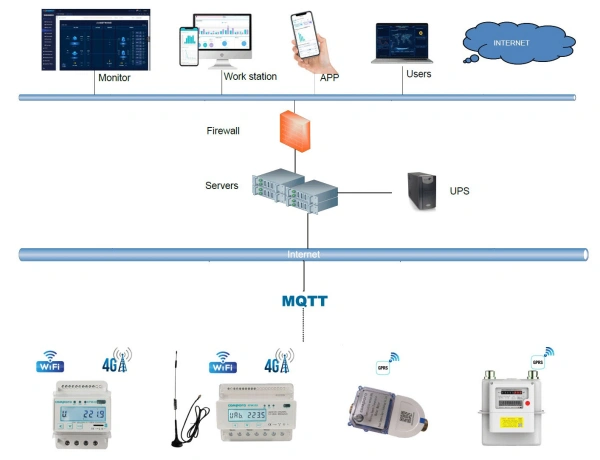
A complete prepaid solution for industrial parks consists of two parts: a perception layer (hardware) and an application layer (software):
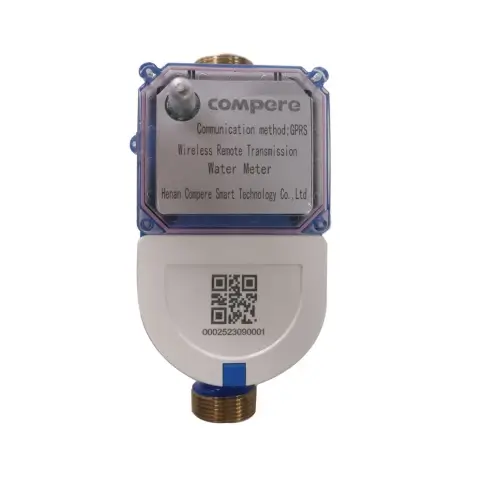
1. Industrial-grade Smart Prepaid Meters (Hardware)
Unlike ordinary household meters, industrial park-specific meters offer higher stability:
Multi-circuit metering: Supports accurate metering under high current and high voltage conditions.
Time-of-use pricing: Allows setting different prices for peak, off-peak, and valley periods, guiding businesses to stagger production and reducing overall electricity costs.
Remote tripping: Combined with internal control relays, it automatically cuts off power when overdue and automatically restores power after recharge.
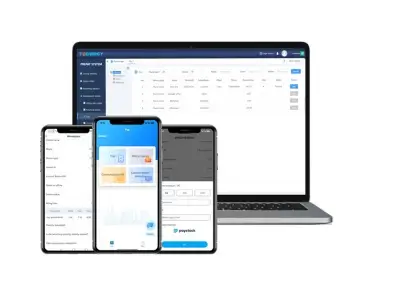
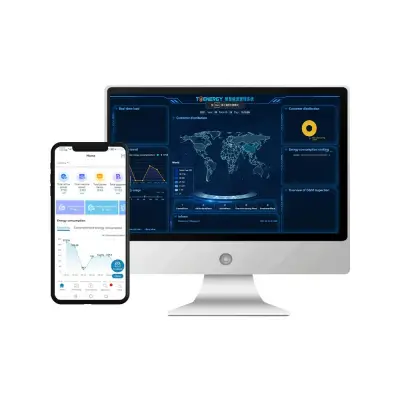
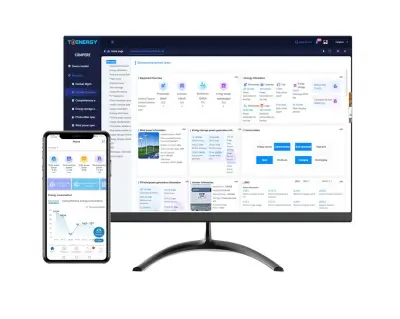
2. Smart Electricity Sales Management System (Software)
The accompanying prepaid system is the core of management. It is typically designed based on a B/S architecture or cloud platform:
Multi-terminal recharge: Tenants can independently recharge via WeChat official account, mini-program, or APP, with the system issuing instructions to the electricity meter in real time.
Automated alarms: The system can be set with multi-level balance reminders (e.g., when there is 50 yuan or 20 yuan remaining), notifying enterprises via SMS or push notifications, allowing sufficient time for recharge.
Financial transparency: Automatically generates recharge, electricity usage, and arrears reports, providing a clear overview of financial data and completely solving the problem of difficult reconciliation.
Five Advantages of Applying a Prepaid System in Industrial Parks
1. Completely solves the “difficulty in collecting fees” and recovers funds
Through the “recharge first, use electricity later” model, the pressure of collecting fees is transformed into the tenant’s autonomous behavior, fundamentally eliminating the risks of arrears and advance payments, and ensuring the park’s operating cash flow.
2. Improves property management efficiency
the system replaces manual meter reading and manual notification. Statistics show that after deploying this system, the manpower required for power management in industrial parks can be reduced by more than 80%, and management efficiency can be improved by 3-5 times.
3. Support for Complex Industrial Electricity Pricing Strategies
Industrial electricity consumption often involves tiered pricing, transformer loss sharing, and complex calculations of shared electricity costs. The prepaid system can flexibly configure calculation formulas and automatically complete complex calculations, ensuring fair and transparent pricing.
4. Real-time Safety Monitoring and Load Control
The system can monitor electricity load in real time. Once a company’s power consumption exceeds the safety threshold, the system will automatically alarm or trip, effectively preventing the risk of cable fires caused by overload and ensuring the power safety of the entire park.
5. Data-Driven Green Energy Saving
Through the energy consumption big data collected by the system, park managers can analyze the energy efficiency of each company, provide energy efficiency improvement suggestions, respond to the national “dual carbon” policy, and create a green and low-carbon demonstration park.
How to Choose a Suitable Prepaid System for Industrial Parks?
When selecting a system, we recommend considering the following three dimensions:
Communication Method Selection: Given the complex environment of industrial parks, wireless communication solutions such as 4G, NB-IoT, LoRaWAN, or WiFi should be selected based on building density to reduce cabling costs.
System Compatibility: Does the system support the integration of existing water and gas meters for unified management of multiple meters?
Vendor Technical Support: Industrial power supply requires continuity; therefore, it is essential to choose a supplier with a mature after-sales team and a proven track record of stable system operation.
Conclusion
The application of prepaid electricity meters and supporting systems in industrial parks is not only a technological upgrade but also a revolution in park management. It frees managers from tedious billing tasks, allowing them to focus on higher-value park services.
If you are planning to improve the intelligent management level of your park or are looking for a stable and reliable prepaid electricity solution, please contact us. We provide one-stop customized services from hardware selection and system deployment to after-sales maintenance.