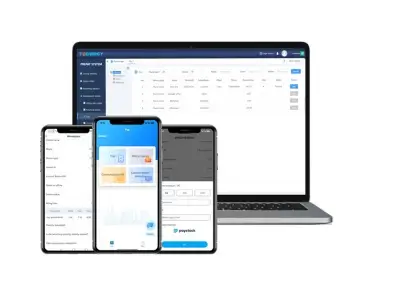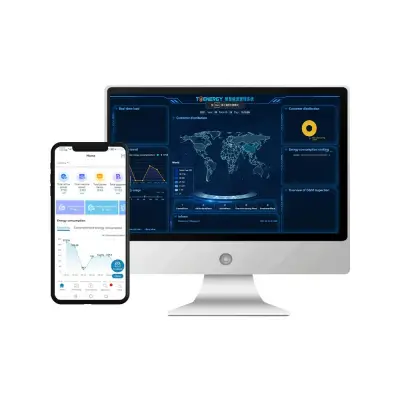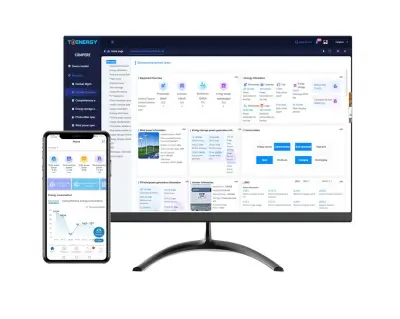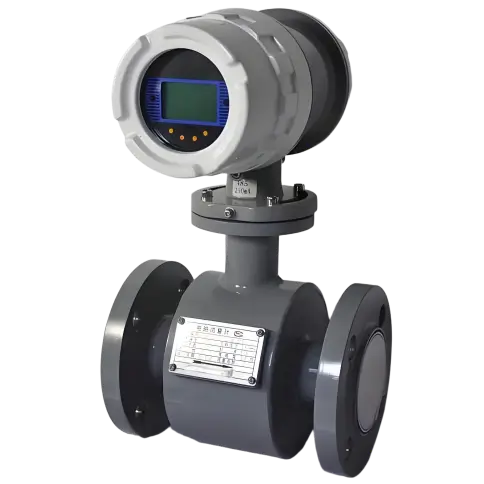
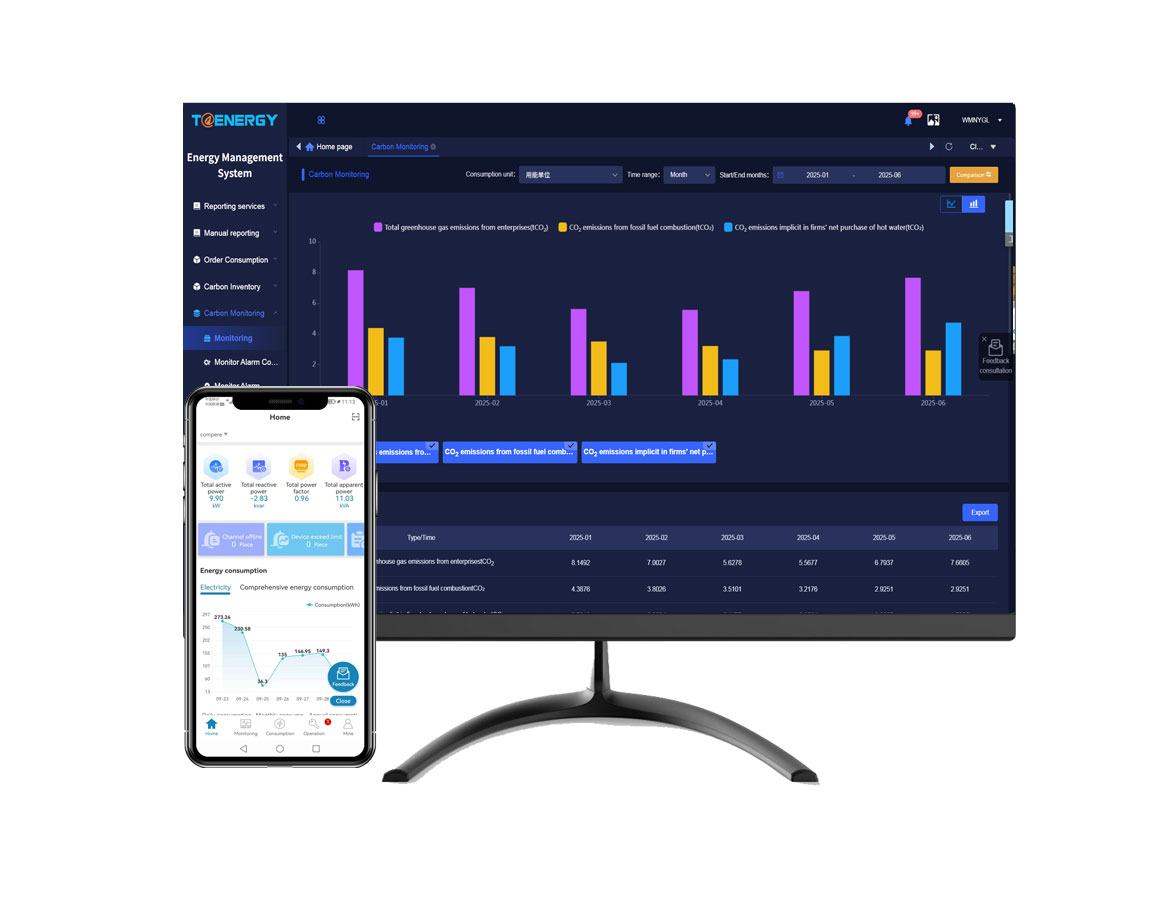
Hunan Renhe Environmental Protection Co., Ltd. is an ecological environment service provider focusing on the harmless disposal and resource utilization of urban and rural solid waste. The company has core technologies for harmless disposal and resource utilization of domestic waste and rich operational management experience. It is a national high-tech enterprise and a small giant enterprise in Hunan Province. Kangpai Intelligent provides it with a carbon emission monitoring system in the industrial park to help customers achieve energy conservation and carbon reduction.
1. Customer needs
The biogas generated by customers in the process of kitchen waste treatment is used to generate electricity and produce high-temperature steam for use in their own industrial parks, and the surplus electricity is sold online. The kitchen waste is separated into waste oil, wastewater and waste residue through combined sorting, crushing and pulping, high-temperature sterilization and other processes. The biogas generated by the customer’s anaerobic digestion technology is pre-treated and then used to generate electricity through a biogas generator set. At the same time, the flue gas and jacket water heat of the biogas generator set are recovered and provided to the waste heat boiler to generate steam. When the steam demand is large, the gas boiler is activated.
The customer supplies biogas and electricity to the energy conversion subsystem through kitchen supply and power purchase from the power grid. The source of thermal steam is gas boiler and flue gas waste heat boiler, which is only provided by the park;
The source of the customer’s early electricity is biogas generator set and external power grid. If the supply within the park is insufficient, some support can be provided by the outside world. From the customer’s typical day power generation and power load time-sharing diagram (below), it can be seen that the total daily power generation is surplus, but the park cannot achieve self-sufficiency in electricity during peak hours and needs to purchase electricity from outside. The customer urgently needs a multi-energy scheduling solution to achieve a balance between power generation and self-use and realize the “zero power purchase” demand.
2. Solution
Based on the customer’s “zero power purchase” demand, our company proposed corresponding solutions:
From the perspective of “source”: dispatch biogas distribution, and then change the unit output;
From the perspective of “load”: shut down part of the load during peak hours or perform time-series translation control on the load.
In the process of building a carbon emission monitoring system, we have in-depth cooperation with the Changsha University of Science and Technology team, and finally selected a prediction scheduling solution based on the gray model. After establishing a mathematical model for the equipment, setting the goal to be the best economy (maximum benefit value), and listing the constraints, the optimization problem is converted into a nonlinear processing method, and it is linearly approximated in segments, thus converting it into a mixed integer linear programming problem, and finally solving it, generating an optimized scheduling work order, and opening up the customer’s OA system for task push. After actual measurement and verification, the system prediction accuracy reached more than 90%.
III. Project Value
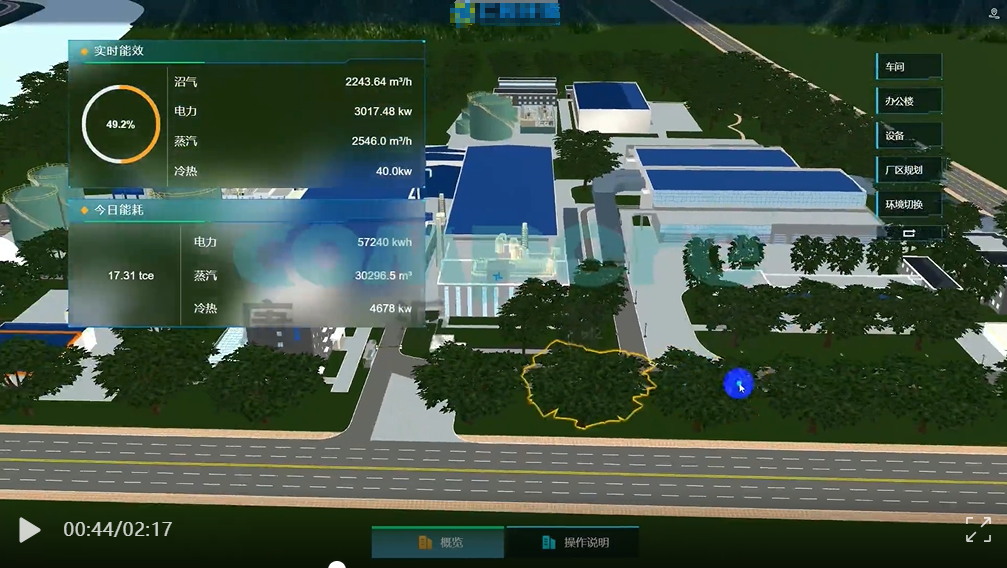
Based on the carbon emission monitoring system, the park achieves energy self-sufficiency through the adjustment of load and output, and can also sell electricity to the outside for profit. The objective function value (benefit value) has increased the profit rate by 77% compared with the original value, and the optimized benefit is about 60,000 yuan/month.
After solving the user’s “zero electricity purchase” demand, the user proceeds to join the carbon trading market, and the carbon quota obtained by the user through garbage disposal is traded in the market to obtain greater benefits. The system can be modified to take economy and carbon emissions as dual goals, optimize scheduling, achieve maximum benefits, and help customers save energy and reduce carbon emissions.