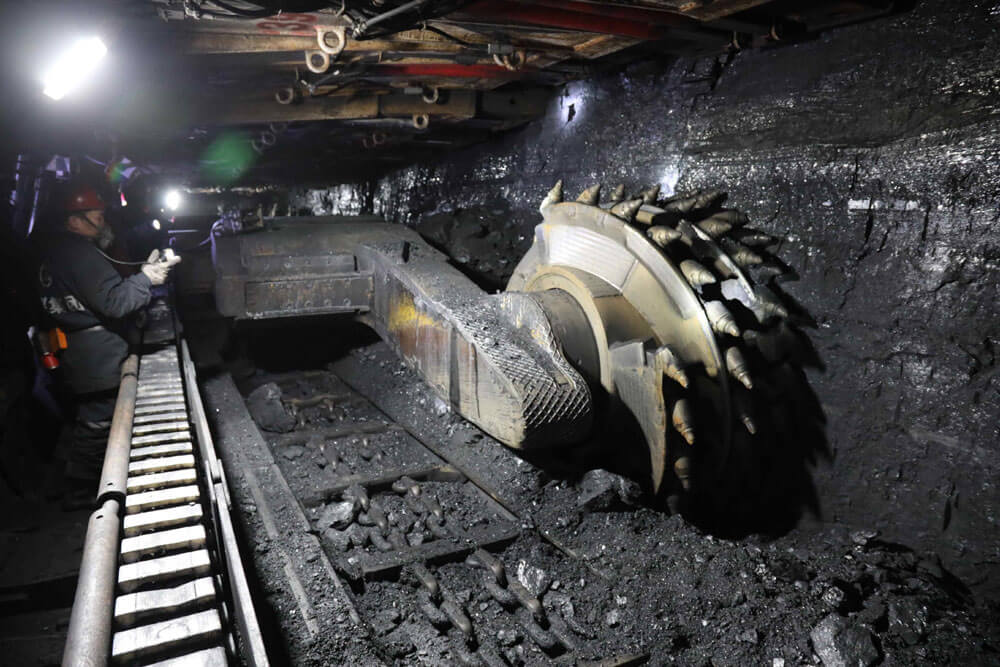
Coal Industry Energy Management System Case – Shanxi Jintaoyuan Group Energy Management System Project belongs to the coal mining industry. The group’s main businesses are raw coal mining, coal washing, coke production, city gas, chemical products, and tourism development.
Policy Background
The energy consumption structure of coal enterprises is mainly electricity and coal, and its energy management mainly involves design, procurement, coal mining and processing. Storage and transportation, equipment procurement, maintenance, waste disposal, products, services and other links, including underground mining , open-pit mining, and various energy-consuming systems involved in coal washing. Affected by geological conditions, service life, coal seam thickness and burial depth, mining technology, coal quality characteristics and other conditions, coal enterprises should fully consider the differences in energy consumption of different enterprises and the changing characteristics of energy consumption under different conditions of each enterprise when carrying out energy management. The effective implementation of an energy management system is an important way to promote systematic energy conservation in China’s coal industry, and it is also a necessary guarantee.
The “Guidelines for the Implementation of the Energy Management System in the Coal Industry” was formulated in light of the characteristics of coal enterprises. By analyzing the current status of energy management, energy use and energy consumption of coal enterprises, and combining the energy management experience and achievements of my country’s coal industry, it guides coal enterprises to establish, implement, maintain and continuously improve the energy management system, achieve energy goals, and achieve the purpose of standardizing corporate energy management behavior, reducing energy consumption, improving energy utilization, and promoting sustainable development of enterprises.
1. Project Files
Project Name: Shanxi Jintaoyuan Group Energy Management System Project Case
Industry: Coal mining industry
Project procurement related equipment: 1 set of energy management system, 1 batch of auxiliary materials
II. Project Introduction
1. Project Introduction:
Shanxi Jintaoyuan Group is a large-scale private enterprise cluster with raw coal mining, coal washing, coke production, city gas, chemical products, and tourism development as its main businesses, and also involved in real estate development, ecological agriculture, logistics and transportation, etc. Based on the actual situation of its own industries, combined with national policy trends and future development plans, Jintaoyuan actively carries out and implements the requirements of power demand management, so that the company’s electric energy can be finely managed, thereby achieving energy conservation and emission reduction, reducing energy expenditure, and achieving the goal of sustainable development.
2. Customer needs:
Through technical communication and field investigation, Kangpai Intelligent ‘s technical team developed a plan to meet Jintaoyuan’s needs based on its actual on-site conditions.
There are a total of 100 monitoring points in the Jintaoyuan project, which are distributed in 35KV substations and multiple plant distribution rooms as well as distribution rooms in gas stations and coal preparation plants.
Jintaoyuan’s core needs are mainly concentrated in two aspects: energy consumption data collection and display, and the connection between communication solutions and data platforms.

3. Energy Management System Solutions
System management layer
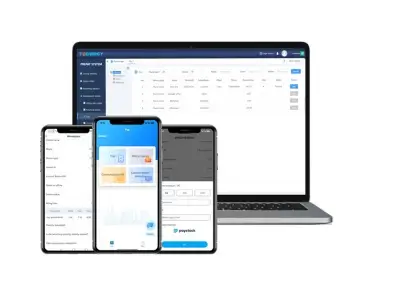
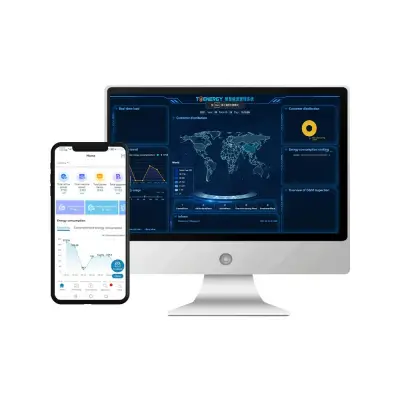
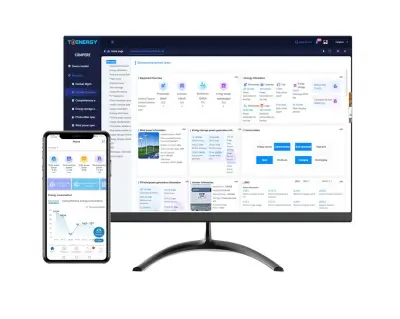
Jin Taoyuan’s energy consumption is mainly electricity, so Kangpai Intelligent chooses the power management system for this type of energy management system. In comparison, the system has more comprehensive power monitoring and display functions, and the power data analysis is more professional.
On-site equipment layer
Jin Taoyuan has many equipment and complex types. In order to ensure the normal operation of the equipment, it is necessary to monitor the operating parameters of each key equipment and important circuit in real time, such as voltage, current, load, power, power quality and other information. Therefore, it is necessary to install multifunctional power meters that meet the requirements at each monitoring point, and then save the data to the database of the power management system through Internet technology. Through the power management system software, the data is analyzed and indicators such as energy consumption, power quality, power pollution and power efficiency are reported.
Energy consumption data transmission solution
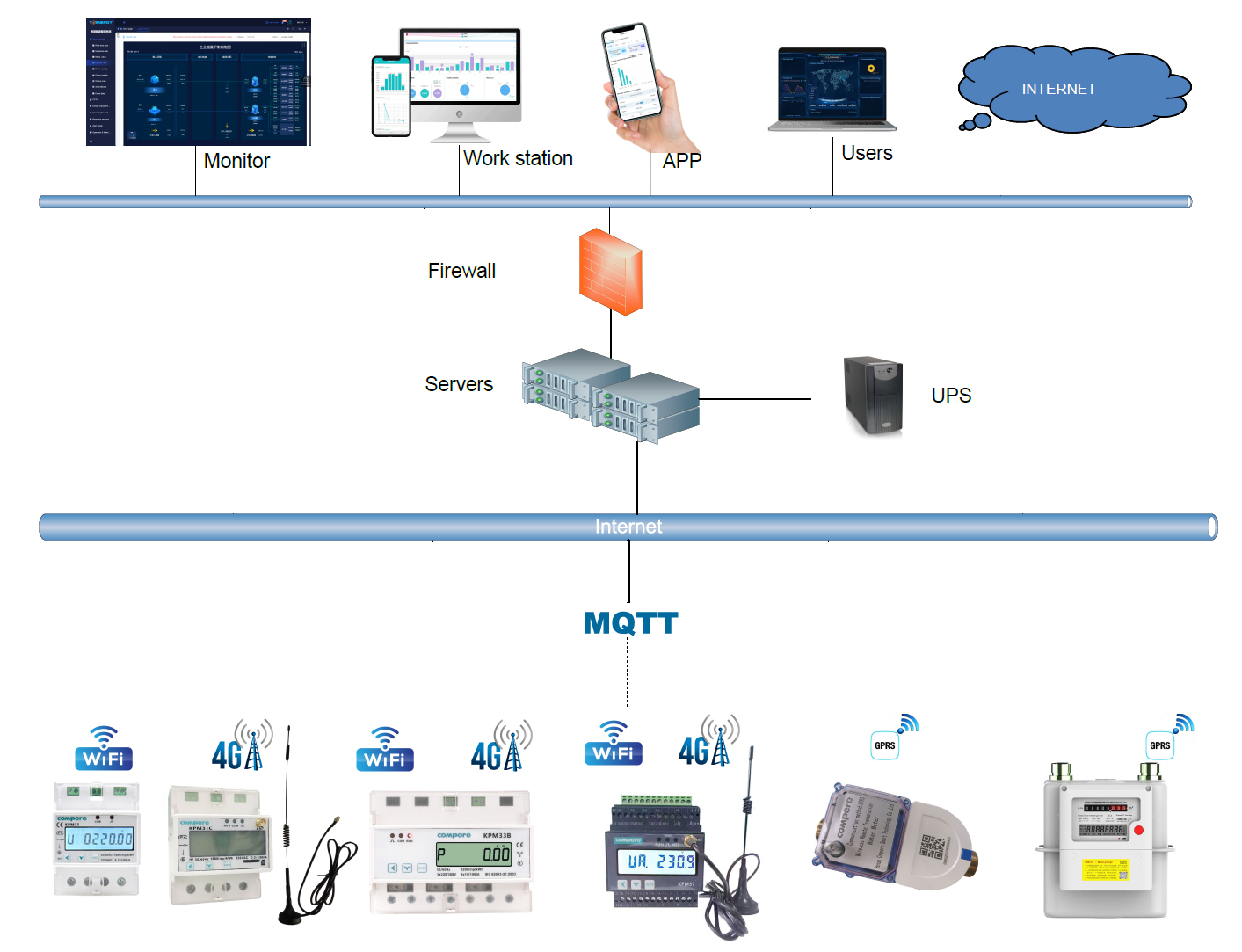
There are four main communication designs for the energy management system: 485 bus communication, GPRS wireless communication, DTU wireless centralized communication, and master station server communication . The 485 bus communication method is used in the Jin Taoyuan power demand side management platform project.
This communication method is to use 485 communication lines to connect the communication ports of various multi-function power meters and sensors in parallel, and connect them to the communication port of the 485 communication server; the 485 communication server is connected to the enterprise Internet router to communicate with the platform data center.
4. User Benefits
1. Short-term benefits
(1) Energy saving management
Help enterprises to form a gradually efficient energy management system from extensive energy management. On the one hand, it will change energy consumption management from disorder to order, so as to fully grasp the flow and utilization efficiency of energy; on the other hand, it will reduce the workload of operation and maintenance personnel , reduce the error and leakage rate, and improve the operation and maintenance level.
(2) Optimizing production load
Based on the local power company’s “peak and valley” tiered electricity prices and the actual needs of market customers, we rationally allocate production personnel and production equipment investment, balance production capacity, and use relatively simple management methods to reduce production costs.
2. Medium-term benefits
(1) Improving energy quality and reliability
The status of energy-consuming equipment is fully understood, and abnormalities and failures of equipment are understood immediately to reduce losses caused by abnormalities, and potential problems are predicted to improve the reliability of energy use and equipment reliability. Energy quality issues are monitored, especially power quality issues, and power quality is optimized in a timely manner through power quality management measures after problems are found.
(2) Optimizing energy-using assets
By recording and analyzing the load characteristics of energy-consuming equipment, potential capacity can be discovered; and energy consumption can be calculated to help choose a more economical energy payment method. For example, “capacity-based transformation” can be carried out. At the same time, the fixed asset structure of the enterprise can be optimized according to the market situation of the enterprise, and the excess equipment can be converted into cash.
3. Long-term benefits
(1) Technical energy-saving transformation
Based on commercial big data, data model analysis is used to assist decision-making, helping to find space for energy-saving transformation of enterprises and optimizing process flow, and to conduct cost accounting and energy-saving effect assessment. With evidence and supervision, the production costs of enterprises can be reduced through equipment transformation or the use of new energy-saving technologies.
(2) Energy efficiency assessment
Establish standard energy efficiency assessment norms, combine them with the energy assessment system, promote proactive energy conservation within the enterprise, and enhance the energy-saving awareness of all employees.