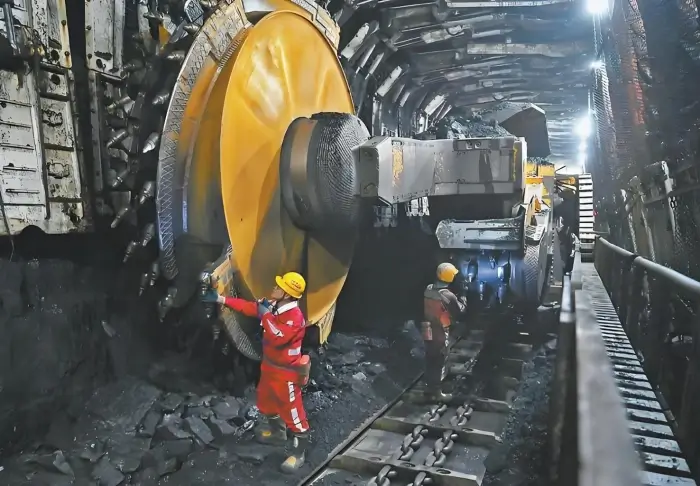
Coal is the main source of energy in my country. At present, my country’s available coal reserves account for about 11.67% of the world’s coal reserves, ranking third in the world. From the perspective of the energy consumption structure of the coal industry, electricity consumption accounts for about 73%, coal accounts for about 24%, and oil (gasoline, diesel) and water account for only a small part. At the same time, electricity is the main energy and power of the coal industry. It occupies an extremely important position in the production of coal enterprises and is an important factor affecting economic benefits. In the process of coal mining, coal enterprises should analyze the energy consumption of each link and adopt scientific means to maximize the economic effect of electricity use, realize low-energy production of enterprises, and improve economic benefits.
1. Pain Points in Energy Management in the Coal Industry
High Energy Consumption and High Costs
Mine ventilation, drainage, hoisting and transportation, washing and processing equipment operate constantly, consuming significant amounts of electricity.
Energy costs account for approximately 30% of a coal mine’s overall costs, posing significant potential for energy savings.
High Safety and Stability Requirements
Critical systems such as ventilation, gas extraction, and drainage must ensure 24/7 stable operation.
Abnormalities in the energy system can directly threaten production safety.
Complex Energy Consumption Structure
Multiple energy sources, including electricity, compressed air, diesel, steam, and water, coexist across numerous distribution points, making management challenging.
Some older mines lack unified monitoring, resulting in fragmented and lagging energy consumption data.
Pressures of Green and Low-Carbon Transformation
Coal companies are both energy suppliers and key targets for energy conservation, emission reduction, and carbon emission regulation.
Accurate energy data is required to support carbon emission accounting and environmental compliance.
2.Benefits of the Coal Industry Energy Management System
| Benefit Category | Description | Estimated Savings/Improvement |
|---|---|---|
| Reduce Energy Costs | Through demand analysis, load characteristic analysis, time-of-use analysis, peak regulation analysis, and loss variation analysis, the system helps identify opportunities to optimize electricity prices, participate in power trading, reduce deviation in electricity usage reporting, and lower both electricity rates and overall electricity costs. | 3%-10% |
| Identify Energy-Saving Opportunities | The system monitors equipment operation in real time, detects abnormalities, reduces equipment failure rates, and provides maintenance and repair guidance, thereby extending equipment lifespan. | — |
| Improve Operation & Maintenance Efficiency | Fully monitors equipment status to detect abnormalities and faults promptly, predicts potential risks, reduces losses, and improves equipment reliability. | 15%-30% |
| Extend Equipment Lifespan | Reduces fault operation frequency, provides targeted maintenance guidance, extends healthy equipment lifespan, and lowers equipment replacement costs. | 20%-40% |
| Save Overall Operating Costs | Helps transform from rough energy management to an efficient, lean energy management system, making energy management systematic and orderly while reducing frontline workload. | 15%-40% |