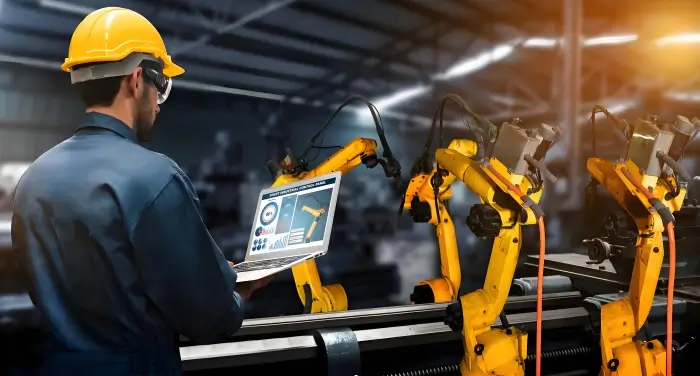
Discrete manufacturing (such as the automotive, electronics, mechanical equipment, and home appliance industries) has production characteristics somewhat different from those in the pharmaceutical and chemical industries. It focuses on multiple processes, diverse equipment, and automated production lines, and therefore, the focus of energy management is also different.
1. Energy Management Pain Points in the Discrete Manufacturing Industry
Various and Widely Distributed Equipment
Equipment types are numerous (CNC machine tools, welding robots, stamping machines, spray painting lines, assembly lines, etc.).
Energy media (electricity, water, gas, compressed air, and industrial gases) are dispersed, making monitoring difficult.
Uneven production rhythms
Production batches vary widely, resulting in significant load fluctuations.
Some production lines experience idle power consumption and idling.
High Cost Control Pressure
Energy accounts for 10% to 25% of production costs, with compressed air, spray painting, and welding processes consuming the most energy.
A lack of energy accounting for each workshop and production line makes it difficult to identify high-energy-consuming processes.
Insufficient Digitalization
Most companies still rely primarily on meter reading or empirical analysis, lacking real-time energy consumption data and visualization tools.
2. The Value of Energy Management Systems in the Discrete Manufacturing Industry
Energy Transparency and Refined Management
Establish an energy collection system for electricity, water, and gas, supporting tiered monitoring by workshop, production line, process, and equipment.
Provide a real-time energy usage dashboard to help workshop managers quickly understand energy efficiency.
Process-Level Energy Consumption Analysis
Correlate energy consumption with production data (output, working hours, and shifts) to implement energy quota management.
Identify high-energy-consuming processes (such as stamping, spraying, and welding) to provide a basis for energy-saving improvements.
Energy Optimization and Scheduling
Implement intelligent group control of air compressor fleets, cooling water pumps, and air conditioning systems to reduce standby energy consumption.
Energy usage forecasting and load analysis help avoid peak electricity prices and optimize electricity usage strategies.
Performance Evaluation and Benchmarking
Establish energy efficiency KPIs for different production lines and work teams, benchmarking against industry or historical data.
Support the integration of lean production and TPM (Total Productive Maintenance) to reduce overall energy consumption.
Green Factory and Carbon Management Support
Collect and calculate carbon emissions data to support carbon accounting and emission reduction targets.
Provide data support for companies applying for Green Factory and ISO50001 Energy Management System certification.