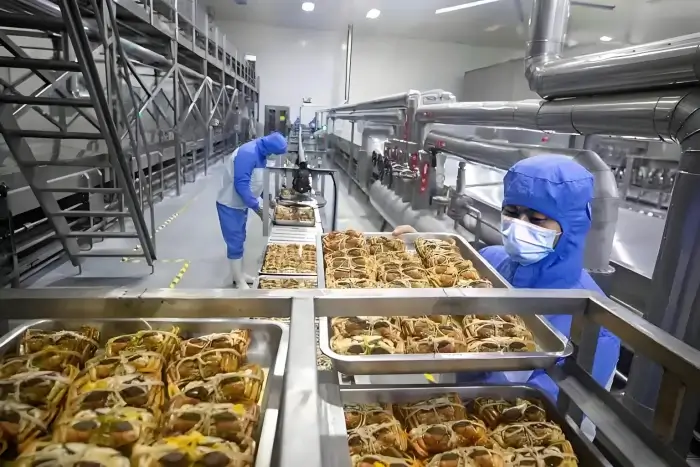
Energy consumption in the food industry is primarily concentrated in cold chain, steam, hot water, refrigeration, and ventilation. The industry also places extremely high demands on food safety, production continuity, and environmental compliance.
1. Pain Points in Energy Management in the Food Industry
Energy consumption is concentrated in refrigeration and heating
Large cold storage, quick-freezing equipment, cooling towers, boilers, and steam systems are the main energy consumers.
The coexistence of refrigeration and heating systems results in low energy efficiency.
High food safety and environmental requirements
Workshop temperature, humidity, and storage temperature must be strictly controlled, directly impacting food quality.
Abnormalities in the energy system can lead to food spoilage or production downtime.
Significant production fluctuations
Seasonal and batch-based production is characterized by significant fluctuations in energy load.
Traditional energy management methods struggle to cope with peak and off-peak loads.
Energy Consumption and Carbon Emission Pressures
Energy costs in the food industry account for 15% to 30% of production costs.
Green factories and carbon emission accounting are emerging trends, but data is fragmented and lacks traceability.
2. The Application Value of Energy Management Systems in the Food Industry
Energy Visualization and Refined Management
Establish a unified monitoring platform for multiple energy sources, including electricity, water, gas, steam, and refrigeration.
Supports energy consumption statistics for each workshop, process, and equipment, locating high-energy-consuming areas.
Ensuring Food Safety and Quality
Real-time monitoring of key temperature-controlled areas, such as cold storage, quick-freezers, and fermentation workshops, with automatic alarms for abnormalities.
Ensures that the temperature and humidity environment meets the requirements of food safety certifications such as HACCP and ISO 22000.
Energy Savings Optimization and Cost Control
Intelligent control of refrigeration fleets optimizes COP values and avoids overcooling or no-load operation.
Recover waste heat from boilers and steam to improve thermal energy utilization.
Off-peak and off-peak electricity pricing reduces energy costs.
Compliance and Traceability
Automatically generates energy consumption and carbon emission reports to meet government energy conservation and emission reduction assessments.
Data traceability supports audits and food safety inspections.
Green Factory and ESG Support
Provides basic data for carbon emission accounting. Support enterprises in applying for qualifications such as “green factory” and “low-carbon factory”.