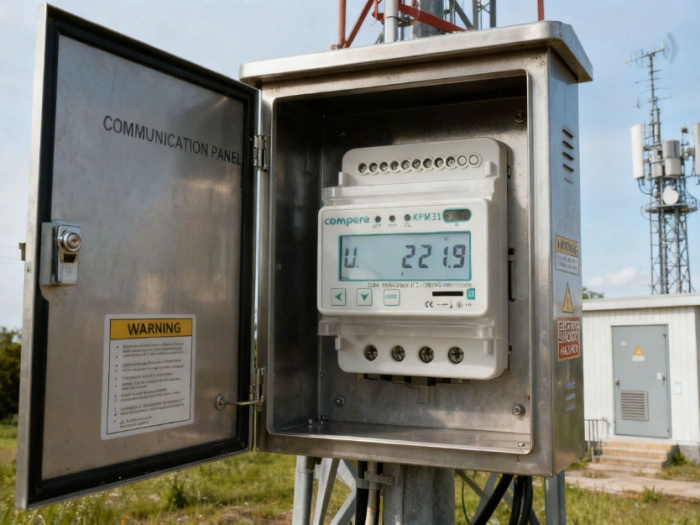
Mobile communication base stations, as the “nerve endings” of telecommunications networks, undertake core functions such as signal coverage and data transmission. However, their construction, operation and maintenance, energy consumption, and security present numerous pain points, directly impacting network stability, operating costs, and user experience.
Pain Points of Mobile Communication Base Stations
High Energy Consumption and High Cost Pressure: A Heavy Operational Burden
Base stations must operate 24/7/365. Core energy consumption comes from the main equipment (RRU/BBU), air conditioning, and power supply systems (switching power supplies and batteries). Energy costs account for 40%-60% of a base station’s total operating costs.
Difficult and Inefficient Operation and Maintenance: A Chronic Management Challenge
Base stations are distributed over a wide range of areas (covering urban, mountainous, rural, coastal, and desert environments). Some sites are located in remote locations and face harsh environments, resulting in high operation and maintenance costs and slow response times.
Unstable Network Quality: A Stumbling Block to User Experience
The core value of base stations is to ensure network coverage and communication quality. However, network quality is subject to fluctuations due to issues such as coverage blind spots, interference, and insufficient capacity.
Multiple Security Risks: Stable Operation Hidden Concerns
Base stations face multiple risks, including physical, electrical, and environmental safety. A safety incident can not only cause site outages but also potentially damage equipment and cause casualties.
Construction and Compliance Challenges: Roadblocks to Implementation
Base station construction requires the coordination of multiple resources and is hindered by difficult site selection and stringent compliance requirements, resulting in long construction cycles and high costs.
The pain points of mobile communication base stations span the entire lifecycle of construction, maintenance, operations, and security. The core conflicts lie between cost and efficiency, stability and user experience, and compliance and implementation. These pain points have also driven technological upgrades (such as more energy-efficient 5G equipment and intelligent operations and maintenance systems) and management optimization (such as base station sharing and new energy collaboration), becoming core issues that the telecommunications industry continues to address.
The Core Application Value of Smart Meters in Mobile Telecom Base Stations
Smart meters are the core hardware for achieving “visualized, refined, and intelligent” energy management in mobile telecom base stations. By accurately collecting and transmitting power data in real time, they address the pain points of traditional base station energy consumption management, such as data lag, ambiguous accounting, and difficulty in fault early warning. They provide the underlying support for cost reduction, efficiency improvement, and green operations.
- Replacing manual meter reading: Reduce costs, improve efficiency, and eliminate data lag.
- Alerts on abnormal energy consumption: Prevent equipment failures and safety risks.
- Supporting new energy synergy: Improve the utilization efficiency of photovoltaic/energy storage.
- Energy consumption analysis and energy-saving optimization: Identify energy savings opportunities and reduce operating costs.