
In energy management systems or automation retrofit projects, the choice of the physical form of the meter is often more perplexing than its functional parameters. DIN rail smart meters and panel smart meters each have their advantages and disadvantages. Choosing the wrong one can not only increase installation costs but also lead to insufficient space in the distribution cabinet.
This article will break down the core differences between the two from four dimensions: space, interaction, installation, and application scenarios.
Space Layout: Which is the King of “Space Utilization”?
This is the core pain point for most retrofit projects.
DIN Rail Meters: Installed using standard 35mm rails, their design logic is similar to a circuit breaker. Their biggest advantage lies in “compression,” allowing multiple circuits to be installed horizontally side-by-side within the limited width of the distribution box. For scenarios requiring metering of dozens of branch circuits, it is the only efficient choice.
Panel Meters: Each meter requires a separate opening in the cabinet door. If there are too many circuits, the cabinet door will be completely filled with screens, and overly dense openings will affect the structural strength of the cabinet door.
Interactive Experience: Is the data for “machines” or “people”?
Panel meters: Emphasizing “intuitiveness.” Maintenance personnel can directly read current, voltage, and power factor on the external screen during inspections without opening the cabinet door. This is crucial for locations with extremely high safety requirements and where frequent opening of the cabinet door is strictly prohibited (such as high-voltage distribution rooms and medical power distribution rooms).
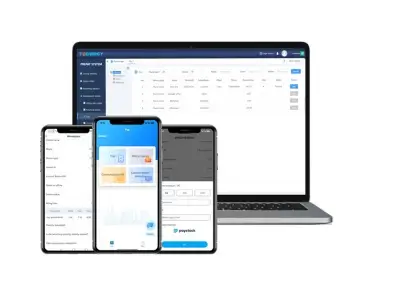
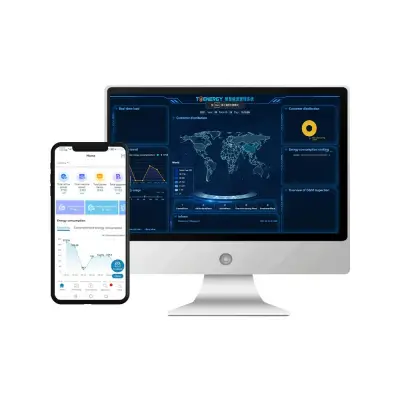
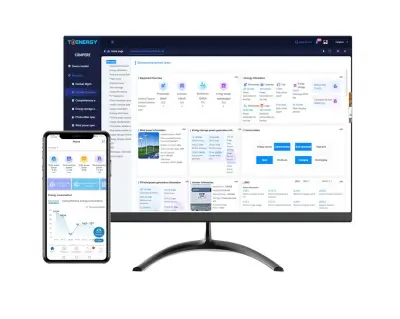
Din Rail meters: Emphasizing “digitalization.” Their screens are usually smaller, and some models even lack a screen. Their mission is to upload data to the cloud or local backend via a communication interface. They are more suitable for modern intelligent projects, where managers can view all data from the control room via computer or mobile app.
Installation and Maintenance: A trade-off between stability and convenience
Installation Logic: Panel-mounted meters are installed on the cabinet door, and wiring needs to pass through the wire groove at the cabinet door hinge. Frequent opening and closing of the cabinet door may cause fatigue, loosening, or even breakage of the secondary wiring harness. Rail-mounted meters are fixed to the cabinet frame, ensuring secure wiring and conforming to standard industrial automation wiring logic.
Maintenance and Replacement: Rail-mounted meters, due to their standardized snap-fit design, allow for extremely fast replacement; panel-mounted meters require disassembling the fixing bolts and handling complex cabinet wiring, resulting in relatively longer maintenance times.
Decision Guidelines: Choose Based on Your Scenario
If you face the following situations, prioritize rail-mounted meters:
Old Project Renovation: Space is limited, and uninterrupted installation with split-core current transformers (CTs) is required.
Multi-Circuit Monitoring: Such as smart apartments or office buildings with separate billing for each unit, requiring more than four meters to be installed in the same distribution box.
Wireless Networking Needs: Rail-mounted meters are easier to integrate with wireless gateways or 4G/LoRa modules for compact deployment.
If you face the following situations, prioritize panel-mounted meters:
High-Level Distribution Cabinets: Incoming or important outgoing cabinets requiring real-time display of power parameters for manual inspection.
Frequent Human-Machine Interaction: On-site operators need to frequently check complex power quality parameters such as harmonics and waveforms.
High-End Display Needs: Panel-mounted meters enhance the visual appeal of distribution cabinets, making them appear more professional and integrated.
💡 Compere’s Expert Summary
Regardless of the form factor you choose, Compere provides high-precision (supporting up to Class 0.5S) and full-protocol (Modbus, WiFi, 4G) metering solutions.
Scenario Recommendations: For energy efficiency management on the factory side, we recommend using DIN rail meters to save space; while for critical nodes in central substations, panel-mounted network analysis instruments are a more reliable choice.