In the landscape of the modern energy internet, smart energy meters are no longer simply electricity billing tools, but have evolved into the most fundamental and sensitive terminal sensing nodes in the power system. They not only record data, but also, through efficient communication technology, enable real-time “dialogue” between the power grid and users.
Core Role: From Data Silo to Information Hub
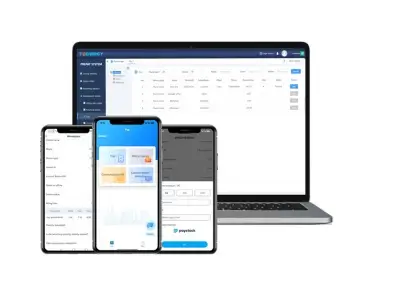
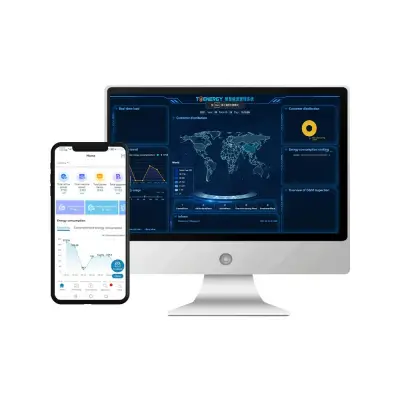
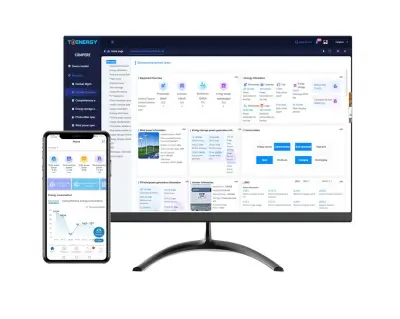
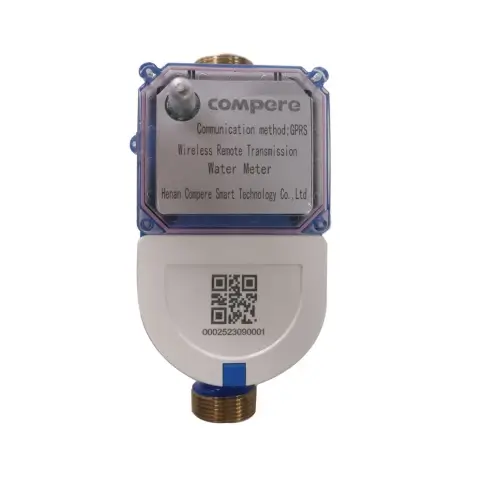
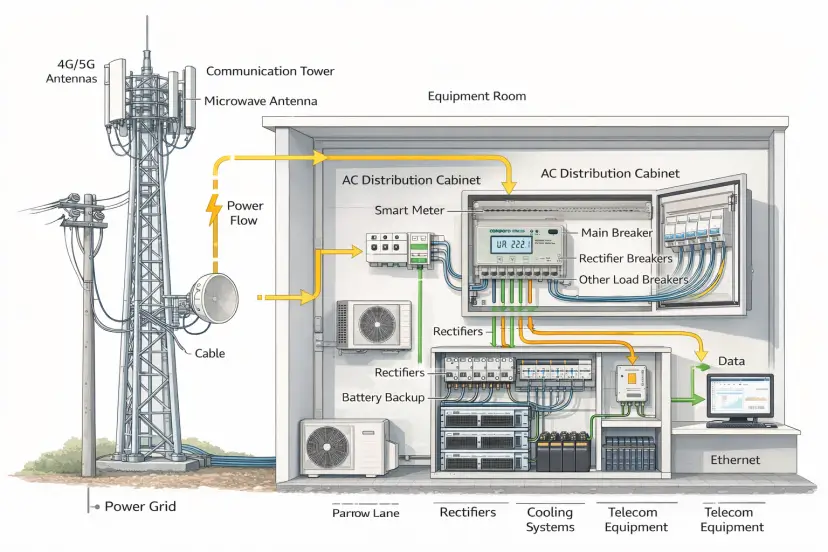
Traditional mechanical meters are like one-way bookkeepers, while smart energy meters are intelligent terminals with two-way communication capabilities. Through their built-in communication modules, they transmit massive amounts of information such as electricity load, voltage fluctuations, and abnormal alarms back to the power grid management center in real time, while also receiving control commands from the power grid (such as tiered pricing adjustments or remote power outages).
Mainstream Communication Technologies and Their Application Scenarios
The communication network of smart energy meters is generally divided into two layers: local communication (meter to collector/gateway) and remote communication (collector to master server):
1.Power Line Carrier Communication (PLC):
This is the most common application method. It utilizes existing power lines to transmit signals, requiring no additional wiring. In urban residential communities, PLC technology allows electricity meters to transmit data via power lines, significantly reducing construction costs.
2.Wireless Sensor Networks (WiFi/LoRa):
In complex power line environments or older communities, low-power wireless technology has become mainstream. It uses short-range radio frequency signals to form a “cellular” self-organizing network between meters, ensuring data transmission even if individual nodes are blocked.
3.Narrowband Internet of Things (NB-IoT) and 4G/5G:
With the upgrading of communication technologies, many industrial-grade or critical node smart meters are directly connected to operator networks. NB-IoT features wide coverage and low power consumption, making it ideal for remote areas or basements with weak signals; while 5G applications enable millisecond-level self-healing of power grid faults.

Core Changes Brought by Smart Meter Communication
Automatic Meter Reading and Accurate Billing: Completely eliminating the era of manual meter reading. The communication system ensures zero-error data transmission, reduces human error, and supports prepaid models, making electricity trading as convenient as topping up phone credit.
Electricity Load Monitoring and Demand-Side Response: Through high-frequency communication data, power companies can analyze residents’ electricity consumption habits. During peak electricity consumption periods, such as in summer when temperatures are high, the power grid can push energy-saving suggestions to users through communication interfaces, and even achieve intelligent scheduling of energy storage devices or charging piles to balance the grid load.
Fault Early Warning and Rapid Repair: Once a line experiences a circuit break, overvoltage, or electricity theft, the smart meter will instantly send out a “distress signal.” The communication system can accurately locate the fault location, and maintenance personnel can often depart before users notice the power outage, greatly improving power supply reliability.
Support for Distributed Energy Integration: At the user end with rooftop solar panels, smart meters need to measure the bidirectional electricity consumption of “self-generation and self-consumption, with surplus electricity fed into the grid” in real time. Complex communication protocols ensure that these scattered energy sources can be safely and smoothly integrated into the main grid.
Future Outlook: Smarter and More Connected
Future smart meters will deeply integrate edge computing capabilities. They will not only be communication terminals but also microprocessors, capable of directly processing some electricity consumption data locally, uploading only key summaries. This “cloud-edge collaboration” model will significantly reduce the pressure on communication bandwidth, further improving the power grid’s response speed.
Conclusion
Communication technology has given smart energy meters “life,” transforming cold electrical facilities into warm, intelligent stewards. With the further integration of 5G and AI, smart meters will become an indispensable cornerstone for building future smart cities.