【Current Situation and Pain Points】
A large textile manufacturing plant has long faced the challenge of inaccurately tracking its electricity consumption. Due to a lack of systematic monitoring methods, the plant’s total electricity load data is vague, and energy consumption patterns cannot be traced. The entire energy management relies entirely on manual, periodic meter readings and experience-based estimations, leading to significant energy waste and management blind spots.
【Management Blind Spots and Hidden Dangers】
The lack of a digital view of actual energy consumption prevents the plant from optimizing its electricity efficiency, resulting in persistently high electricity costs. Furthermore, the inability to grasp peak and off-peak electricity patterns or detect abnormal power surges hinders the maintenance team’s ability to conduct preventative maintenance and provides scientific data support for production scheduling.
【Transformation Challenges】
The core challenge of the project lies in upgrading the energy monitoring system without disrupting the plant’s existing continuous production lines. While the plant’s basic electrical infrastructure is complete, it is all traditional architecture and lacks digital interfaces. The goal of the digital transformation is to achieve real-time visualization of load status and establish an immediate early warning mechanism for overload and abnormal power consumption.
【Solution】
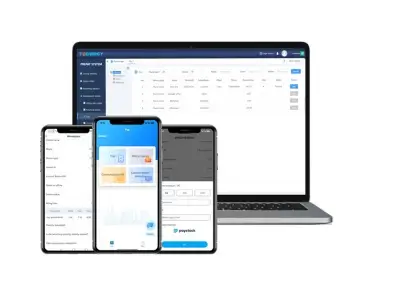
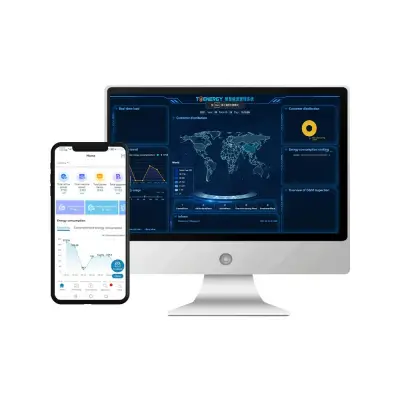
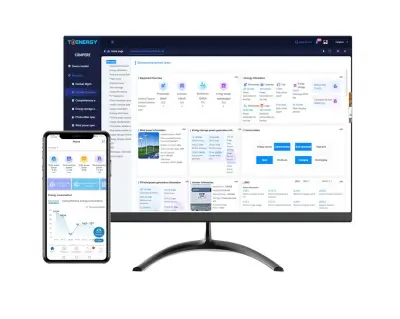
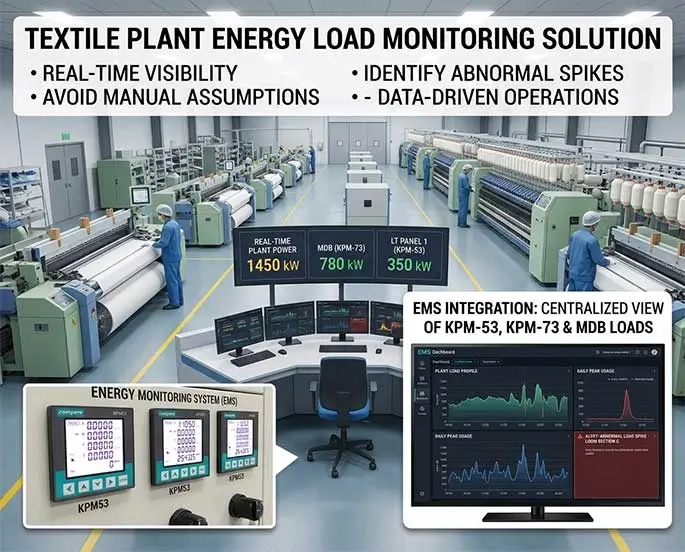
The technical team deployed a sophisticated real-time energy monitoring system at the low-voltage distribution panel (LT Panel) and main distribution board (MDB). By introducing KPM73 and KPM53 power meters and the EMS energy management system, real-time acquisition and cloud visualization of underlying data were achieved. The system integrates all load curves into a digital center, allowing managers to continuously track electricity consumption patterns and flexibly set alarm thresholds.
【Transformation Results】
After the transformation, the traditional, inefficient manual meter reading method was completely eliminated. Now, the factory can not only receive alarms for abnormal power fluctuations within seconds, but also proactively adjust equipment operation strategies through data dashboards, achieving refined cost reduction and efficiency improvement. The overall operational efficiency, equipment safety, and energy-saving awareness of the entire plant have all been significantly improved.