Case study of energy management system in the food industry – Inner Mongolia Zhengda Hongye Food Co., Ltd.
Compere uses advanced data processing and analysis technology to conduct comprehensive energy efficiency analysis and management, helping it achieve the goal of energy conservation and emission reduction.
1. Project Files
Project Name: Inner Mongolia Zhengda Food Energy Management System Project Case
Industry: Food Industry
Project procurement-related equipment: 1 set of energy management system, a batch of auxiliary materials
II. Project Introduction
Project Introduction:
Inner Mongolia Zhengda Food Co., Ltd. was registered and established in Saihan District, Hohhot City on November 10, 2010. It belongs to the manufacturing industry, and its main industry is manufacturing. Our company operates in the mode of production and processing, with 201-300 employees and a registered capital of 21.95 million US dollars. The office address of Inner Mongolia Zhengda Food Co., Ltd. is Shengle Economic Park, Helin County, Hohhot City.
3. Energy Management System Solutions
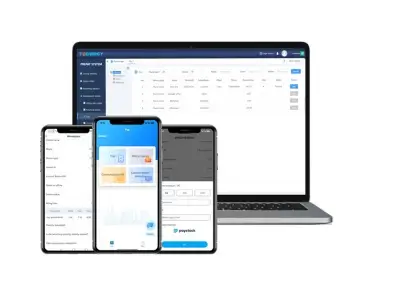
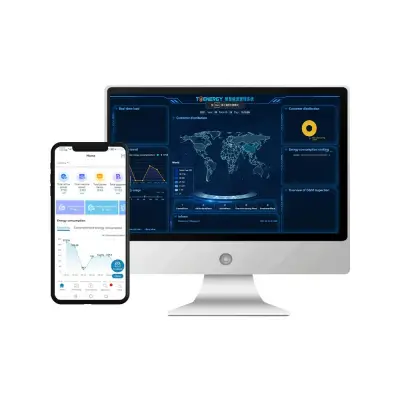
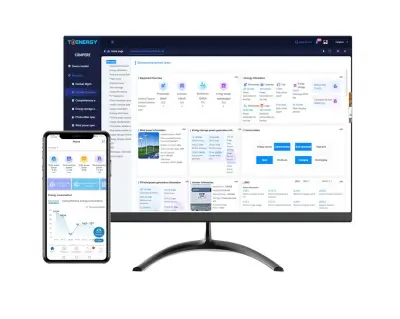
The energy management and dispatching center is established by using advanced automation and information technology to realize the automation, efficiency and scientific management of the whole process from energy data collection – process monitoring – energy medium consumption analysis – energy consumption management, etc. Thus, the whole process of energy management, energy production and use is organically combined, so that it can use advanced data processing and analysis technology to conduct comprehensive energy efficiency analysis and management.
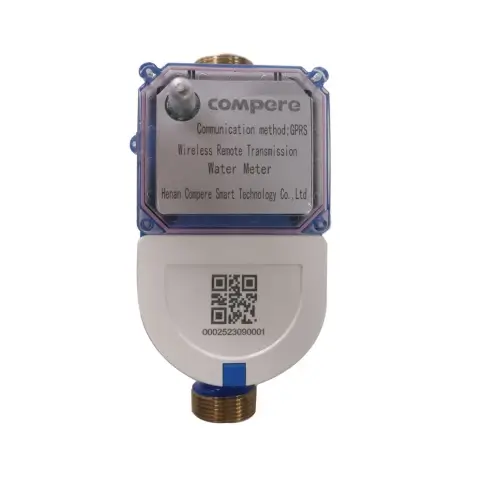
The smart energy management system consists of a supervision center, a backbone communication network, an on-site monitoring network, various smart metering devices, a network controller (used to connect third-party smart metering devices), etc. It is systematically designed from the perspectives of safe energy use, energy management automation, energy consumption monitoring and metering, energy efficiency improvement, energy quality monitoring, and smart device management. The specific ideas are as follows:
1. Fully combine the company’s current status and the characteristics of energy management to design a scientific, efficient, perfect, reasonable, fully functional and feasible energy management platform technology solution;
2. According to the energy consumption, an energy monitoring system integrating water, electricity, gas and heating can be finally realized;
3. Realize real-time online monitoring of energy usage in a real sense, provide energy managers with different management permissions, and query energy consumption anytime and anywhere;
4. Fully reflect the return on investment and the comprehensive benefits of management energy saving and technical energy saving;
5. Provide detailed basis for formulating energy policies to achieve scientific management and utilization of resources;
6. Use appropriate communication methods and network cable connections according to the locations of each distribution room, monitoring center, and detection points.

4. User Benefits
1. Short-term benefits
1) Energy saving management
Help enterprises to form a gradually efficient energy management system from extensive energy management. On the one hand, it will change energy consumption management from disorder to order, so as to fully grasp the flow and utilization efficiency of energy; on the other hand, it will reduce the workload of operation and maintenance personnel , reduce the error and leakage rate, and improve the operation and maintenance level.
2) Optimize production load
Based on the local power company’s “peak and valley” tiered electricity prices and the actual needs of market customers, we rationally allocate production personnel and production equipment investment, balance production capacity, and use relatively simple management methods to reduce production costs.
2. Medium-term benefits
1) Improve energy quality and reliability
The status of energy-consuming equipment is fully understood, and abnormalities and failures of equipment are understood immediately to reduce losses caused by abnormalities, and potential problems are predicted to improve the reliability of energy use and equipment reliability. Energy quality issues are monitored, especially power quality issues, and power quality is optimized in a timely manner through power quality management measures after problems are found.
2) Optimize energy-using assets
By recording and analyzing the load characteristics of energy-consuming equipment, potential capacity can be discovered; and energy consumption can be calculated to help choose a more economical energy payment method. For example, “capacity-based transformation” can be carried out. At the same time, the fixed asset structure of the enterprise can be optimized according to the market situation of the enterprise, and the excess equipment can be converted into cash.
3. Long-term benefits
1) Technical energy-saving transformation
Based on commercial big data, data model analysis is used to assist decision-making, helping to find space for energy-saving transformation of enterprises and optimizing process flow, and to conduct cost accounting and energy-saving effect assessment. With evidence and supervision, the production costs of enterprises can be reduced through equipment transformation or the use of new energy-saving technologies.
2) Energy efficiency assessment
Establish standard energy efficiency assessment norms, combine them with the energy assessment system, promote proactive energy conservation within the enterprise, and enhance the energy-saving awareness of all employees.