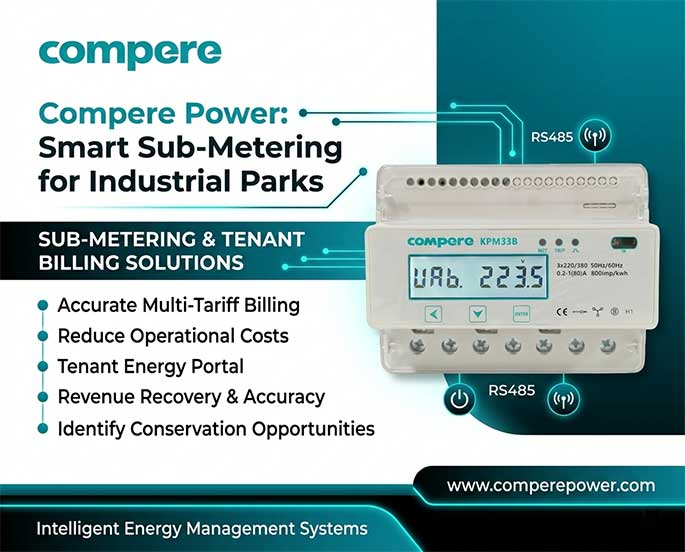
Under the current policy background of “dual carbon” targets and dual energy consumption control, industrial parks, as the core carriers of industrial agglomeration, are not only engines of economic development but also major consumers of energy and emitters of carbon. The traditional “one-size-fits-all” energy management model—where the park management committee or operator uniformly pays electricity, water, and gas fees and then amortizes them to tenants based on area or a fixed percentage—is facing significant challenges.
Promoting sub-metering and tenant billing is not only a powerful tool for solving the pain points of refined park management but also a key to motivating tenants to proactively conserve energy and reduce consumption, achieving a green and low-carbon transformation for the park.
Three Major Pain Points of Traditional Industrial Park Energy Management
Before achieving precise sub-metering, energy management in industrial parks generally suffers from the following problems:
Unfair distribution of benefits leads to conflicts: Tenants in different industries have vastly different energy consumption characteristics. For example, the energy consumption of a precision electronics manufacturing company or data center is on a completely different scale compared to a light-asset R&D design company. Allocating costs based on area leads to a situation where “those who use less receive more subsidies,” easily triggering conflicts between tenants and property management.
Severe Insufficient Motivation for Energy Saving: Under a system where “use more or less doesn’t matter,” tenants lack the economic incentive to shut down idle equipment, optimize production processes, or invest in energy-saving equipment. This results in persistent energy waste such as lights left on unnecessarily, water running continuously, and equipment idling.
Inaccessible Energy Efficiency Blind Spots: Park management only has master meter data and cannot see the energy flow within the park. Which areas, which tenants, and during which times are experiencing abnormal energy consumption? Without data support, collaborative energy saving is impossible.
Sub-tenant Billing: From “Fuzzy Allocation” to “Precise Metering”
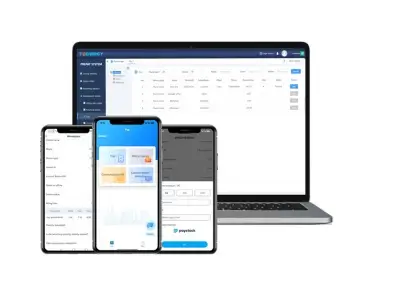
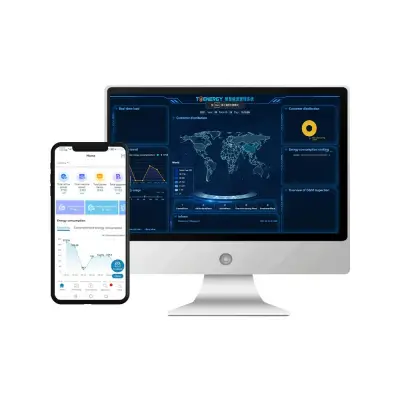
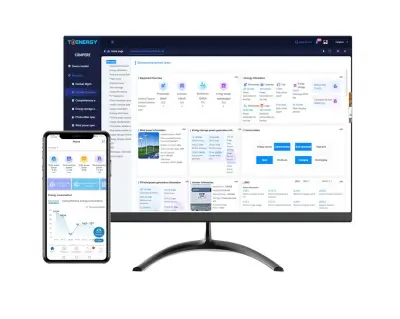
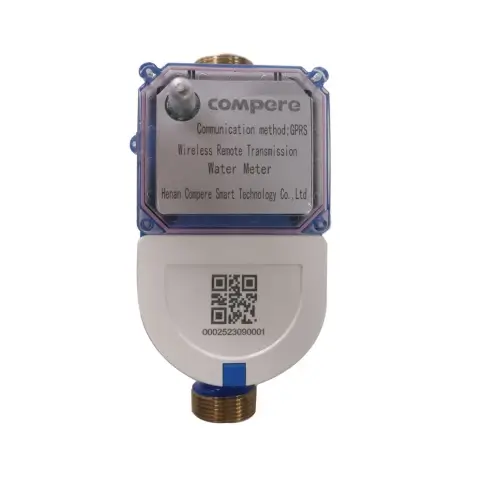
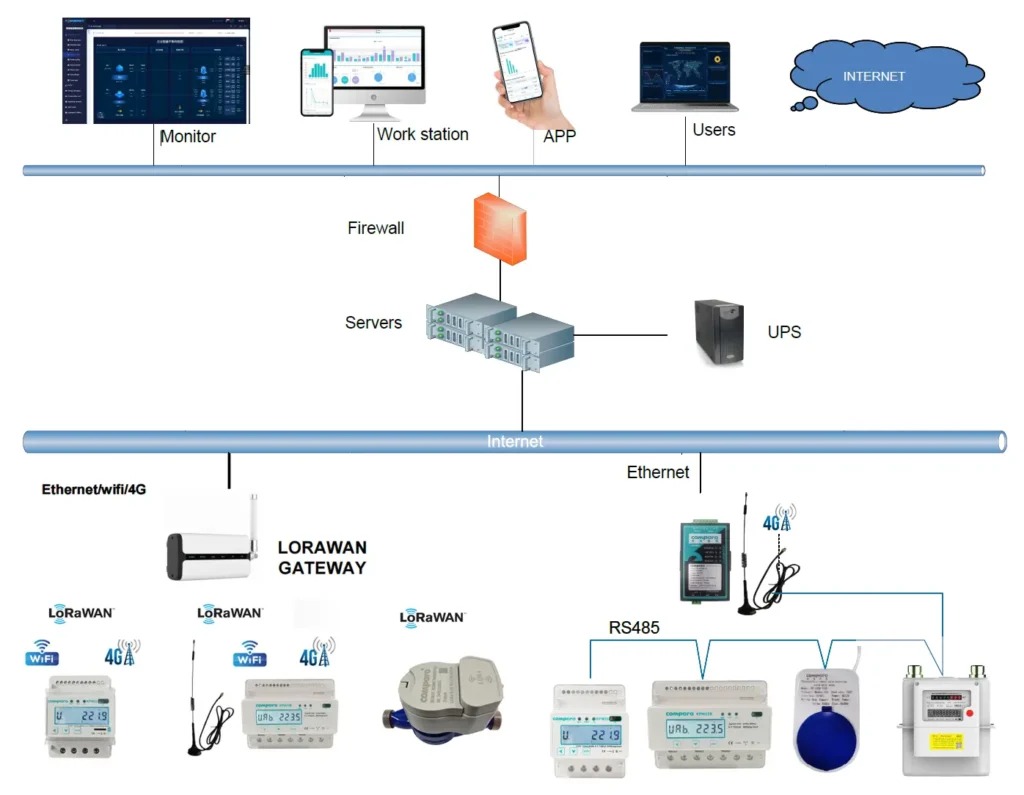
The core of sub-tenant billing lies in the application of digital Internet of Things (IoT) technology. By installing smart meters, smart water meters, and ultrasonic heat (cold) meters on the incoming lines, key production lines, or high-power equipment of each tenant, real-time energy data collection is achieved.
1. Technical Implementation Path
Data Acquisition Layer: Deploy industrial-grade smart energy meters with communication capabilities (e.g., Modbus, LoRa, WiFi, 4G).
Edge Transmission Layer: Aggregate scattered data through IoT gateways, convert protocols, and securely upload to the cloud.
Platform Application Layer: The Energy Management System (EMS) automatically matches tenant profiles and billing rates (e.g., peak-valley time-of-use pricing) to generate transparent energy bills.
2. Business Model Transformation: Topology Perspective
Through refined metering, the energy flow within the park forms a clear topology, laying the technological foundation for “pay-as-you-go, pay-more-use” pricing.
Energy Saving Through Billing: Energy-Saving Benefits from Tenant-Specific Management
Accurate billing is not merely about “collecting money”; its core value lies in driving overall energy efficiency improvements across the park through behavioral, managerial, and technological energy conservation.
1. Activating Tenant Behavioral Energy Conservation
When energy consumption is directly linked to economic benefits, tenant attitudes undergo a fundamental shift.
Peak-Valley Electricity Pricing Response: Industrial electricity prices are typically accompanied by significant peak-valley price differences. With individual metering, tenants proactively adjust their production schedules, scheduling energy-intensive processes during off-peak hours, reducing their own costs and alleviating the pressure on the park’s power grid during peak summer demand.
Eliminating Reactive Power Waste: Tenants strictly manage “equipment status after get off work,” reducing standby power consumption and idling rates.
2. Empowering Refined Park Management
For park operators, tenant data is a valuable asset for digital asset management:
Energy Consumption Anomaly Alarm: The system sets energy consumption baselines. If a tenant experiences a surge in energy consumption during non-production periods, the system automatically alerts, promptly detecting potential leaks such as water or gas leaks or equipment left running.
Carbon Emission Compliance and Collaboration: In the context of advancing carbon market development, individual metering data can be directly converted into carbon asset certificates for tenants, helping them meet supply chain green audit or ESG compliance requirements.
3. Driving Technological Upgrades and Energy Management Contracting (EMC)
Data can accurately expose “energy efficiency troughs.”
By comparing the energy consumption intensity of similar tenants (e.g., energy consumption per unit area, energy consumption per unit output), management can assist tenants with low energy efficiency in diagnosing problems.
Introducing a third-party integrated energy service provider to implement air compressor system upgrades, waste heat recovery, LED lighting upgrades, or distributed photovoltaic construction for high-energy-consuming tenants, using the energy management contracting model, allows the saved electricity costs to repay the upgrade investment, achieving a win-win situation for all three parties.
Implementation Recommendations for “Billing and Energy Saving” in Industrial Parks
To truly implement sub-tenant billing and energy saving, park operators can follow these steps:
| Stage | Core Task | Key Action Points |
|---|---|---|
| Step 1: Planning & Audit | Assess Current Status | Conduct park-wide energy audits, map out pipeline and grid networks, identify unmetered blind spots, and develop a comprehensive deployment plan for smart meters. |
| Step 2: Digital Transformation | Hardware Deployment & Networking | Install smart meters in phases; build a park energy management cloud platform that supports multi-tenant architecture. |
| Step 3: Mechanism Innovation | Develop Pricing Strategies | Pass through local peak-valley time-of-use electricity tariffs transparently to tenants; specify energy metering and settlement clauses in lease contracts to ensure compliance and transparency. |
| Step 4: Value-Added Services | Transition to “Energy Butler” | Regularly deliver energy efficiency analysis reports and energy-saving recommendations to tenants; partner with professional firms to provide green power procurement, energy storage optimization, and other value-added services. |
Conclusion
Energy management in industrial parks is shifting from the traditional “extensive property management” to a “refined energy service” model. Sub-tenant billing is the entry point for this transformation; it breaks down information silos and streamlines the profit mechanism with real and transparent data.
When every kilowatt-hour of electricity and every ton of water can be accurately traced back to the responsible party, energy conservation is no longer a one-sided concern of the park management committee, but becomes a spontaneous behavior of all resident enterprises. Through the deep integration of sub-tenant billing and energy conservation, industrial parks can not only effectively reduce overall operating costs, but also strengthen their core competitiveness in green and low-carbon development, and move towards a sustainable future.