Product Overview
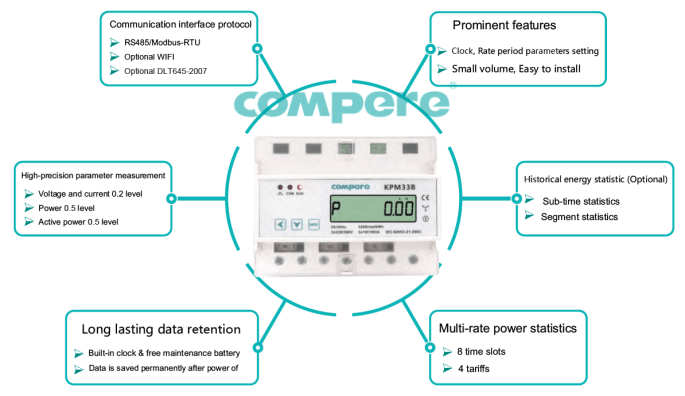
It is a three-phase smart energy meter designed for standard 35 mm DIN rail mounting. It offers the following key advantages:
Multi-parameter Measurement: Supports monitoring of all three-phase voltage, current, and other energy parameters.
Multi-rate Statistics and Historical Data: Supports up to eight time periods and four tariff settings per day, and provides historical energy consumption statistics.
Communication Interface: Equipped with an optocoupler-isolated RS-485 interface and supporting Modbus-RTU protocol, it facilitates integration with higher-level systems.
Output and Indication: Features a pulse output (passive optocoupler) for remote meter reading or integration with AMR systems.
Easy Installation: The DIN-rail mounting structure ensures an attractive appearance, easy installation, and simplified maintenance.
1. Detailed Zone-Based Measurement and Energy Consumption Statistics
Schools have diverse electricity usage scenarios, with significant variations in electricity demand and usage patterns across different areas. Accurate energy metering is essential for scientific management. The KPM33 three-phase din rail smart energy meter offers exceptional measurement accuracy, fully meeting the school’s need for refined electricity consumption statistics.
In the teaching building, the meter records the power consumption of lighting, projectors, air conditioners, and other equipment in each classroom in real time. For example, by precisely measuring each classroom’s active power (with an accuracy of ±0.5%) and usage duration, the school’s logistics department can clearly understand energy consumption distribution during different time periods (such as class and study periods), identifying wasteful activities such as “lights burning all the time” and “equipment running idle.” In laboratory settings, some precision instruments require extremely high voltage stability. Its high-precision voltage monitoring function provides real-time feedback on voltage fluctuations. If voltage fluctuations outside the normal range occur (e.g., exceeding 1.2 times the rated voltage of 220/380V), administrators are promptly alerted to troubleshoot circuit issues, preventing damage to expensive laboratory equipment and ensuring the smooth progress of teaching and research.

2. Multiple Rates and Peak-Shifting Management
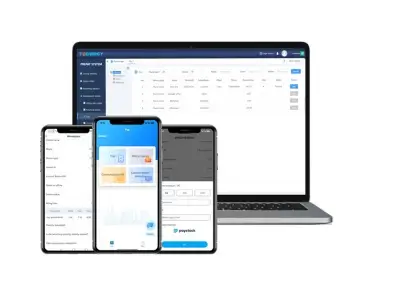
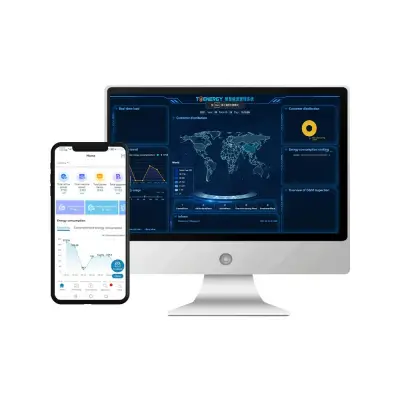
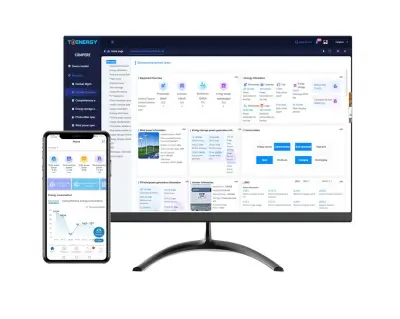
Traditionally, manual meter reading in schools is not only time-consuming and labor-intensive, but also prone to data errors and lags, preventing schools from keeping abreast of overall electricity usage. The KPM33 three phase din rail prepaid energy meter, with its diverse communication options, completely breaks down information silos, enabling real-time transmission and remote management of electricity usage data. Equipped with a standard RS485/Modbus-RTU communication interface, the meter seamlessly integrates with the school’s energy management platform, uploading real-time electricity usage data for each area (teaching buildings, dormitories, cafeterias, and laboratories) to the platform. Administrators no longer need to read meters on-site; they can simply log in from their office via a computer or mobile phone to view real-time electricity usage data, historical energy consumption curves, and monthly electricity statistics for the entire school, a specific building, or even a single room. Furthermore, the meter offers optional wireless communication options such as Wi-Fi and 4G. This eliminates the need to lay additional communication lines in areas of the school where wiring is difficult, such as older teaching buildings and makeshift labs, significantly reducing the complexity and cost of school renovations.
The remote reading and control function allows schools to quickly respond to abnormal power usage. For example, if unusually high power consumption occurs in dormitories after lights are turned off at night (e.g., due to the use of illegal high-power appliances), the energy management platform can monitor this in real time using meter data and automatically issue an alert, prompting dormitory staff to promptly investigate and eliminate potential power safety hazards. The platform also analyzes historical power usage data and generates energy consumption trend reports, helping schools identify high-energy-consuming areas and equipment, providing data support for energy-saving retrofit plans. Flexible management and control adapt to diverse power needs of schools. Power needs and management models vary significantly across different areas of a school. The KPM33 three-phase DIN-rail smart energy meter, with its flexible configuration, can adapt to diverse power usage scenarios and provide schools with personalized power management solutions.
For teaching buildings and laboratories, the meter’s optional relay remote control feature enables granular power management. For example, during non-teaching periods (such as weekends, winter and summer vacations), administrators can remotely shut down lighting and air conditioning in common areas of the teaching building, leaving only essential laboratory equipment powered, reducing unnecessary energy waste. They can then remotely power on relevant equipment half an hour before class to ensure the smooth flow of teaching activities. Furthermore, the meter supports tariff periods, allowing schools to set electricity rates for different periods based on the grid’s peak and off-peak pricing policies (e.g., higher prices during peak hours than off-peak hours). This allows teachers and students to use high-energy-consuming equipment (such as large laboratory instruments) during off-peak hours, thereby reducing overall electricity costs.

3. Electricity Prepayment and Data Statistics
The meter’s prepaid function plays a crucial role in managing electricity usage in student dormitories. The school can top up each dormitory’s electricity meter through the energy management platform. Students’ electricity usage is deducted from their pre-deposited balance in real time. When the balance is low, the platform automatically sends payment reminders. If a student fails to pay on time, the meter automatically cuts off power according to settings (although basic lighting power remains available to meet basic living needs). This effectively avoids the overdue billing issues associated with traditional post-payment models and fosters students’ awareness of energy conservation.
This energy meter stores 12 months of monthly energy consumption data, along with meter operating hours and load time statistics. This data not only provides a basis for energy audits and energy conservation assessments, but also helps track anomalies in electricity usage. For example, if a teaching building experiences a sudden and significant increase in energy consumption in a particular month, administrators can analyze the causes of the increase (such as equipment failure or increased usage) by querying the monthly electricity usage data and load time statistics, and implement targeted solutions.
Summary
The KPM33 three-phase DIN rail-mounted smart energy meter is an accurate, reliable, and easy-to-integrate measurement device ideal for zoned energy consumption statistics and management in school environments. It enables peak-shifting, multi-rate control, and seamless integration with EMS/BMS systems. It monitors load and safety status in real time, ensuring campus safety, reducing maintenance costs, and improving management efficiency. Campus-wide deployment enables schools to not only effectively monitor energy consumption but also make data-driven energy-saving decisions, providing strong support for green campus development.