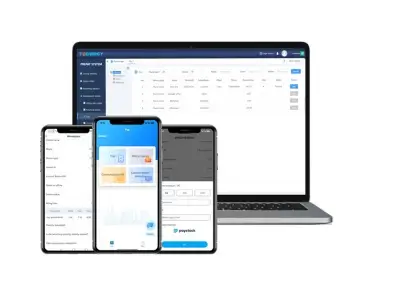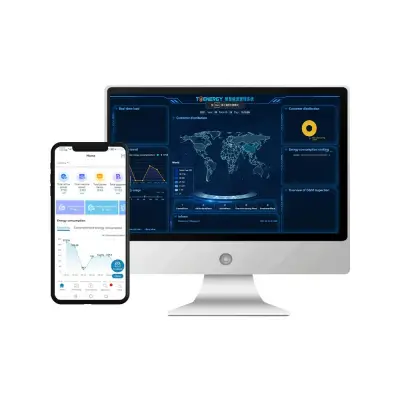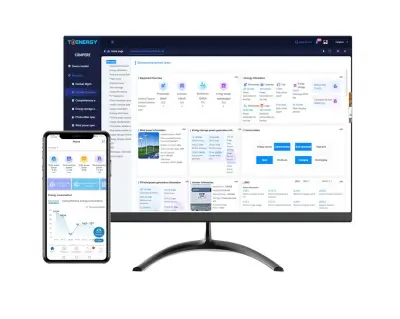

With the global energy crisis, rising energy consumption, and the proliferation of new energy technologies, renewable energy generation is becoming increasingly widespread, gradually forming a new energy and electricity market. However, renewable energy generally has a low energy density, and high-power generation requires the selection of suitable locations and sites, resulting in intermittent power sources. The emergence of microgrid technology, including the microgrid energy management and control platform, provides an important technical direction for the efficient utilization of these renewable energy sources.
Business Pain Points and Needs
Power Shortage: Enterprise electricity demand continues to rise
Electricity Price Rise: Enterprises’ Need for Cost Reduction Continues to Increasing
Power Reform: Diversifying Profit Models for Enterprise Microgrids
Market Space: Broad Growth Potential and Accelerating Demand
Definition of a Microgrid Energy Management and Control Platform
Microgrid Energy Management System: A small-scale power generation and distribution system consisting of distributed power sources, energy storage devices, energy conversion devices, associated loads, and monitoring and protection devices. It is an autonomous system capable of self-control, protection, and management.
Microgrid Energy Management and Control Platform Categories
Grid-Connected: Can operate both connected to an external grid and independently off-grid, with grid-connected operation being the primary approach.
Off-grid: Not connected to the external grid, this microgrid generates and uses electricity for its own consumption, creating a power-balanced microgrid.
Microgrid – Photovoltaic
Microgrid – Wind Power
The wind turbine converts wind energy into AC power. The AC output from the wind turbine has unstable amplitude and frequency, which is rectified by a controller into DC power and then fed to an inverter. The inverter then converts the AC power into stable amplitude and frequency. After being measured by a meter, the DC power is directly fed into an inverter to convert it into three-phase AC power at 380V, 50Hz.
Microgrid – Energy Storage
The electrochemical energy storage system primarily consists of a battery pack, a power storage converter (PCS), a battery management system (BMS), an energy management system (EMS), and other electrical equipment.
The battery pack is the primary component of the energy storage system.
The battery management system is responsible for battery monitoring, evaluation, protection, and balancing.
The energy storage converter controls the charging and discharging of the battery pack, performing AC/DC conversion. The energy management system is responsible for data collection, network monitoring, and energy scheduling.
Application Scenarios of the Microgrid Energy Management Platform: Isolated islands and remote areas: Solve power supply issues in remote areas. Weak grids: Improve power supply reliability, ensure power supply to critical loads, and prevent grid failures. High-demand industrial parks: Enhance the distribution network’s ability to absorb renewable energy and increase its utilization. Reduce energy costs, improve energy stability, and ensure grid quality.