I. Project File
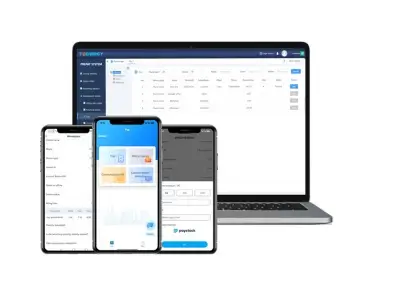
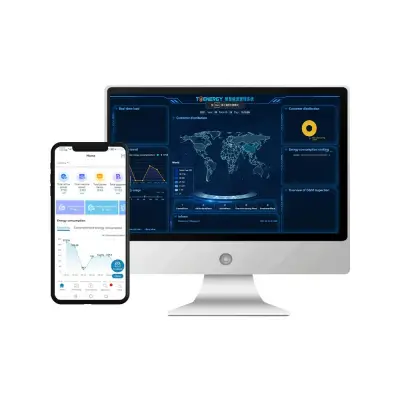
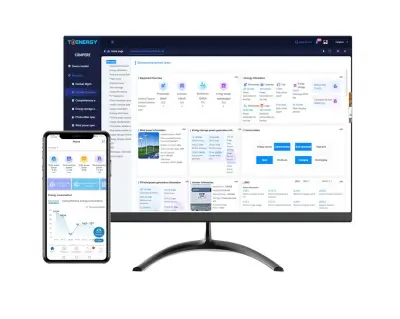
Project Name: Zhuzhou Cemented Carbide Group Nonferrous Metals Industry Energy Management System Project Case
Industry: Nonferrous Metals Industry
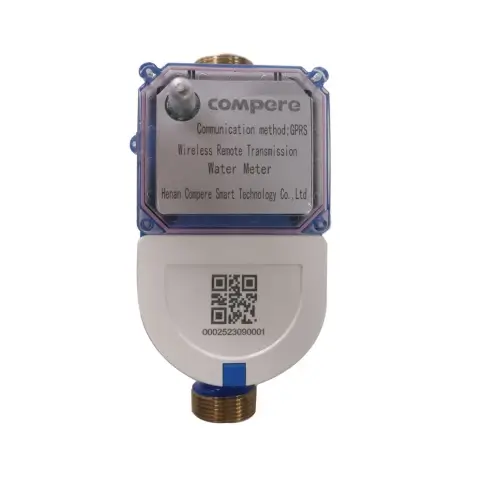
Related Equipment Procured: 1 set of nonferrous metals industry energy management system, 1 batch of auxiliary materials
II. Project Overview
1. Project Introduction:
The company’s main energy consumption categories are electricity, natural gas, and very small amounts of gasoline and diesel.
2. Current Energy Management Status:
The company’s production and living electricity is supplied by the hydrogen power workshop of its subordinate Production Support Department. The main process is as follows: 110kV power is stepped down to 6kV by two main transformers, then concentrated in a 6kV high-voltage room, and transmitted through 6kV high-voltage distribution cabinets and high-voltage cables to the distribution transformers of various production units and former main and auxiliary separated and restructured units (including the current Kaide Hospital, Zhuzhou Diamond Cemented Carbide Equipment Co., Ltd., living quarters, etc.). After secondary step-down to 400V by each distribution transformer, it is supplied to the company’s various production units and restructured units.
III. Energy Management System Solution
Enterprises transmit energy consumption data (water, electricity, gas, etc.) to online energy monitoring devices via wired or wireless networks. These devices aggregate, verify, filter, and package the collected data before uploading it to the provincial system platform using HTTPS. The energy monitoring devices must use a CA digital certificate, as required by the national center, for authentication before connecting to the national and provincial (regional) nodes.
Product Technical Parameters:
(1) Supports data acquisition from field instruments: Collects real-time energy consumption data from field instruments via Modbus (GB/T19582), DL/T645, and CJ/T188 protocols, and aggregates and generates reported energy consumption data.
(2) Supports data acquisition from data acquisition units: Collects real-time energy consumption data from data acquisition units via standard communication protocols such as Modbus TCP (GB/T19582), MQTT, and HTTPS, and aggregates and generates reported energy consumption data.
(3) Supports data acquisition from automation information systems: Collects real-time energy consumption data from the automation information systems of key energy-consuming units via the OPC (OLE for Process Control) protocol, and aggregates and generates reported energy consumption data.
(4) Supports manual data entry: For data where online data acquisition is not possible, a manual data entry and upload mode should be provided.

IV. User Benefits
1. Short-Term Benefits
(1) Energy Management
Helping enterprises transition from extensive energy management to a more efficient energy management system. On the one hand, it transforms energy consumption management from disordered to orderly, thereby comprehensively grasping the flow and utilization efficiency of energy; on the other hand, it reduces the workload of maintenance personnel, lowers error and leakage rates, and improves maintenance levels.
(2) Optimizing Production Load
Based on the local power company’s “peak and valley” tiered electricity pricing, combined with the actual needs of market customers, it rationally allocates production personnel and equipment inputs, balances production capacity, and uses relatively simple management methods to reduce production costs.
2. Long-Term Benefits
(1) Technological Energy-Saving Retrofits
Based on commercial big data, it conducts data model analysis to assist decision-making, helping to discover areas for energy-saving retrofits, optimize process flows, and conduct cost accounting and energy-saving effect assessments. Under the premise of evidence and supervision, it reduces enterprise production costs through equipment retrofits or the use of new energy-saving technologies.
(2) Energy Efficiency Assessment
It establishes standardized energy efficiency assessment norms, combined with an energy assessment system, to promote proactive energy conservation within the enterprise and enhance the energy-saving awareness of all personnel.