In industrial automation, power monitoring, and building control systems, do you often hear the term “panel power meter”? It may seem insignificant, but it’s the “nerve ending” that ensures stable system operation and data visualization. Whether you’re an engineer, purchasing agent, or an enthusiast, choosing the right panel power meter is crucial. This article will take you deep into the world of panel power meters, from basic concepts to advanced applications, helping you make the most informed choice.
1. What is a Panel Power Meter? What is The Core Function?
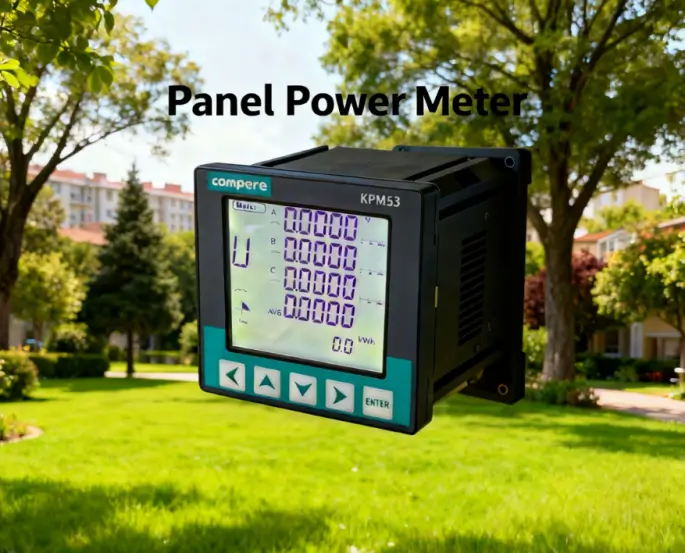
A panel power meter, as the name suggests, is an instrument installed on a device panel or control cabinet. It is mainly used to measure, display, and monitor various electrical parameters (such as voltage, current, frequency, and power) or physical quantities (such as temperature, pressure, and speed).
Core Functions
Real-time Monitoring: Provides instant readings of key system parameters, allowing operators to understand the situation at a glance.
Fault Diagnosis: Quickly locates system problems through abnormal data display, shortening repair time.
Process Control: Provides feedback signals for automated systems and is an important component of closed-loop control.
Data Logging: Some advanced panel power meters have data logging and communication functions, providing a basis for energy efficiency analysis and production optimization.
2. What Are The Main Types Of Panel Power Meters?
Understanding the different types of panel power meters is the first step in selecting the right one. Here are some common classifications:
By Display Method
Pointer Panel Power Meters: Traditional mechanical instruments that display values through pointer deflection. Advantages include strong anti-interference capabilities and low cost.
Digital Panel Power Meters: Use LCD or LED displays to directly display results in digital form. Advantages include accurate and intuitive readings and richer functionality. (Common search: Which brand of digital panel power meter is good?)
By Measurement Function
Voltage Meter/Ammeter: The most basic panel power meter, used to monitor line voltage and current.
Power Meter: Measures active power, reactive power, and apparent power. (Common search: How to wire a three-phase power meter)
Frequency Meter: Monitors the frequency of the power grid or generating equipment.
Multifunctional Power Meters: Integrating all the above functions, and capable of measuring power factor, electrical energy, etc., they are the first choice for modern intelligent power distribution systems. (Common search: Multifunctional power meter brand recommendations)
Non-electrical power panel meters: Such as temperature controllers, pressure displays, etc.
By Installation Size
Internationally accepted panel power meter cutout sizes include 96x96mm, 72x72mm, 48x48mm, 96x48mm (horizontal/vertical), etc. The cutout size must be confirmed when selecting a model. (Common search: 96×96 panel power meter cutout size)
3. Installation and Wiring Precautions for Panel Power Meters
Correct installation and wiring are essential for the stable operation of panel power meters.
Installation: Ensure the panel cutout is clean and free of burrs. Insert the meter into the cutout from the front of the panel, then secure it from the rear using the provided bracket.
Wiring:
Safety first! Operate with the power off.
Strictly follow the wiring diagram in the instruction manual, distinguishing between power terminals and signal terminals.
Use appropriate wire gauge and ensure secure crimping to avoid loose connections or short circuits.
For ammeters, ensure the secondary side of the current transformer is not open-circuited.
Debugging: After powering on, observe whether the instrument display is normal. Verify measurement accuracy by simulating a known signal.
4. Frequently Asked Questions
Q1: Why is the reading on my digital panel power meter unstable?
A: Possible causes include: unstable signal source, poor wiring contact, severe electromagnetic interference in the field, or a malfunction in the instrument itself. It is recommended to first check the signal source and wiring, and ensure the instrument is reliably grounded.
Q2: What is the typical price of a panel power meter?
A: Prices vary widely, from simple meters costing tens of yuan to multi-functional power meters costing thousands of yuan. The specific price depends on factors such as functionality, accuracy, brand, and communication interface.
Q3: Are panel power meters and digital display meters the same thing?
A: They are basically the same concept. Generally, “panel power meter” emphasizes its installation method, while “digital display meter” emphasizes its digital display feature. In most cases, the two types are interchangeable.
Conclusion
As the “eyes” of the industrial field, the importance of panel power meters is self-evident. This guide aims to provide you with a comprehensive and clear understanding of the types, functions, and selection of panel power meters. Choosing the right meter not only improves system reliability and intelligence but also brings convenience to your long-term operation and maintenance.