
In today’s building energy-saving renovations and commercial office upgrade projects, smart energy meters are no longer just simple billing tools. They are more like the “nerve endings” of the entire energy management system, responsible for collecting the most raw and critical data.
If you are in charge of a commercial office building renovation project, understanding the selection and application of this equipment is crucial.
Why Are Smart Energy Meters Indispensable for Office Building Renovations?
In traditional renovation projects, we often face pain points such as messy wiring, limited space, and difficulties in construction during power outages. Modern smart energy meters can tell you:
Who is using it? (Tenant-specific metering: air conditioning, lighting, power equipment, etc.)
When is it being used? (Time-of-use pricing, load curve analysis)
What is the power quality like? (Voltage fluctuations, harmonic analysis, protecting expensive office equipment)
Are there any potential hazards? (Overload alarm, leakage current monitoring, malicious load identification)
Core Hardware Selection: “Powerful Tools” for Different Scenarios
In office building renovations, we need to flexibly select the following key equipment types based on installation location and functional requirements:
1. Three-phase DIN rail Prepaid Electricity Meter
This is the “main force” for metering and billing office building tenants. It is usually installed in the tenant’s distribution box or the floor’s electrical room. Its core value lies in its integrated remote on/off switch function, supporting prepaid mode (payment via WeChat/Alipay). Once the balance is insufficient or there is an arrears, the system can automatically remind and cut off the power. When selecting a model, it is recommended to prioritize models that support RS485/NB-IoT dual communication to cope with complex environments with unstable signals.
2. Open-type multi-functional power meter
For key nodes such as the floor’s main incoming line, elevator rooms, or central air conditioning units, this type of meter is a “power outage-free renovation” tool. It comes equipped with a split-core current transformer (CT), allowing for real-time monitoring of current, voltage, and power factor without cutting existing main busbars or cables during installation. This significantly reduces construction downtime and is highly beneficial for office building tenants who cannot easily disconnect power.
3. Single Phase DIN Rail Energy Meter
For individual offices or common area socket circuits, a single-phase meter offers the best cost-performance ratio. Its compact size (typically only 1P width) allows it to easily fit into the otherwise cramped DIN rails of distribution boxes. In addition to basic metering, it can identify hazardous loads such as electric heaters and immersion heaters, improving fire safety in office areas.
4. Smart Data Acquisition Gateway
This acts as a data “transfer station,” typically located in the electrical shaft on each floor. The gateway is responsible for collecting data from all meters downstream and uploading it to the management cloud via wired network or 4G signal upstream. When selecting a gateway, ensure it has a “resume data transmission after network outage” function to ensure no data loss during network fluctuations.
Core Aspects of the Renovation Implementation
1. Uninterrupted Power Supply Solution
Office buildings typically house financial and technology companies, whose servers cannot be easily powered down.
Operational Technique: Using open-type current transformers (CTs), construction workers only need to insert an induction ring into the cable sheath. During the renovation process, tenants are virtually unaware, significantly reducing communication costs.
2. Digital Management of Revenue and Expenditure Lines
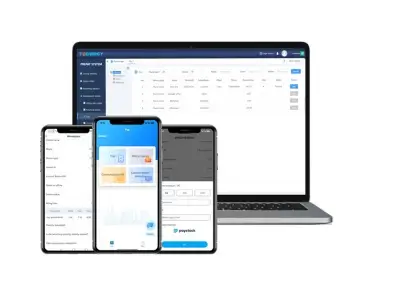
Tenant Side: Develop or integrate a WeChat mini-program, allowing tenants to view remaining power consumption, historical power usage curves, and recharge online at any time.
Property Management Side: The system automatically compares the “master meter” with the “sum of individual meters” to accurately calculate line loss. If the difference is abnormal (e.g., exceeding 5%), the system automatically issues a warning to prevent electricity theft or leakage.
3. Individual Metering of Air Conditioning Terminals
The most troublesome aspect of office building renovations is the allocation of central air conditioning costs.
Solution: In addition to metering the air conditioning unit’s electricity consumption, time-based metering (to track operating time) or energy meters can be installed at the tenant’s fan coil units. Combined with smart meter data, this truly achieves “whoever uses it pays, and pays for the duration.”
Communication Methods: Establishing a Data “Highway”
Data received by the meter must be transmitted back to the backend to be meaningful. Commonly used communication solutions in renovation projects include:
RS485 Bus: The most classic and stable, but requires additional communication cabling. Suitable for buildings with ample space in the electrical shaft and convenient wiring.
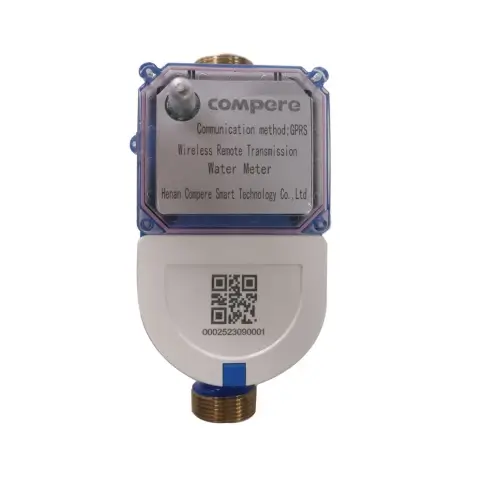
Wireless NB-IoT / LoRa: Specifically designed for renovation projects with difficult cabling. Data is directly uploaded to the cloud without large-scale structural changes, suitable for dispersed locations.
WiFi / 4G: Suitable for a small number of monitoring points or key monitoring devices requiring extremely high real-time feedback.
Why Choose a “Cloud” Management System?
Traditional local software requires dedicated server maintenance. For older office building renovations, a cloud platform (SaaS) is recommended:
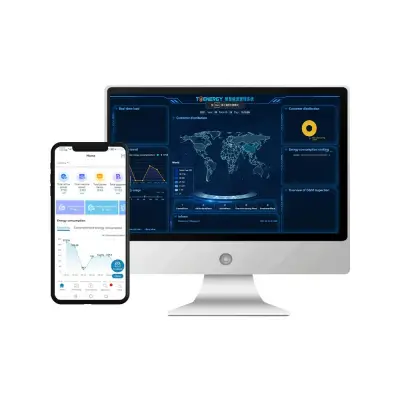
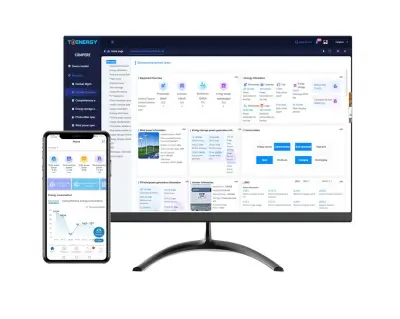
Zero Deployment Cost: Property management doesn’t need to purchase servers; management can be done directly through a browser or app.
Automatic Inspection: The system monitors current data 24/7. If a floor experiences abnormally high load at 1 AM, the system will send a notification to security guards’ phones, indicating a possible over-cooling of air conditioning/equipment, reducing energy waste.
Avoidance Guide (Real-World Experience Sharing)
Signal Penetration: Office building electrical shafts are typically reinforced concrete structures with strong shielding. If using wireless meters, always test the NB-IoT or LoRa signal on-site. If the signal is poor, use an RS485 bus to Ethernet adapter; don’t skimp on signal strength.
Load margin: Considering the increasing number of office appliances (such as coffee machines and high-power servers), it is recommended to select a slightly higher rated current for the meter during the renovation (such as 10(80)A) to prevent future overload damage.
Conclusion
Smart energy meters are not only the “eyes” of renovation projects, but also the “brain” for cost reduction and efficiency improvement. Through accurate metering and intelligent data analysis, office building properties can usually recover their hardware investment within 1-2 years through savings in electricity and labor costs.