In today’s manufacturing industry, where profit margins are razor-thin, many factory owners are struggling:
Materials are rising, labor costs are rising, but they dare not raise product prices.
Even though production lines aren’t operating at full capacity, why are electricity bills still alarmingly high?
The power company’s “reactive power compensation fines” are inexplicable; which piece of equipment is malfunctioning?
If you’re still relying on manual meter readings and month-end reconciliations, your factory is experiencing severe “energy bleeding.” Today, we’ll discuss how to use the golden combination of “smart meters + IEMS energy management systems” to precisely stop losses, like giving your factory a “CT scan.”
The Hidden Black Holes: The Unseen “Electricity Killers”
Most factories only understand electricity costs in terms of the total amount, ignoring three “vampires” lurking in the workshop: Ineffective Idle Operation: Air compressors left on after get off work and production lines powered on without scheduled shifts quietly consume hundreds of thousands of yuan annually.
Unhealthy Power Supply: Unstable voltage or excessive harmonics not only waste electricity but also shorten the lifespan of expensive and precision equipment.
Peak-Valuation Misalignment: Working during peak electricity prices and shutting down during lowest prices—this “reverse operation” unnecessarily doubles costs.
Joint Solution: Making Every Kilowatt-Hour Traceable
The combination of “smart meters + IEMS system” essentially transforms physical electricity flow into digital decision-making.
1. Sensing Layer: More Than Just Meters, They Are “Digital Sentinels”
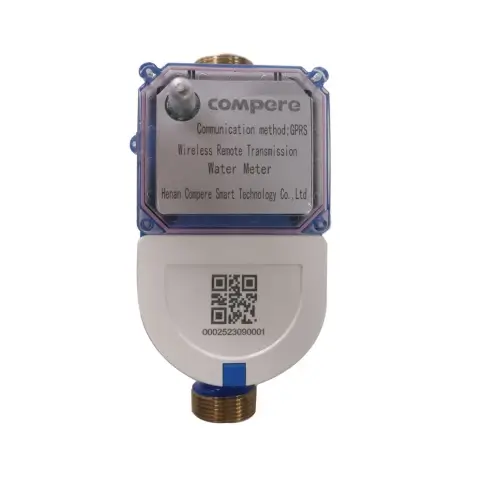
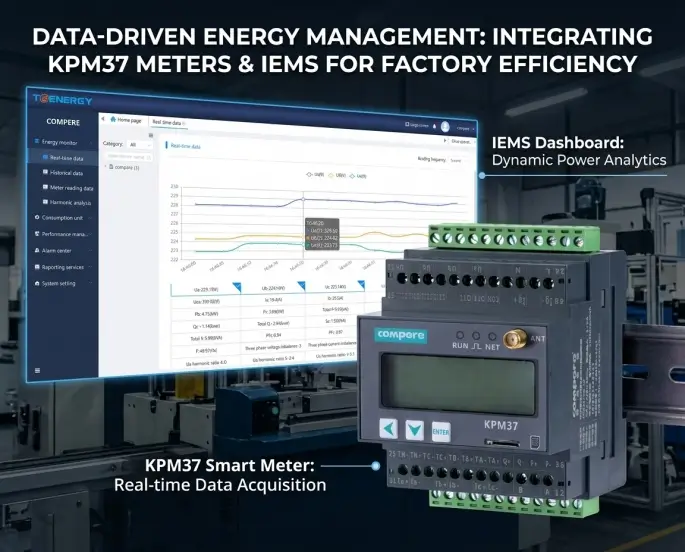
Our din rail smart energy meters support:
Millisecond-level capture: Comprehensive data collection including current, voltage, power factor, and harmonics.
Protocol interoperability: Rapid networking via RS485 or LoRa, enabling low-cost upgrades even for older factories.
2. The Brain Layer: The High-Dimensional Strike of the IEMS System
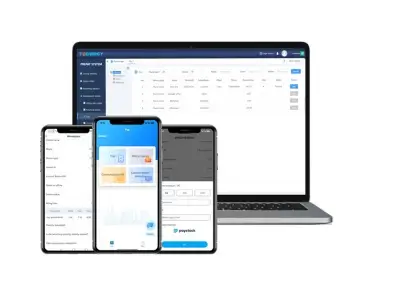
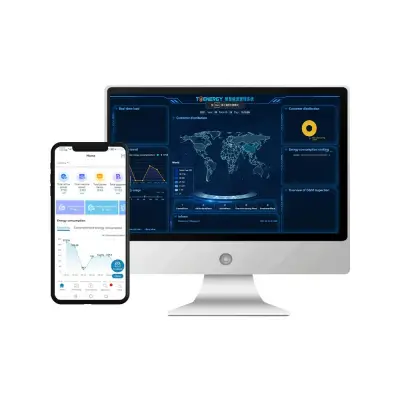
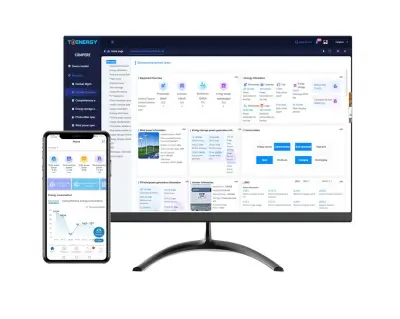
When massive amounts of data converge in the Industrial Energy Management System (IEMS), something amazing happens:
Energy Consumption Panorama: Like a navigation map, clicking on the workshop takes you directly to a specific injection molding machine or punch press, providing a clear view of real-time energy consumption.
Automatic Early Warning: Once the current exceeds the preset value or an overload warning appears, a mobile phone immediately receives an alarm, preventing fire hazards and machine shutdowns.
Cost Accounting by Person: The system automatically generates energy consumption rankings for work teams. Who operates more energy-efficiently? Who is the biggest wasteful? Data speaks for itself, performance evaluations are no longer arbitrary.
Case Study: The “Turnaround” of a Precision Mold Factory
Background: A mold factory in South China has monthly electricity costs of approximately 450,000 yuan. Manual meter reading has large errors, and peak-valley electricity usage is extremely unreasonable.
Renovation Solution:
120 smart rail meters were installed in the workshop, covering all secondary distribution cabinets and large energy-consuming equipment.
Deployed the IEMS cloud platform and integrated production scheduling data.
Results:
Discovered a black hole: The system detected that the central air conditioning was still running at 30% power on weekends when no one was using it. This single optimization saved 12,000 yuan per month.
Off-peak production: Based on system suggestions, some high-power testing was moved to off-peak electricity periods.
Final results: After 3 months of implementation, total electricity costs decreased by 18%. The invested hardware costs were fully recovered within 4 months.
Why Is Now The Best Time To Enter The Market?
Dual carbon policy pressure: Green factories and dual energy consumption control are now mandatory indicators, and digitalization is the only way to pass the test.
Technological dividends: The cost of smart hardware is now 40% lower than three years ago, and the system is more mature.
Lean management needs: In the future, cost savings will be the most direct competitive advantage.
Conclusion
Instead of complaining about high electricity bills, let’s make energy management transparent.
Factory management begins with measurement and succeeds with transparency.
If you also want to know how much money your factory can save, or want to experience the technological feel of “controlling the entire factory with one screen,” please click the contact information or form below. We will provide you with a customized “Factory Energy Efficiency Diagnostic Report.”
Expert Tip: When choosing a system, be sure to pay attention to its compatibility (such as whether it supports protocols like Modbus-RTU) to ensure seamless integration with different brands of hardware in the future.