Driven by the dual forces of digital transformation and the “dual-carbon” goal, the traditional electricity metering field is undergoing a profound transformation. Among these advancements, the IoT 4G energy meter, as a core device of the next generation of smart metering, is redefining the collection, management, and application of energy data with its high-speed, stable, and wide-coverage communication capabilities. It is not merely a simple metering tool, but a crucial data entry point and communication hub for building smart grids and realizing intelligent energy management.
Core Analysis of IoT 4G Energy Meters: More Than Just “Metering”
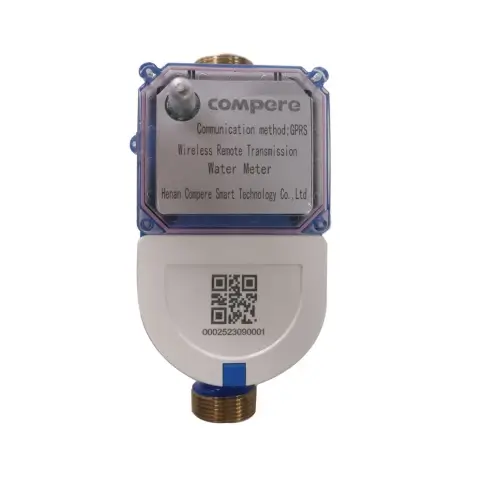
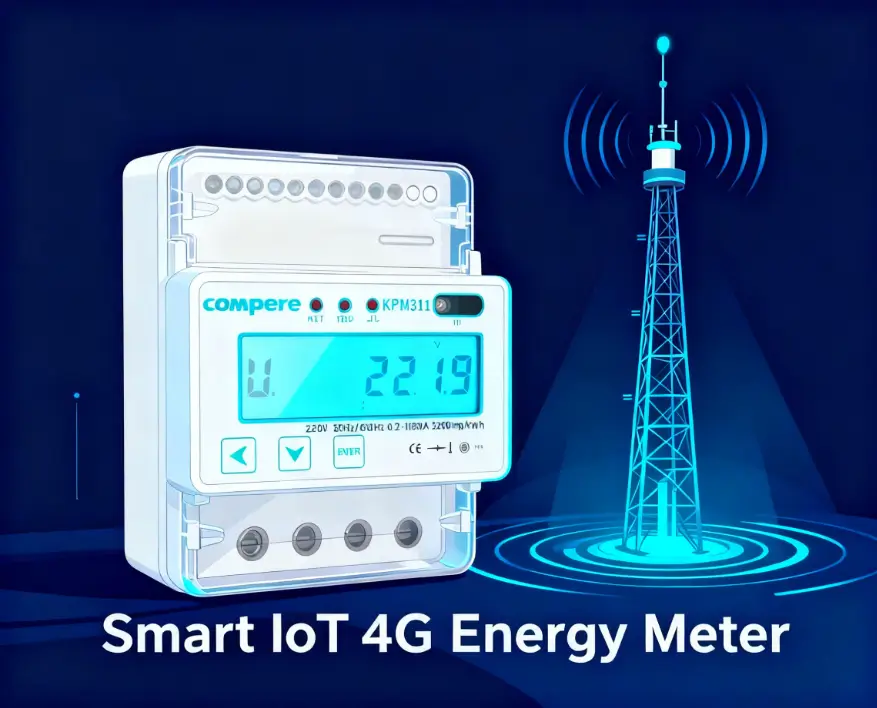
The IoT 4G energy meter is an advanced metering device that deeply integrates a 4G LTE wireless communication module into the traditional smart meter. Its core lies in utilizing the widely covered and technologically mature 4G public mobile network to achieve real-time, high-speed, and remote transmission of electricity data and various status information.
Essential Differences from Traditional Meters/Early IoT Meters:
- Communication Method Innovation: Completely replaces manual meter reading, RS-485 bus, carrier communication, or low-speed narrowband IoT (NB-IoT) methods, adopting a high-speed mobile broadband network.
- Enhanced Data Capabilities: Supports stable uploading of massive amounts of high-frequency data (such as second-level/minute-level electricity load, real-time voltage and current, and power quality data), meeting the needs of in-depth analysis.
- Enhanced Two-Way Interaction: In addition to data uploading, it can reliably and quickly receive and execute remote commands from the cloud platform, such as rate switching, remote power on/off, and firmware upgrades.
Core Technical Architecture and Working Principle
The working system of the IoT 4G energy meter is a typical “cloud-pipe-terminal” collaborative system:
Terminal Layer (Meter Body):
High-Precision Metering Module: Accurately measures forward/reverse active/reactive energy.
4G Communication Module: The core component, with a built-in SIM card, responsible for accessing the operator’s network.
Main Control Processor (MCU): Responsible for data processing, protocol encapsulation, and command execution.
Security Chip: Ensures encrypted data transmission and identity authentication, meeting the high security requirements of the power system.
Network Layer (“Pipe”):
Utilizes the high-quality 4G networks already built by China Mobile, China Unicom, and China Telecom to provide a reliable data pipeline. 4G networks are characterized by wide coverage, high bandwidth, low latency, and excellent mobility.
Platform Layer (“Cloud”):
IoT Connection Management Platform: Responsible for SIM card management, traffic monitoring, and network status diagnosis.
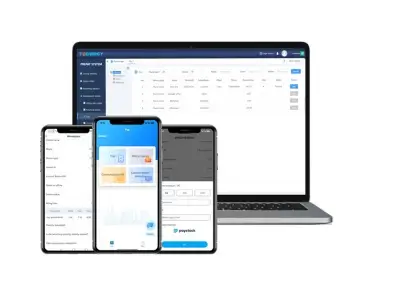
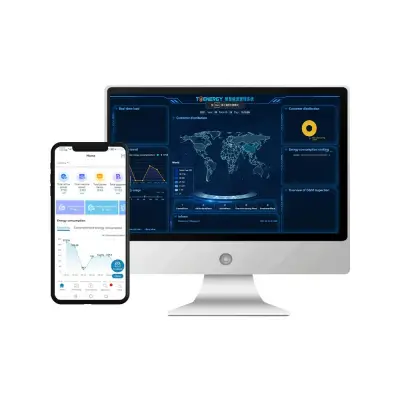
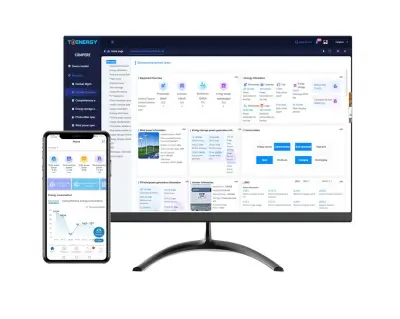
Electricity Information Collection/Energy Management Cloud Platform: Aggregates, parses, stores, analyzes, and visualizes massive amounts of meter data, and issues various control policies.
Workflow: Meters transmit metering data to base stations via 4G modules according to set cycles or triggered events. This data then travels through the operator’s network and the internet, and is finally encrypted and transmitted to the power company’s cloud platform. Platform commands are also transmitted back to the meters for execution.
Core Advantages: Why Choose 4G IoT Energy Meters?
- Extreme Deployment Flexibility and Coverage: No dedicated communication network is required. Relying on ubiquitous 4G signals, deployment can be rapid in urban high-rises, remote villages, and on mobile devices, significantly reducing construction costs and time.
- High-Speed and Reliable Transmission of Massive Data: Easily handles high-bandwidth demands such as high-frequency data collection and video surveillance, ensuring the implementation of advanced measurement systems and demand-side response applications.
- Superior Real-Time Performance and Interactive Experience: Low network latency supports near real-time monitoring and instantaneous remote control (such as remote fault diagnosis and emergency power outages), improving customer service response speed and electricity safety.
- Powerful System Integration and Expansion Capabilities: As a high-speed data gateway, it can simultaneously access data from temperature and humidity sensors, access control systems, and other devices within the meter box, enabling comprehensive smart IoT monitoring of the distribution area.
Core Application Scenarios of IoT 4G Energy Meters
- Smart Cities and Smart Grids: Supports distribution automation, precise line loss analysis, load forecasting, and friendly access and scheduling of distributed energy sources (photovoltaics, energy storage).
- Industrial and Commercial Energy Management: Enables refined energy consumption monitoring, demand management, and energy-saving optimization for branch circuits, workshops, and equipment of large industrial and commercial users.
- Electric Vehicle Charging Facilities: Provides stable and reliable billing and communication guarantees for ubiquitous public charging piles and battery swapping stations.
- Distributed Photovoltaic and Energy Storage Systems: Real-time monitoring of power generation/storage status, achieving precise metering and remote control for “self-consumption and surplus power to the grid.”
- Infrastructure and Special Scenarios: Suitable for infrastructure projects with complex communication conditions, such as mountainous areas, water conservancy, and transportation, as well as temporary power supply scenarios.
Challenges and Considerations for IoT 4G Energy Meters
- Power Consumption and Power Supply: 4G modules consume more power than NB-IoT, requiring optimization in circuit design and power management, especially for always-on scenarios.
- Long-Term Communication Costs: Involves continuous data traffic charges, requiring refined management through data compression, triggered reporting, and other strategies.
- Network Lifecycle: With the rollout of 5G, attention must be paid to operators’ long-term maintenance strategies for 4G networks.
- Security Protection: Access to the public network necessitates the use of VPN/APN private networks, high-strength encryption, security authentication, and other multi-layered protection to build an end-to-end security system.
Conclusion
IoT 4G energy meters are the preferred solution for achieving wide-area, high-speed, and reliable power IoT connectivity under current technological and economic conditions. By unleashing data potential, they provide a solid technological foundation for power companies to improve operational efficiency, for users to create energy-saving value, and for society to achieve low-carbon goals. They are an indispensable core component in building a safe, efficient, green, and intelligent modern energy system.