The “Energy Blind Spot” In Smart Factories
When your factory has deployed advanced smart equipment, achieving production automation and data collection, do you still feel a key piece of the puzzle is missing? Many managers find that while they can monitor equipment operating status, they know very little about the real-time energy consumption data of each piece of equipment. Electricity bills are just general figures, unable to pinpoint specific equipment, production lines, or batches.
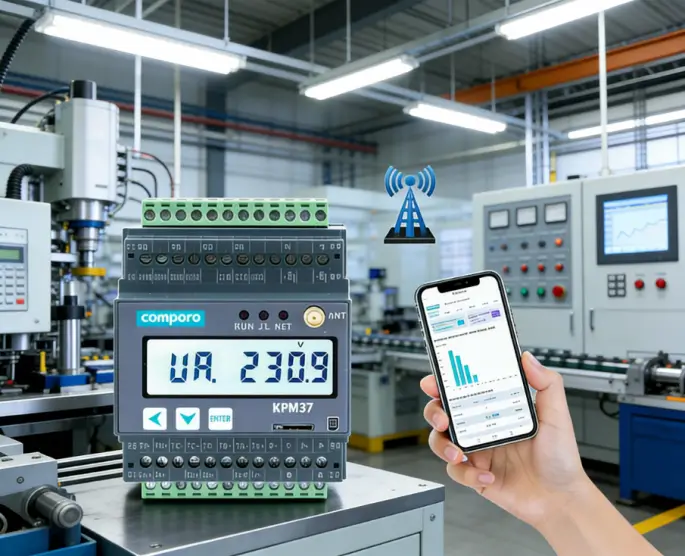
This is precisely the transformative power of WiFi energy meters for smart factories—they transform energy use from a “black box” to a “transparent glass box,” and equipment manufacturers are the best drivers of this transformation.
1. Why Do Smart Factories Need WiFi Enargy Meters?
(1). Limitations of Traditional Electricity Meters
Coarse Data Granularity: Can only measure electricity consumption for the entire factory or a large area.
Information Lag: Monthly billing, unable to guide production decisions in real time.
No Equipment Association: Cannot associate electricity consumption data with specific equipment or orders.
(2). Four Advantages of WiFi Smart Electricity Meters
Install and Use Immediately: No complex wiring required, utilizes existing Wi-Fi networks.
Real-time Monitoring: Collects data every second, instantly identifying problems.
Precise Metering: Accurate down to each piece of equipment and each production line.
Intelligent Analysis: Automatically generates electricity consumption reports and identifies abnormal patterns.
2. The New Role of Equipment Manufacturers: From “Selling Equipment” to “Providing Energy Efficiency Solutions”
As a smart factory equipment manufacturer, you understand the operating characteristics of your equipment better than anyone else. With Wi-Fi electricity meters, you can:
(1). Provide Value-Added Services to Customers
Energy Efficiency Baseline Assessment: Establish standard energy consumption models for new equipment.
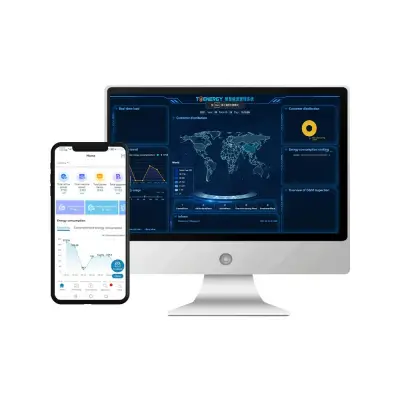
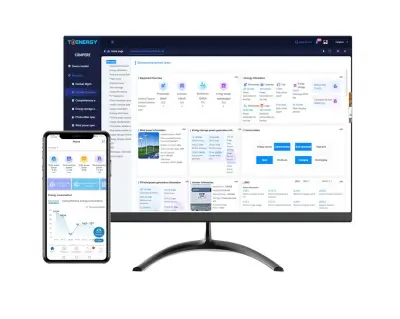
Real-time Energy Efficiency Dashboard: Allows customers to view equipment energy efficiency performance at any time.
Maintenance Early Warning: Predicts potential equipment failures through abnormal electricity consumption.
(2). Enhancing Product Competitiveness
“Equipment + Energy Efficiency Management” Package Solution: Creating a Differentiated Competitive Advantage
Data-Verified Energy Saving Commitment: Proving the Energy-Saving Effect of Equipment with Actual Data
Continuous Service Revenue: Building Long-Term Customer Relationships through Energy Management Services
3. Implementation Path: Building a Smart Electricity Management System in Three Steps
Step 1: Precise Deployment
Select key power-consuming equipment to install WiFi energy meters, focusing on:
Large equipment operating continuously
Production equipment with large fluctuations
Equipment accounting for a high proportion of the plant’s total electricity costs
Step 2: Data Integration
Integrate meter data with existing systems
Step 3: Integration with Enterprise MES/ERP Systems
Add an energy consumption view to the equipment monitoring interface
Establish equipment energy efficiency indicators (e.g., energy consumption per unit product)
Step 4: Intelligent Applications
Develop practical functions based on data analysis:
Energy Efficiency Benchmarking: Ranking energy efficiency of similar equipment to stimulate energy-saving awareness
Peak-Valley Optimization: Automatically suggesting off-peak production plans
Quota Management: Setting electricity budgets for each piece of equipment
Carbon Footprint Calculation: Automatically calculating carbon emissions
4. Success Story: Practice at an Automotive Parts Factory
Challenge: The factory could not determine which injection molding machine consumed the most electricity, resulting in electricity costs consistently exceeding the budget.
Solution:
The equipment manufacturer installed WiFi energy meters on 10 injection molding machines.
Integrated into the existing equipment monitoring platform.
Energy consumption metrics for individual products were established.
Results:
Two older machines were identified as having abnormal energy consumption; after repair, energy consumption was reduced by 18%.
Production scheduling was optimized, increasing off-peak electricity utilization by 25%.
Annual electricity cost savings exceeded 1.2 million RMB.
The customer renewed all new equipment of the same brand and requested the meter installation solution.
5. Technical Points: Selecting WiFi energy meters Suitable for Industrial Environments
For equipment manufacturers, we recommend products with the following characteristics:
- Industrial-grade design
- Wide operating temperature range (-20℃~70℃)
- Strong electromagnetic interference resistance
- IP65 or higher protection rating
- Data security
- Support for WPA2/WPA3 encryption
- Local data storage options
- Secure API interface
- Easy integration
- Provides open API interface
- Support for Modbus and OPC UA and other industrial protocols enable seamless integration with mainstream industrial platforms.
Conclusion: Seizing The Market Opportunity Of Visible Energy Efficiency
For smart factory equipment manufacturers, WiFi energy meters are not just a new complementary product, but a catalyst for service model upgrades. They transform you from a simple equipment supplier into a partner in improving customer energy efficiency.
Under the “dual carbon” goals, equipment manufacturers capable of providing accurate energy consumption data will have a significant competitive advantage in the market. This is not only a technological upgrade, but also an evolution of the business model—from selling products to providing quantifiable and visible value.