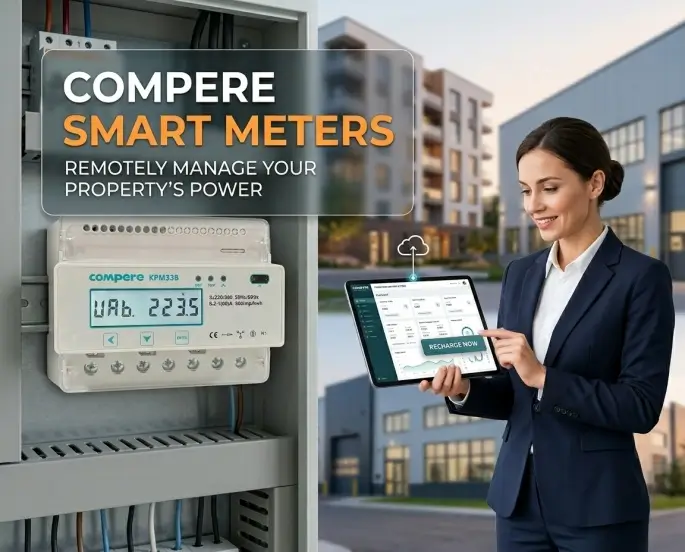
Are you still receiving complaints about tenants cutting off power in the middle of the night? Or are you annoyed by the errors in manual meter reading? Understanding the fundamental differences between prepaid electricity meter and smart meters is not only about choosing the right hardware, but also about upgrading your management model.
Smart/Traditional: This refers to the meter’s “technical level and functions.”
Below, we will delve into the differences and connections between the two.
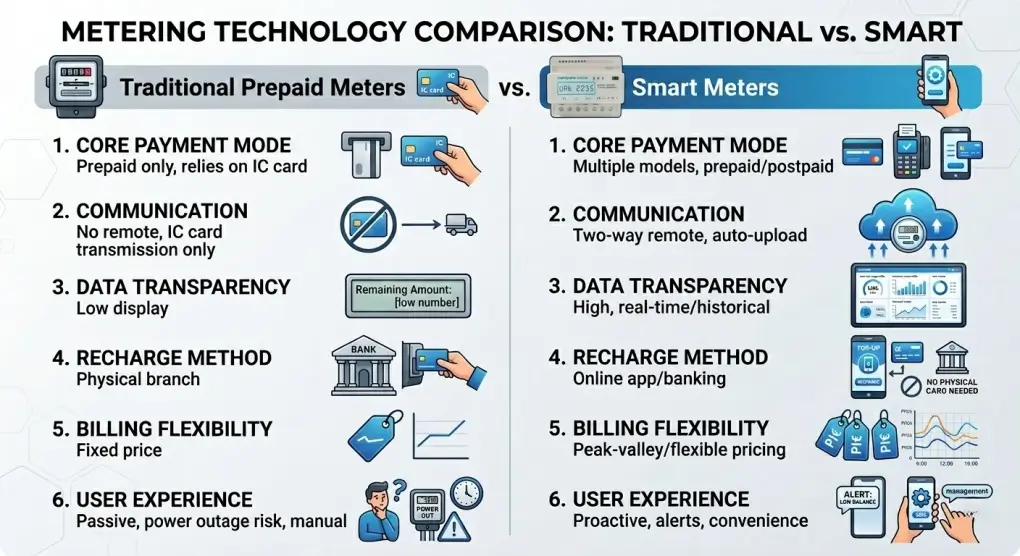
1. Traditional Prepaid Meters: Single-Function “Card-Based” Meters
The most common type of meter we used to see, requiring an IC card or swipe, is a typical traditional prepaid meter.
Core Function: Enables “buy electricity first, use electricity later.” Users need to recharge at a designated service point, writing the amount to an IC card. Upon returning home, they insert the card to input the electricity consumption into the meter.
Technical Characteristics:
Lack of Remote Communication Capability: Power companies cannot remotely read your electricity consumption data or remotely control power supply. They only know the total amount of electricity you purchased, not your specific usage habits.
Lack of Information Transparency: Users typically only see the remaining balance or electricity consumption on the meter screen, without knowing the specific hourly or daily consumption details.
Inconvenient Management: Power automatically cuts off when the balance is depleted, requiring users to always have a spare card. Recharging late at night or in emergencies is extremely inconvenient.
Conclusion: While this type of “card-operated meter” implements a prepaid model, it lacks remote communication and advanced data management functions, falling under the category of traditional meters and not smart meters.
2. True Smart Meters: “Data Terminals” Integrating Communication Functions
Smart meters are the cornerstone of modern smart grids. They are advanced devices integrating accurate metering, real-time monitoring, and two-way communication.
Core Functions: Automatic remote meter reading, real-time data interaction, and support for refined electricity management.
Technical Features:
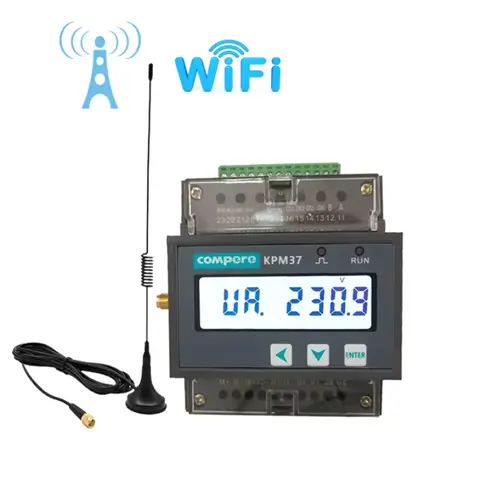
Remote Communication Module: Enables real-time communication with the power company’s data center via wireless networks (such as GPRS, LoRa, etc.), automatically reporting electricity consumption data and eliminating the need for manual meter reading.
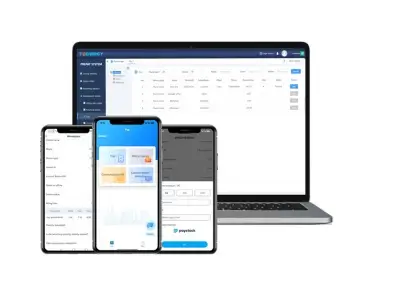
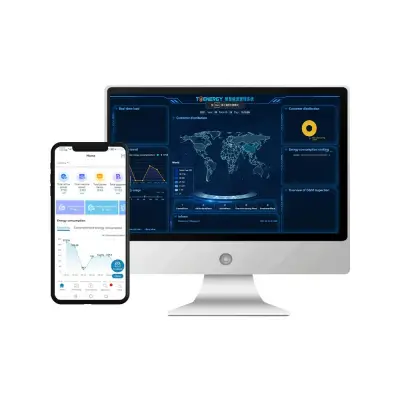
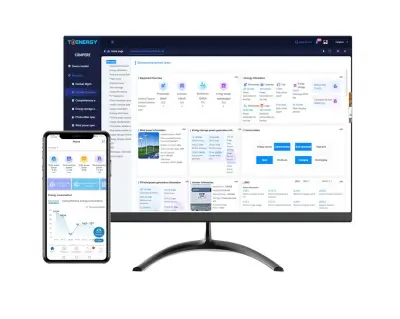
Data Transparency: Power companies and users (usually through mobile apps or online service halls) can view near real-time electricity consumption data, understand electricity load at different times, and help users identify high-energy-consuming appliances.
Supports Multiple Pricing Models: Easily supports complex billing methods such as peak-valley time-of-use pricing and tiered pricing, allowing users to save on electricity bills by adjusting their usage habits.
Rapid Fault Response: Proactively reports power outages and other fault information, accelerating the power company’s repair progress.
3. Key Differences: A Table to Understand the Differences
4. The Relationship Between the Two: How Does a Smart Meter Achieve “Prepaid”?
By now, you should understand that “smart” is a capability, while “prepaid” is a model. A smart meter can operate entirely in prepaid mode, offering a far superior experience compared to traditional card-operated meters.
When a smart meter operates in prepaid mode:
You can top up your electricity bill online through the power company’s mobile app, official website, or a third-party payment platform.
The top-up amount is remotely and automatically sent to the meter via its communication module.
You can check your real-time balance and electricity usage at any time on the app.
When the balance falls below a threshold, the system will proactively send you an SMS or app push notification to prevent sudden power outages.
This is analogous to this: a traditional card-operated meter is like an old-fashioned feature phone, only allowing you to insert a prepaid card for calls; while a prepaid smart meter is like a smartphone, allowing you to top up and check your plans online using WeChat, Alipay, and other apps—the experience is completely different.
Conclusion: Summary and Recommendations
If your home still uses a meter that requires you to insert a card to top up, then it is not a smart meter. If you upgrade to a smart meter, you can apply to your power company to choose between a “postpaid” or the more secure “smart prepaid” model, based on your preference.
Recommendation: If you are still using a traditional prepaid meter, considering upgrading to a smart meter will bring significant convenience. It not only eliminates the hassle of going out to recharge, but also helps you become a more informed electricity user through transparent data, achieving effective energy conservation and saving on household electricity bills.
Hopefully, this article has thoroughly answered your question, “Is a prepaid meter a smart meter?” If you have any other questions about electricity, please continue to follow our website and contact us. We are happy to assist you!