In large-scale industrial manufacturing, automated production lines, and high-voltage power distribution networks, accurate energy consumption data collection is a core foundation for reducing operating costs and achieving carbon neutrality. Unlike ordinary commercial or residential meters, industrial energy meters must possess industrial-grade resilience to harsh grid environments, extremely high metering accuracy, and interoperability with factory SCADA, BMS, and EMS systems.
For system integrators, EPC contractors, and energy managers, selecting the right industrial energy meter involves considerations that go beyond simply reading electricity consumption figures; it focuses on higher-level business needs. Below, we discuss how to choose the most suitable industrial energy meter.
Core Technical Specifications of Industrial Energy Meters
When planning an industrial-grade energy monitoring network, hardware compatibility and reliability are non-negotiable. The following are the standard technical benchmarks for industrial smart meters deployed in modern heavy industry, chemical industrial parks, and commercial complexes:
| Compere Smart Industrial Energy Meter – Technical Specifications | |
|---|---|
| Mounting Type | Standard 35mm DIN Rail (Industrial Grey Housing) |
| Communication | LoRa, 4G, WiFi, RS485 (Modbus-RTU) |
| Accuracy Class | Active Energy Class 0.5s(IEC Standard) |
| Integration | Modbus-RTU / MQTT Protocol for 3rd-party Platform |
| Key Features | Remote Reading & Control, Offline data storage function, Addition of Rogowski coil and 24V backup power supply |
Core Functional Requirements of Energy Meters in Modern Industrial Environments
The power grid environment in factory workshops is extremely complex, with numerous nonlinear loads. Therefore, a qualified industrial energy meter must possess powerful edge computing and power quality analysis capabilities.
1. Comprehensive Power Quality Analytics
Large industrial heavy machinery generates significant electromagnetic interference and harmonics during start-up and shutdown. Smart meters must be able to monitor total harmonic distortion (THD) and harmonics in real time to prevent harmonics from causing transformer overheating, damage to reactive power compensation capacitors, or production line malfunctions.
2. Multiple Rates and Time-of-Use Billing
In response to the “peak-valley-off-peak” electricity pricing policy for industrial electricity consumption, the hardware terminal must have a built-in highly accurate real-time clock (RTC) that supports flexible configuration of multiple time periods, rate tables, and tiered pricing to help enterprises accurately optimize electricity load for off-peak production.
3. SOE Event Logging and Early Warning Prevention
The equipment must also possess millisecond-level time-stamped logging capabilities for critical events such as voltage transients, current overloads, three-phase imbalances, phase loss, and reverse power supply. This allows for rapid alarm triggering when anomalies occur in the distribution network, preventing millions of dollars in sudden downtime losses.
IoT System Integration: Wired and Wireless Dual Topology Architecture
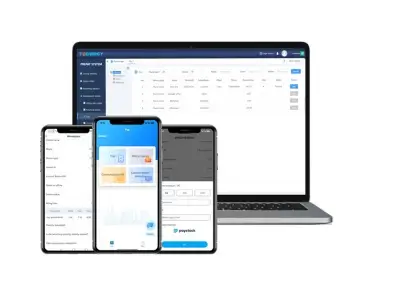
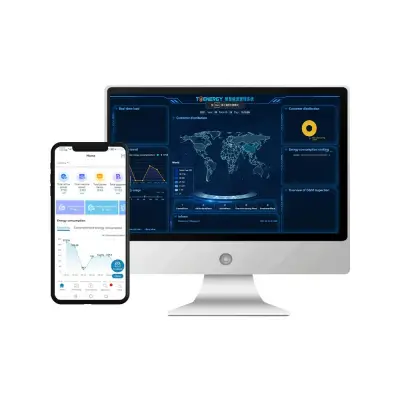
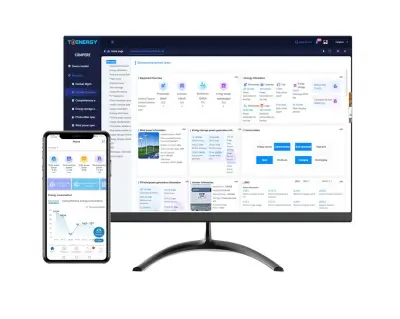
In the Industry 4.0 era, industrial energy meters are no longer isolated hardware but rather data extensions of the entire cloud platform and local servers. Typically, industrial energy consumption data collection and transmission follow two main architectures:
1. Traditional Wired Bus Architecture (RS485 to Modbus-RTU)
In centralized distribution cabinets or low-to-medium voltage distribution rooms, multiple industrial meters are connected in a daisy-chain configuration via shielded twisted-pair cables. High-speed, interference-resistant data streams are directly pushed to the local PLC, edge gateway, or central data acquisition system using the standard Modbus-RTU protocol.
2. Wireless IoT Topology
In the passive intelligent transformation of large industrial parks or old factories, rewiring is extremely costly. Wireless technology becomes the preferred choice:
LoRaWAN Energy Meters: Utilizing the superior penetration power of radio frequency technology, data can easily penetrate reinforced concrete walls and metal cabinets, achieving unimpeded data transmission over a range of several kilometers.
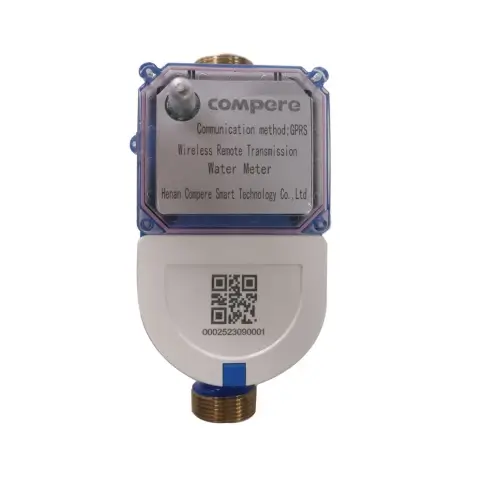
4G Smart Meters: For remote scenarios such as distributed factory assets, field pumping stations, or communication base stations that cannot be connected to the enterprise LAN, they provide point-to-point direct cloud access capabilities.
Why Do System Integrators and Engineers Choose Compere?
It is precisely because of these complex industrial application requirements that system integrators and engineers worldwide choose to collaborate with Compere Intelligent.
1. Industrial-Grade Electrical Isolation and High Protection
All Compere communication interfaces, power supplies, and voltage sampling inputs employ high-level opto-isolation and surge protection, ensuring continuous operation without interruption even in environments with strong electromagnetic interference.
2. Extremely Simple Software Interoperability
For easy integration, we provide a fully open and standardized Modbus register map, allowing seamless integration with any third-party standard SCADA, BMS, or EMS system, shortening on-site commissioning time by over 40%.
3. Flexible OEM/ODM Deep Customization
To meet diverse global bidding needs, we offer flexible deep customization services. From specific wireless communication frequency band customization to dedicated firmware control logic algorithms, we comprehensively help you achieve a high success rate in winning overseas project bids.
Conclusion and Technical Support: Launching Your Smart Energy Project
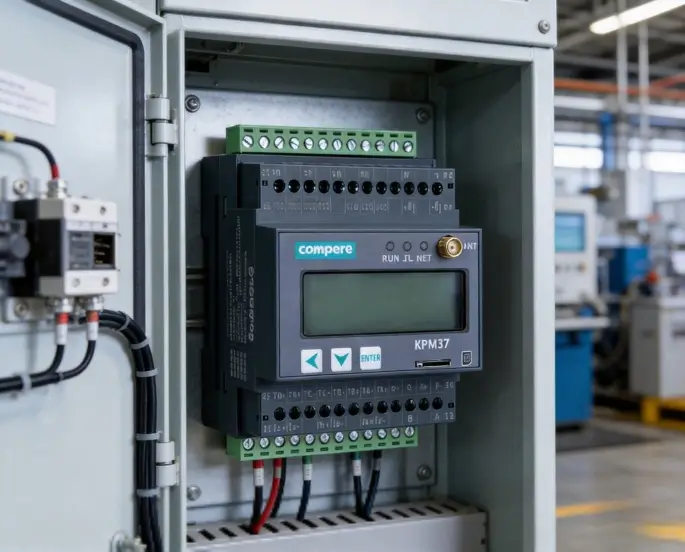
In summary, choosing an industrial energy meter with heavy-duty interoperability and high-precision data acquisition capabilities is crucial for ensuring the stable operation of modern factories and commercial power systems. Compere’s KPM37 three-phase rail-mounted smart energy meter, with its high accuracy (Class 0.5S), powerful 31st harmonic analysis, and perfect compatibility with multiple protocols including WiFi/4G/LoRa/Modbus, has become the go-to choice for many system integrators worldwide facing space-constrained distribution cabinets and extremely high energy consumption monitoring requirements.
Whether you are looking for hardware terminals that can be seamlessly integrated into your existing EMS software, or preparing technology selections for a large industrial park tender, Compere’s experienced technical team can provide you with comprehensive support.