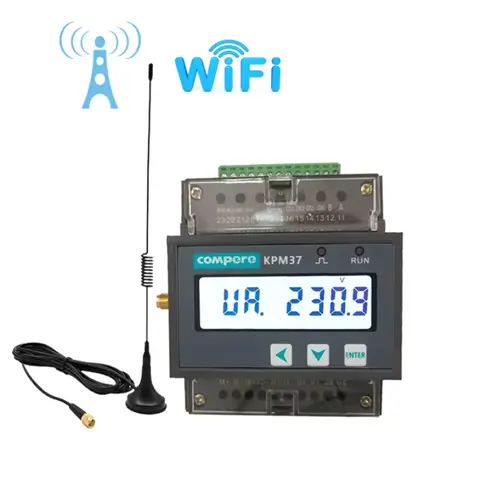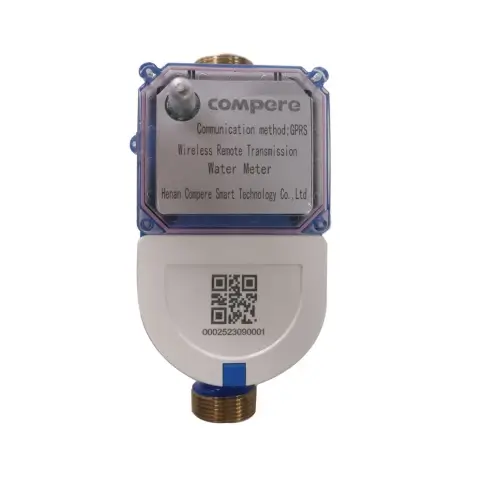
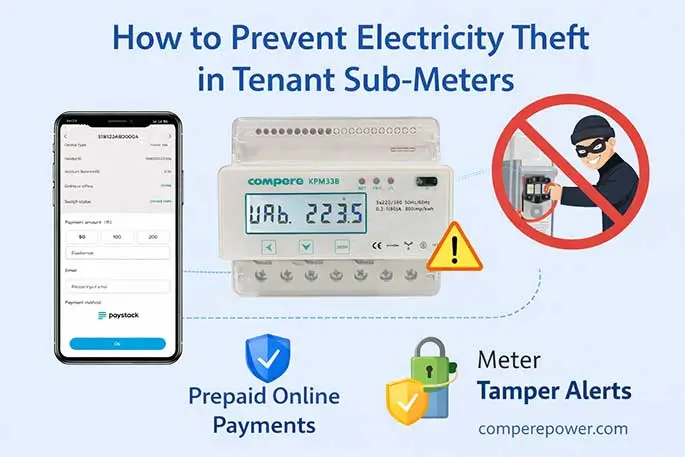
In multi-family dwellings or subletting, the installation of sub-meters was originally intended to uphold the fair principle of “whoever uses electricity, pays for it.” However, in practice, landlords often face various insidious methods of electricity theft. Traditional “human prevention” (frequent meter readings and surprise inspections) is not only time-consuming but also prone to rental disputes and even fire hazards.
To completely solve this major problem, the battle against electricity theft must be shifted to the meter itself. The following addresses the three most troublesome issues for landlords, providing the ultimate solution through technological upgrades to the meter itself.
Pain Point 1: Physical Tampering and Damage
❌ Tenant’s Mistakes: Unauthorized Dismantling of Meter Casing, Alteration of Wiring, Physical Damage
Many older meters are exposed. Daring tenants will use tools to secretly dismantle the meter casing, bypassing the metering coil by “tethering” the wires, or directly damaging the internal counting gears, causing the meter to stop or run slowly.
✔️ Meter-Specific Solutions: Physical Defense and Self-Destruct Recording Upon Opening
Modern security meters have built-in “anti-theft armor” in their hardware structure, making it impossible for tenants to tamper with them:
Integrated Original Factory Seal and One-Way Screws: At the factory, the core metering compartment and terminal cover are laser-welded or sealed with a one-time anti-counterfeiting lead seal. Disassembly will inevitably leave irreversible damage to the casing.
Mechanical and Photoelectric Dual Case-Open Detection: The meter contains a miniature trigger switch. Even in a power-off state, if the meter cover or terminal cover is opened even by 1 millimeter, the meter’s internal permanent memory (EEPROM) will immediately lock and record the tampering time. The next time power is restored, the meter will directly display “Err” or an alarm icon on the screen, providing irrefutable evidence.
High-Strength Explosion-Proof Casing: Made of high-density polycarbonate (PC) flame-retardant material, it is impact-resistant and resistant to strong acids and alkalis. Some tenants’ attempts to short-circuit the electricity meter by injecting water or corrosive liquids have become completely ineffective.
Pain Point Two: Hidden Technological Interference
❌ Tenant’s Tricks: Strong Magnetic Adhesion, Disconnecting the Neutral Wire, Borrowing the Ground Wire
These are the most difficult-to-detect methods of electricity theft. Tenants attach a strong neodymium iron boron magnet to the outside of the meter, using the magnetic field to slow down the mechanical meter’s disc; or they use their knowledge of circuits to deliberately disconnect the meter’s neutral wire, or ground the appliance, preventing the current from passing through the meter’s metering circuit, thus “stealing” electricity.
✔️ The Meter’s Own Solution: Anti-interference Chips and Dual-Circuit Full Metering
Modern electronic smart meters have undergone “immune upgrades” in their core circuit design specifically to address these chemical/physical attacks:
Fully Shielded Anti-Magnetic Sensor: This replaces the traditional coil, which is susceptible to magnetic field interference, with a shunt as the current sampling element. It is completely immune to external magnetic fields. No matter how large the magnet the tenant places, the internal chip of the meter remains stable and accurately measures the electricity.
Dual-circuit (live and neutral) independent metering technology: Traditional meters only measure the live wire, while anti-theft meters have current sensors installed on both the live and neutral wires.
If the tenant uses methods such as “disconnecting the neutral wire” or “borrowing the ground wire,” causing unequal currents in the two wires, the internal chip of the meter will automatically switch and use the circuit with the larger current as the billing standard, completely thwarting various methods of electricity theft.
Pain Point Three: Too late to discover after the fact, difficulty in obtaining evidence, and difficulty in recovering losses
❌ Tenant’s tricks: Reversing the meter, creating short circuits to erase data, and denying everything
Some tenants reverse the incoming and outgoing wires of the meter before moving out, causing the meter to reverse and “wash” the electricity consumption; or when discovered, they deliberately create a high-voltage short circuit to break down the meter, attempting to destroy evidence and deny everything. Landlords often only realize something is wrong when they receive a high total electricity bill, but by then the tenant may have already moved out, leaving them with no recourse.
✔️ Solutions within the Meter Itself: Smart Behavior Monitoring and Proactive Power Cut-off
Anti-theft electricity meters in the Internet of Things (IoT) era possess proactive defense and remote control capabilities similar to computers:
Automatic Reverse Power Accumulation: If a tenant intentionally reverses the meter’s cables in an attempt to reverse the meter’s readings, the smart meter’s metering chip will automatically identify the current direction. It will not only prevent the meter from reversing but will also automatically convert the reversed power consumption into positive power, continuing to accumulate it and simultaneously recording the “reverse phase event.”
Built-in Magnetic Latching Relay (Automatic Tripping): This is the ultimate weapon against electricity thieves. When the meter itself detects strong magnetic interference, tampering, or a severe current imbalance, the internal microprocessor can issue a command within milliseconds, causing the built-in relay to automatically trip and cut off the power supply to the room until the landlord arrives and enters the administrator password to unlock it.
Prepaid electricity model: Smart prepaid electricity meters support “pay first, use later.” The meter deducts payment in real time based on the measured electricity consumption, and automatically cuts off the power when the balance reaches zero. This eliminates the incentive for tenants to steal electricity through trickery—because the meter will automatically cut off the power if it detects any abnormality, preventing tenants from even turning on the lights.
💡 Core Indicators for Choosing Sub-meters (Pitfall Guide)
To perfectly solve the aforementioned pain points, please cross-reference the meter specification sheet when purchasing and ensure it includes these “Top 3 Hardcore Indicators”:
Anti-tamper / Event Log
Resolves the pain point of physical tampering.
Dual Loop Measurement (Live & Neutral)
Resolves the pain points of illegal wiring and bypassing via ground lines.
Internal Relay / Prepayment
Resolves the pain points of difficulty in recovering financial losses and inability to stop theft instantly.
Conclusion
Facing savvy tenants, constant monitoring is exhausting. Upgrading to a smart anti-theft meter with “self-protection” and “proactive counterattack” capabilities is the right way for landlords to achieve lasting peace of mind.