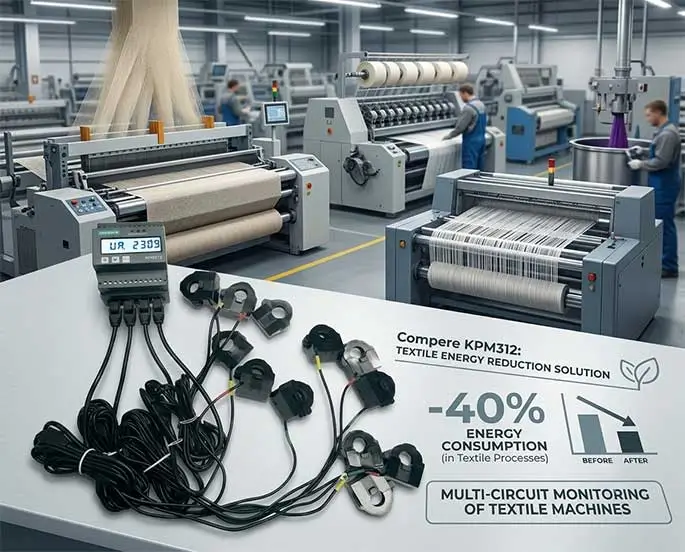
The textile industry is notoriously energy-intensive. From spinning and weaving to dyeing, machines on the entire production line operate almost 24/7. Faced with rising electricity costs and increasingly stringent pressures for green production, reducing energy costs is no longer a “bonus,” but a “must-have” that determines a company’s survival.
Recently, a large textile factory successfully achieved a 40% reduction in energy costs by introducing multi-circuit energy meters. How did they do it? This article will provide an in-depth look.
Core Pain Point: The Invisible “Energy Black Hole”
Before the transformation, this textile factory faced a common problem for many traditional manufacturing companies: billing-based management.
“We only receive a single total electricity bill each month. We know the bills are outrageously high, but we have no idea how that electricity is being spent. Which machine is overloaded? Which workshop is wasting resources? Without data, we’re like blindly working in the dark.”— The factory’s Operations Director
Traditional single-point metering can only measure the factory’s total energy consumption, but it cannot provide granular data. This data blind spot leads to numerous problems:
Hidden equipment failures: Machine aging or wear and tear causes a surge in power consumption, but it goes undetected.
Ineffective idling: During production breaks, some large pieces of equipment continue to consume electricity unnecessarily.
Peak-valley electricity price losses: Failure to properly stagger production during peak hours results in significant energy consumption during periods of high electricity prices.
Solution: Efficient Integration Of Multi-Circuit Energy Meters
To completely reverse this situation, the factory decided to implement a digital energy management transformation. Instead of adopting the traditional approach of installing individual energy meters for each machine (which is costly, space-consuming, and extremely complex in terms of wiring), they introduced an advanced multi-circuit energy meter solution.
1. What Is a Multi-Circuit Energy Meter?
A traditional energy meter is like a main water meter installed at the factory gate, while a multi-circuit energy meter is an integrated intelligent device that monitors multiple circuits simultaneously. It can monitor a dozen or even dozens of independent three-phase or single-phase power distribution branches within a single compact unit.
This means that by deploying just one multi-circuit energy meter in the core distribution cabinet, voltage, current, power factor, and energy consumption data from multiple circuits, including those from the setting machine, carding machine, spinning machine, and auxiliary lighting, can be collected simultaneously.
2. Core Implementation Steps
Refined Deployment: Utilizing the modular nature of multi-circuit energy meters, monitoring extends to core high-energy-consuming equipment and key process sections within the workshop.
Real-time Data Upload: The energy meter transmits data from all circuits to the central energy management platform in real time via IoT technologies such as Modbus and wireless gateways(e.g., 4g、wifi and lorawan).
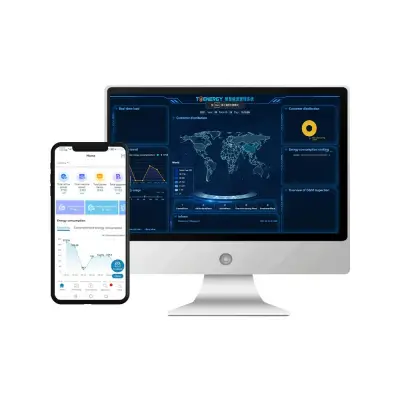
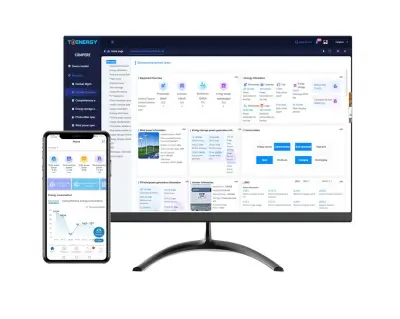
Visual Dashboard: Managers can view real-time energy consumption curves and historical analysis reports for each workshop and work group anytime via mobile phone or computer.
Four Key Actions to Cut Costs by 40%
Based on the massive amounts of accurate data provided by multi-circuit energy meters, factory management implemented a precise “energy reduction plan”:
Action 1: Identifying Faulty Equipment “Stealing Electricity”
In the first week of the system’s operation, the multi-circuit energy meters detected abnormal data: the energy consumption curve of an old shaping machine was significantly higher than other equipment of the same model. After disassembly and inspection by technicians, it was found that its internal heating elements were severely aged and inefficient. Through timely repair and replacement of parts, the energy consumption of this single piece of equipment instantly decreased by 25%.
Action 2: Completely Eliminating “Idle Waste”
The data clearly exposed management loopholes: during shift changes or breaks while waiting for semi-finished products, many spinning machines and dust collectors remained running. Based on this, the factory utilized the abnormal energy consumption alarm function of the multi-circuit energy meters. Once it was detected that the energy consumption of a certain circuit exceeded the set threshold for 15 minutes during non-production periods, the system automatically sent a notification to the workshop supervisor, completely eliminating unnecessary idling.
Action 3: Maximizing the Use of Peak-Valley Electricity Pricing
The textile factory utilized the time-of-use metering function of its multi-circuit electricity meters to re-profile the electricity consumption characteristics of each process. Without affecting total output, they adjusted production schedules: scheduling the most energy-intensive and highly automated preparation processes (such as cotton cleaning and carding) during off-peak hours at night, achieving “peak avoidance and valley utilization.”
Action 4: Optimizing Auxiliary Systems such as Air Compressors
Air compressor systems are often the most easily overlooked “energy hogs” in factories. Multi-circuit monitoring revealed that after reaching the set pressure, the air compressors frequently entered an “unloaded idling” state, wasting a significant amount of energy. The factory subsequently introduced variable frequency drive (VFD) control upgrades, perfectly matching the air compressor output power with actual air demand.
Comparison of Transformation Benefits
After six months of operation and continuous optimization, the textile factory delivered an impressive performance:
| Monitoring Dimension | Pre-Transformation Status | Post-Transformation Results |
|---|---|---|
| Overall Electricity Costs | Remained persistently high; lack of granular monitoring and control. | Reduced by 40% overall. |
| Equipment Anomaly Response | Relied on manual inspections; significant response delays. | Minute-level alerts; reduced downtime by 30%. |
| Peak-to-Valley Tariff Utilization | Vague scheduling; high proportion of electricity consumed during peak price hours. | Off-peak electricity utilization increased by 45%. |
| Space & Hardware Costs | Traditional single-circuit meters would not fit in existing enclosures. | Saved 70% of installation space; significantly slashed hardware investment. |
Conclusion
This textile factory’s success story proves that “what cannot be digitized cannot be optimized.” Multi-circuit energy meters are not merely measuring tools, but also a “lens” that helps enterprises initiate digital operations and clearly understand energy flow. In today’s manufacturing industry, which pursues high-quality development and “dual-carbon” goals, this refined energy management model is the only way for traditional manufacturing enterprises to reduce costs, increase efficiency, and reshape their competitiveness.