Electricity costs are a significant portion of modern hospital operating costs. As a special institution operating 24/7, hospitals must ensure the absolute stability of advanced medical equipment while maintaining strict temperature and humidity control in each department. However, traditional, inefficient electricity management methods contain numerous undetected energy wastes.
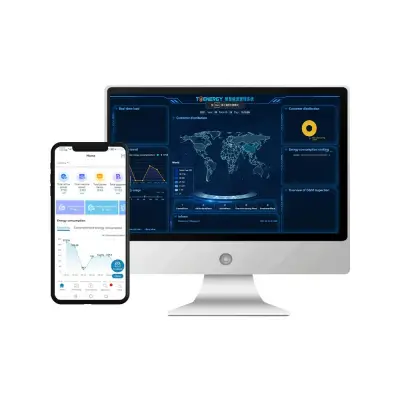
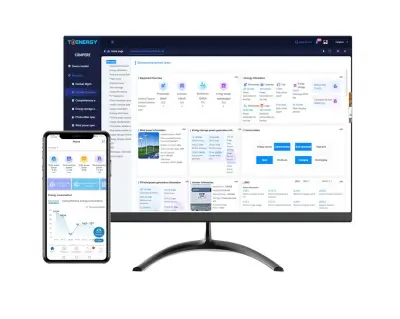
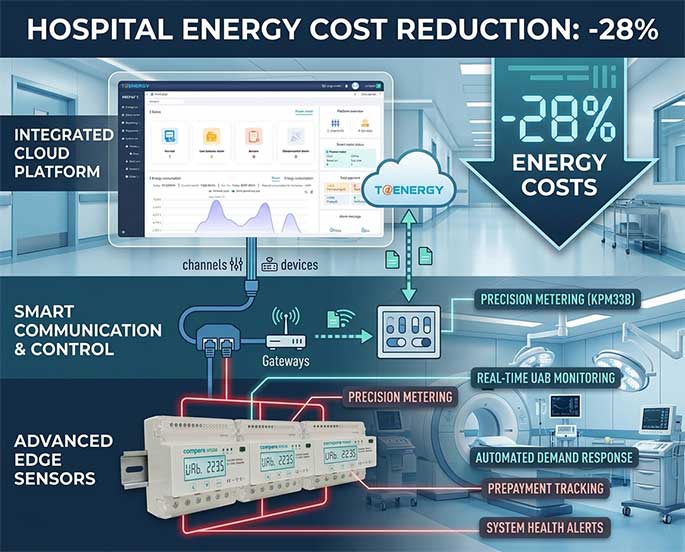
The solution offered by modern green hospitals is very clear: a network for visualized and intelligent control of energy consumption is built through a combination of IoT smart meters and an EMS (Energy Management System) hardware and software. Practice has shown that this combined approach can help hospitals accurately reduce energy costs by up to 28% without compromising medical safety.
Core Architecture: How Do Smart Meters And EMS Work Together?
If we compare a hospital’s power network to the human body, then smart meters are the “nerve endings” throughout the body, while the EMS is the “brain.”
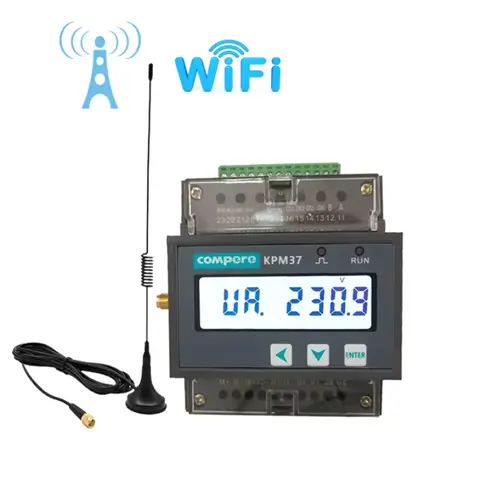
Hardware Collaboration (Smart Energy Meters): Hospitals no longer rely solely on traditional meters installed in the main distribution room. Instead, they comprehensively deploy IoT smart meters in every building, on every floor, and even in key departments (such as the ICU, operating rooms, and large radiology departments) and on core equipment (such as central air conditioning units and MRI machines). These meters can not only collect electricity consumption data in seconds but also monitor power quality data such as voltage, current, power factor, and harmonics.
Energy Management System: The massive amounts of data collected by smart meters are transmitted wirelessly (e.g., via…) Data is uploaded in real-time to the EMS platform via 4G/LoRa or wired networks. The EMS system uses big data algorithms for cleaning, classification, and comparison, transforming dry numbers into visualized energy consumption charts, anomaly warnings, and energy-saving strategies.
Which Areas Of The Hospital Can Save The Most Electricity?
Relying on smart meters combined with the precise positioning of the EMS system, hospitals can accurately control the following three major energy-consuming areas, which is the foundation for achieving the 28% cost reduction target:
1. Heating, Ventilation, and Air Conditioning System (HVAC) – Identifying 45% of the biggest energy consumers
The air conditioning system accounts for nearly half of the hospital’s total energy consumption. The EMS system uses load data fed back from smart meters for联动 optimization:
Operating room and ICU “on-call mode”: Operating rooms need to maintain minimal ventilation during non-operative periods. EMS Monitoring fan power meters automatically sends commands to switch to inverter “on-call energy-saving mode” during idle periods, preventing unattended operating rooms from continuously running at high power.
Managing oversized chiller/heat source systems: The EMS system calculates the cooling efficiency (COP) of chiller units in real time. When outdoor temperatures drop and hospital load decreases, the EMS detects abnormal power consumption of the main units and prompts staff to shut down some units or adjust the chilled water temperature.
Time-based control for outpatient and administrative areas: The outpatient hall is closed at night, and the administrative area is closed on weekends. The EMS system sets time strategies, combined with monitoring by smart meters, so that if someone forgets to turn off the air conditioning after get off work, the system can automatically cut off the air conditioning or remotely raise the temperature.
2. Large Medical Equipment – Combating “Hidden Standby Energy Consumption”
Large medical equipment (CT, MRI, accelerators, etc.) is valuable and consumes a lot of power, often resulting in significant standby energy waste.
Standby behavior profiling: Smart meters monitor the current of a single MRI machine 24 hours a day. EMS System analysis revealed that a certain piece of equipment, despite having no inspection tasks from 10 PM to 8 AM the following morning, remained in a high-power standby state of 15kW.
Precise Energy Saving Guidance: The EMS (Electronic Management System) aggregates this data and sends reports to departments, assisting them in developing a “one-click low-power standby during off-peak hours” strategy. This reduces standby electricity costs by 60% while ensuring rapid warm-up the next day.
Equipment Health Warning: When smart meters detect a sudden increase in the operating current of a piece of equipment under the same workload, the EMS issues a warning—this usually indicates bearing wear, poor heat dissipation, or circuit aging. Timely maintenance saves electricity and extends the lifespan of millions of pieces of equipment.
3. Public Lighting and Power Systems—Refined Management
Intelligent Lighting in Public Areas: In corridors, underground parking garages, elevator lobbies, and other areas, the EMS system combines smart meter circuit data to implement “time-based, graded, and sensor-based” control. In the parking garage at night, lights turn on when a car approaches and off when it leaves, reducing underground lighting energy consumption by 60%. That’s all.
Harmonic Mitigation for Elevators and Water Pumps: Frequent start-stop cycles of hospital elevators and water pump rooms generate harmonics, reducing grid efficiency and wasting energy. After smart meters detect harmonics, the EMS (Energy Management System) will recommend that the logistics department install frequency converters or active power filters (APFs) to improve the power factor and directly reduce electricity costs caused by reactive power.
A Three-Step Strategy for 28% Cost Reduction Based on Smart Meters and EMS
To achieve the 28% cost reduction target, hospital logistics management needs to go through the following three stages:
Phase 1: Full Energy Consumption Digitalization
1-3 MonthsDeploy IoT smart electricity meters across critical nodes within the hospital, and officially launch the EMS (Energy Management System). Establish a four-level metering framework covering “Whole Hospital – Building – Department – Key Equipment” to grasp the hospital’s baseline energy consumption. This helps identify blatant energy leakages (such as unextinguished lights, continuous water running, and unjustified high energy use at night). In this stage, management optimization alone can effortlessly achieve a 5% – 8% reduction in energy costs.
Phase 2: Inter-system Joint Group Control
3-6 MonthsIntegrate the EMS with the hospital’s Building Automation (BA) system and Hospital Information System (HIS). Dynamically adjust air conditioning and lighting based on real-time medical schedules and patient volumes retrieved from the HIS. At this point, the EMS acts as the “intelligent brain,” utilizing variable frequency drive (VFD) technologies and strategy optimization to achieve system-level deep energy savings, expanding the cost reduction by 10% – 15%.
Phase 3: Energy Indicators & Performance Appraisal
Long-termRelying on the energy consumption reports automatically generated by the EMS for each department, electricity costs are allocated directly to specific units. Implement an indicator-driven appraisal system based on the principle of “whoever consumes more bears the responsibility.” This deep-roots energy-saving awareness into the daily habits of every medical staff member, stabilizing and securing the ultimate 28% comprehensive cost-reduction achievement.
Expert Viewpoint:
In the past, hospital electricity bills were a “muddled account,” with only a large total amount visible at the end of the month. The essence of smart meters combined with the EMS energy management system is to transform this muddled account into detailed “energy consumption reports.” It not only tells the logistics department where things are wrong (waste), but also automatically provides prescriptions (energy-saving strategies), which is precisely the necessary path for the development of modern smart and green hospitals.