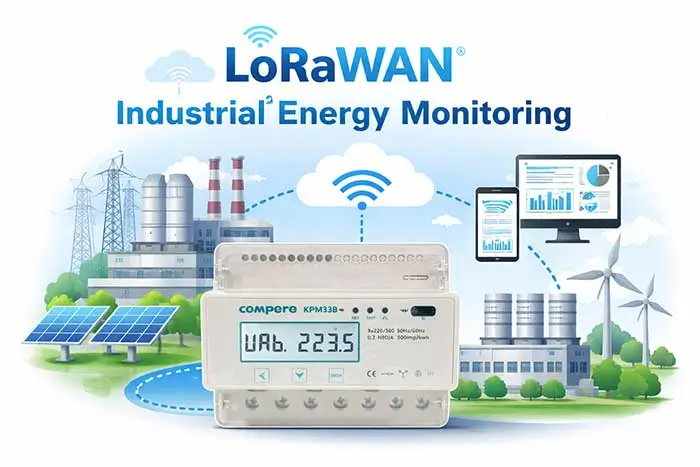
As is well known, real-world industrial environments often involve complex electromagnetic interference, severe signal shielding from reinforced concrete structures, factory areas spanning several kilometers, and tens of thousands of nodes requiring monitoring. These factors pose significant challenges to traditional wired meter reading methods (such as RS485) and wireless solutions (such as WiFi and cellular networks).
LoRaWAN (Long Range Wide Area Network), with its core advantages of ultra-high capacity, exceptional penetration, ultra-low power consumption, and private deployment, is becoming the gold standard in B2B industrial energy metering solution. This article will comprehensively analyze how LoRaWAN deeply empowers industrial meters and its typical application scenarios.
LoRaWAN Is The First Choice for Industrial Energy Metering?
Traditional industrial meter reading solutions often face a dilemma: wired cabling (such as RS485 or Modbus) is costly, has a long construction period, and is difficult to maintain; while traditional wireless technologies (such as Wi-Fi) have short transmission distances and poor penetration, and cellular technologies (5G/4G) face high annual fees and signal dead zones deep within industrial areas.
LoRaWAN perfectly fills this technological gap:
Deep Penetration & Long Range: Based on linear frequency modulation spread spectrum (CSS) technology, LoRaWAN has extremely high receiving sensitivity. In industrial workshops filled with metal pipes and shielding walls, it can easily penetrate several floors of buildings and underground power distribution rooms; in line-of-sight environments, its transmission distance can reach over 15 kilometers.
High Capacity and Star Topology: Unlike mesh networks, which are prone to failure due to the damage of a single node, LoRaWAN uses a star topology. A single industrial-grade eight-channel gateway can manage thousands of industrial meters simultaneously, ensuring signal stability under high-density concurrency.
Enterprise-Controlled (Private Network Deployment): Industrial data involves core production secrets. LoRaWAN allows enterprises to independently deploy gateways and network servers (LNS) within their factories. Data is completely localized, eliminating the need to upload to third-party operator public blockchains, and features end-to-end AES-128 encryption.
ADR (Adaptive Rate Control) Technology Optimizes Energy Consumption: For meters located nearby with strong signals, LoRaWAN automatically shortens their Time-to-A (ToA), reducing power consumption and significantly freeing up channel capacity, thus reducing packet collision rates in high-density deployments.
Core Functions and Technical Architecture of Industrial LoRaWAN Meters
In B2B industrial scenarios, LoRaWAN meters are not simply “data transmitters,” but intelligent terminals integrating edge computing and control functions.
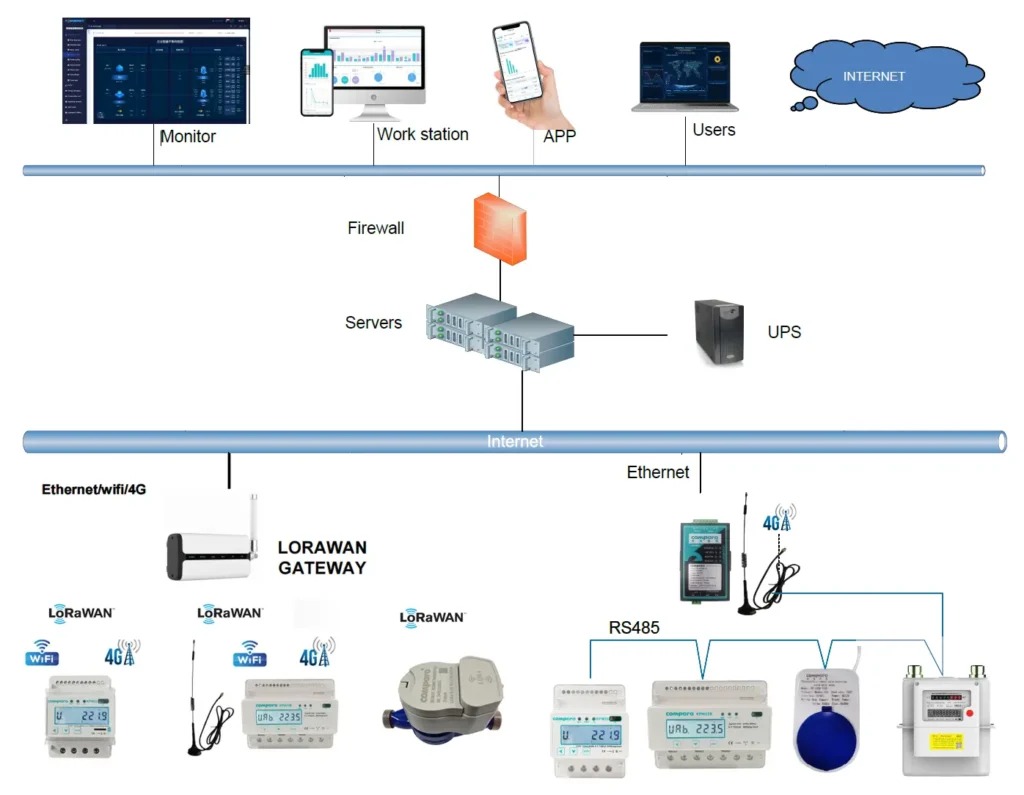
1. System Architecture
The entire system consists of four core layers:
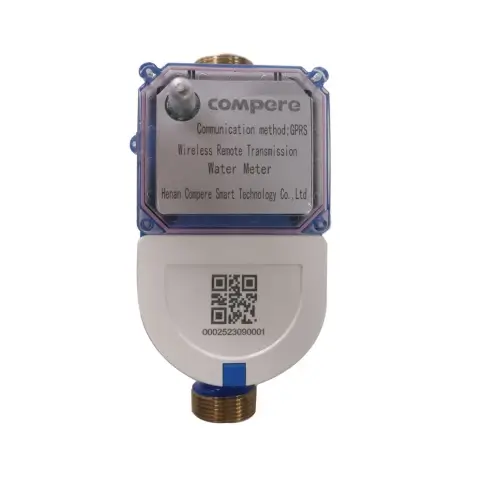
Terminal Layer (LoRaWAN Meter): Contains a built-in LoRaWAN module, directly collecting energy parameters.
Gateway Layer: Responsible for receiving RF signals uploaded by the electricity meter and converting them into IP data packets, which are then transmitted to the server via Ethernet/4G/5G.
Network Server (LNS): Responsible for decryption, deduplication, channel management, and rate scheduling.
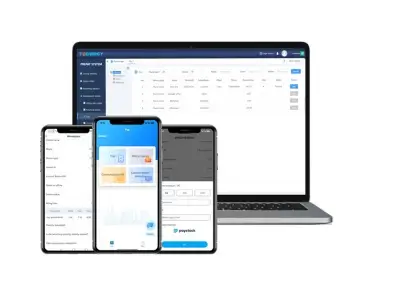
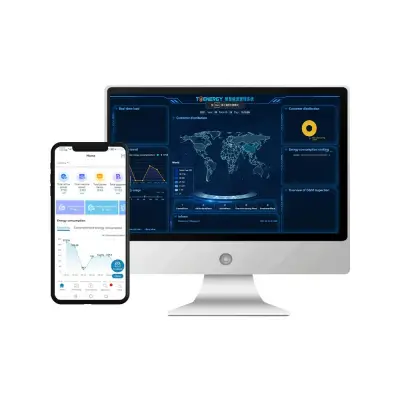
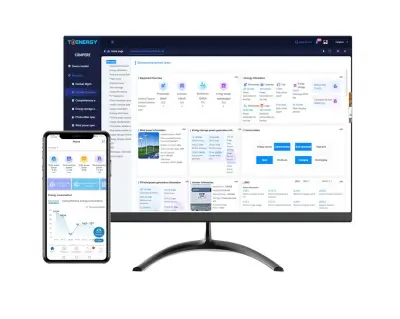
Application Platform (EMS/Prepaid System): Performs data visualization, electricity billing, and energy analysis.
2. Industrial-Grade Core Functions
Multi-Parameter Edge Acquisition: In addition to basic active power (kWh), industrial electricity meters can monitor three-phase voltage, current, reactive power, apparent power, power factor, and harmonic distortion rate (THD) in real time. This data is crucial for assessing industrial grid quality and preventing transformer overload.
Industrial Prepaid and Remote Disconnection: Industrial electricity meters are typically externally powered, therefore operating in LoRaWAN mode. This means the system platform can issue power outage control commands with zero latency. Combined with prepaid software, the system can automatically or manually trip the circuit breaker remotely when the enterprise’s prepaid electricity balance is depleted.
Power Outage Alarm and Event Logging (Last Gasp): When a sudden power outage occurs in the workshop, the meter, using its built-in supercapacitor, can issue a “last gasp” alarm the instant external power is lost, helping maintenance personnel to instantly and accurately locate the fault point.
Four Typical Industrial Application Scenarios
Scenario 1: Prepaid Management of Large Industrial Parks and “Parks within Parks”
In many large development zones or logistics parks, operators typically need to collect electricity fees independently from each resident SME and processing plant.
Pain Points: High tenant turnover makes collecting electricity fees time-consuming and labor-intensive; manual meter reading is inefficient and prone to errors.
LoRaWAN Solution: The park only needs to deploy 1-2 industrial gateways on the roof of the office building to cover all factories within a radius of several kilometers. Through LoRaWAN meters, a “pay first, use later” prepaid model is implemented. The system automatically deducts fees according to the set tiered electricity price, automatically sends SMS reminders when the balance is low, and automatically cuts off power for overdue payments, greatly improving the park’s cash flow rate.
Scenario 2: Energy Efficiency Analysis of Heavy Industrial Workshops and High-Energy-Consuming Equipment (e.g., Steel, Chemical, Cement)
Heavy industrial workshops are filled with high-energy-consuming and electromagnetically interference-prone equipment such as high-frequency quenching furnaces, large cranes, and high-pressure pumps.
Pain Points: Inability to obtain the precise energy consumption percentage of individual equipment; inability to promptly detect abnormal power consumption by equipment (e.g., idling, overload).
LoRaWAN Solution: The highly interference-resistant LoRa signal can penetrate the shielding of heavy machinery. By deploying LoRaWAN meters in front of key equipment (e.g., each production line, large motors), three-phase current and power factor are reported every 5-15 minutes. Through big data analysis, the system can accurately identify which equipment is operating inefficiently or wasting power, thereby optimizing production scheduling (off-peak power consumption).
Scenario 3: Green Factory, Carbon Neutrality Tracking, and Dual Energy Consumption Control
Under the background of carbon neutrality, high-energy-consuming enterprises face strict dual energy control (total energy consumption and intensity) assessments.
Pain Point: Lack of refined basic data required for carbon accounting.
LoRaWAN Solution: Establish a three-tiered LoRaWAN metering network covering the main substation, workshop distribution cabinets, and production line distribution boxes. The LNS server seamlessly integrates high-frequency collected electricity data into the enterprise’s energy management system (EMS). The system automatically generates carbon emission reports, identifies peak carbon emission periods, and provides irrefutable data support for enterprises to procure green electricity and carry out energy-saving renovations.
Scenario 4: Remote Unmanned Operation of High-Voltage Distribution Cabinets and Distributed Substations
Many large factories have multiple distributed underground distribution rooms or outdoor prefabricated substations.
Pain Point: High labor costs for inspections and inability to monitor grid quality in real time (e.g., fines due to three-phase imbalance or low power factor).
LoRaWAN Solution: Deploy multi-functional energy meters integrated with LoRaWAN to monitor line voltage and power factor in real time. Once a severe three-phase imbalance or a power factor below 0.9 is detected, the system immediately triggers an early warning, notifying engineers to maintain or adjust the capacitor compensation cabinet to avoid penalties from the power supply bureau for reactive power consumption.
Practical Recommendations for B2B Project Deployment (Pitfall Avoidance Guide)
When implementing industrial LoRaWAN meter reading projects, it is recommended to pay close attention to the following technical details:
Antenna Feeder and Meter Box Shielding: Industrial distribution cabinets are typically fully sealed with metal (similar to a Faraday cage). Never leave the LoRaWAN antenna inside the cabinet. A magnetic chuck antenna or a feeder cable must be used to attach the antenna to the outside of the distribution cabinet or the top of the meter room to ensure signal transmission quality.
Data Frequency and Frequency Band Planning: Although industrial meters have no power consumption limitations, high-density deployments where thousands of meters report full data every minute can lead to severe co-channel interference. A mechanism of “timed and quantitative reporting + threshold-triggered alarm” is recommended (e.g., electricity consumption reported every hour, while current and voltage overload triggers an alarm instantly).
Gateway Redundancy: Industrial environments are constantly changing (e.g., newly stacked metal raw materials may block existing paths). It is recommended to deploy at least two gateways in core areas, leveraging LoRaWAN’s spatial diversity to ensure that the same meter data can be received simultaneously by multiple gateways, improving system availability to 99.99%.
LoRaWAN Industrial Energy Solutions Are Simply Amazing!
LoRaWAN technology, with its unique long-distance, high-penetration, and flexible private networking capabilities, perfectly meets the stringent requirements of industrial energy metering for “high reliability, high security, and low deployment costs.” By building a smart energy metering network based on LoRaWAN, enterprises can not only achieve efficient remote meter reading and prepaid control, but also grasp the “digital assets of energy consumption” in the era of industrial big data, gaining a competitive edge in the wave of green transformation.