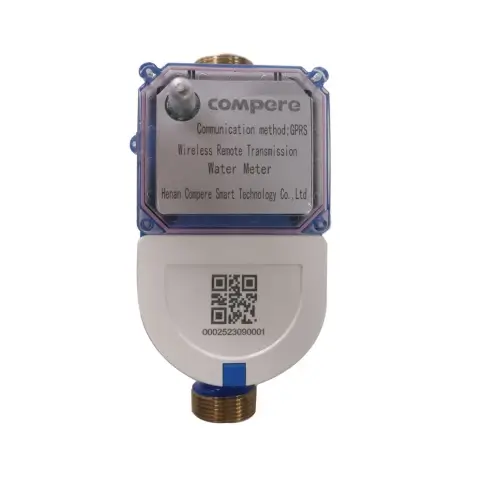
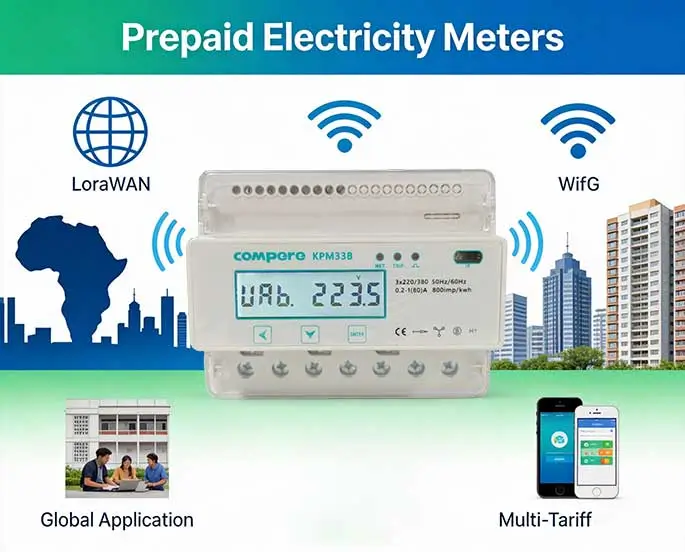
With rising global energy costs and the iteration of Internet of Things (IoT) technology, the traditional “use now, pay later” model is undergoing profound changes. Prepaid electricity meters, this “pay now, use later” model, not only effectively solves the historical pain points of power companies struggling with billing and having large outstanding debts, but also provides users with a more intuitive and autonomous means of controlling their energy budgets.
Globally, the application of prepaid electricity meters exhibits significant regional characteristics due to differences in regional economies, power infrastructure, and market demand.
Africa: The Most Core and Widely Adopted Prepaid Market Globally
Africa has the longest history of prepaid electricity meter application and the highest market penetration rate globally. Due to the high labor costs and weak infrastructure of traditional meter reading, coupled with serious issues like electricity theft and outstanding payments, prepaid electricity meters have become a “lifeline” for power companies in African countries to improve their financial situation and maintain operations.
1. South Africa
South Africa is one of the earliest and most successful countries in the world to promote prepaid electricity meters. More than 20 years ago, the country began widely adopting this electricity management model to effectively address the challenges of electricity bill collection and management in low-income and remote areas. Today, the vast majority of South African households are highly accustomed to this “pay first, use later” daily consumption model.
2. Nigeria
As Africa’s most populous country, Nigeria has long suffered from insufficient power supply and difficulties in collecting electricity bills. In the past, power companies generally used “estimated billing,” which caused significant public discontent and bill arrears. In recent years, the Nigerian government launched the National Mass Metering Program (NMMP), mandating that distribution companies install prepaid smart meters for all end users to achieve transparent consumption.
3. Kenya
Kenya Power has already switched the vast majority of its residential users to a prepaid system. The success of the Kenyan market is attributed to its globally leading mobile payment ecosystem – M-Pesa. Residents can top up their electricity bills instantly via their mobile wallets by simply entering a few lines of code on their phones, eliminating the need to visit a service center and significantly reducing electricity bill evasion.
Asia: A Massive Market for Smart Upgrades and Transformation
Asian countries have a large population of electricity consumers. Currently, the Asian market is experiencing a surge in upgrades from traditional mechanical meters and magnetic card prepaid meters to smart prepaid meters based on Advanced Metering Architectures (AMIs).
1. India
India is currently the fastest-growing and most promising market for prepaid electricity meters globally. Due to an aging power grid and rampant electricity theft, India suffers from high AT&C losses. To address this, the Indian government launched the ambitious Revised Distribution Sector Scheme (RDSS), aiming to replace hundreds of millions of outdated meters with smart meters that offer prepaid functionality. This project is currently being rolled out on a large scale in populous states such as Uttar Pradesh and Bihar.
2. Indonesia
Indonesia’s state-owned electricity company, PLN, launched a prepaid electricity plan called “Listrik Pintar” (Smart Electricity) in 2010. Because the prepaid model eliminates monthly fixed administrative fees and allows users complete control over their electricity usage, it has been very popular among low- and middle-income groups and renters, and its adoption rate is currently among the highest in ASEAN countries.
3. China
China started prepaid electricity services early. Initially, IC card prepaid meters were widely used in many northern cities. Now, with the widespread adoption of smart meters by the State Grid and Southern Power Grid, although postpayment (or automatic deductions via bank cards, WeChat/Alipay) is the mainstream payment method for urban residents, the prepaid model holds absolute dominance in the rental market and commercial sector.
Application Scenarios: University dormitories, office buildings, shops in large shopping malls, long-term rental apartments, and urban villages.
Management Advantages: Property management companies or landlords can use IoT (NB-IoT/Wi-Fi) prepaid systems to automatically cut off power if payments are not made, completely avoiding electricity bill disputes caused by tenant turnover.
Europe: Specific Applications Represented by the UK and Some Eastern European Countries
In developed countries, due to well-established personal credit systems, most countries default to postpaid billing (monthly or quarterly mailed bills). However, in some countries with high rental rates or energy-poor populations, prepaid meters also hold an important place.
1. United Kingdom (UK)
The UK is the most typical country in Europe using prepaid meters. It is mainly used by two specific groups:
High-Mobility Rental Market: The UK has a large number of student apartments and multi-landlord properties (HMOs). Landlords typically install prepaid meters to prevent tenants from leaving behind high electricity bills after moving out.
Energy Debt Management: For households with a history of serious arrears or low credit ratings, UK energy companies may mandate the replacement of meters with prepaid meters according to regulations to prevent their debt from accumulating indefinitely.
2. Eastern Europe (e.g., Bulgaria, Romania)
In some Eastern European countries, due to low electricity bill collection rates in remote areas or specific communities, and high personal safety and management costs for meter readers, local power companies are promoting prepaid meters to reduce operational risks.
Latin America and the Middle East: Targeted Deployment for Specific Pain Points
1. Brazil & Colombia
In Latin America, electricity theft (non-technical losses) is a persistent problem for major power companies. For example, in Brazil’s favelas and Colombia’s marginalized communities, power companies have not only restored order to the electricity market by installing smart prepaid meters with anti-theft designs and remote communication capabilities, but also provided local residents with affordable and legal access to electricity.
2. Jordan
Jordan in the Middle East is a unique case. Due to the large number of refugees the country has received, Jordan’s power sector has cooperated with international organizations such as the United Nations to deploy smart prepaid meters on a large scale in Syrian refugee camps within its borders. This measure enabled precise energy allocation, ensuring basic electricity needs for refugees while preventing uncontrolled energy waste.
Summary: The Core Driving Force for the Global Adoption of Prepaid Electricity Meters
The prosperity of the global prepaid electricity meter market is the result of a combination of policy promotion, technological evolution, and addressing market pain points:
| Market Type | Key Representative Countries | Core Drivers |
|---|---|---|
|
Developing & Transitioning Economies |
South Africa, Nigeria, India, Indonesia |
Eliminating bad debts from unpaid bills, improving utility revenue collection, and drastically reducing non-technical power losses like electricity theft. |
|
Advanced Mobile Finance Regions |
Kenya, China, Bangladesh | Leveraging robust mobile wallets (e.g., WeChat, Alipay) combined with advanced IoT infrastructure to enable seamless, instant, and agent-free online top-ups. |
|
High Rental Rates & Specific Management |
United Kingdom, China (Commercial/Apartments) |
Facilitating precise sub-metering for landlords, property managers, and universities, mitigating the financial risks associated with high tenant turnover. |
With the construction of the next-generation smart grid, prepaid meters are no longer simply “power rationing tools,” but have evolved into intelligent terminals integrating functions such as real-time switching of tiered electricity pricing, big data analysis of electricity consumption, and automatic reporting of grid faults. In the future, with further cost reduction and efficiency improvement of cellular IoT technology, the prepaid model will demonstrate strong vitality in more countries and niche markets.
Related Articles:
In-depth Technical Analysis of Smart DIN Rail Prepaid Energy Meter