Contents
For large factories, data centers, and energy-intensive industrial parks, accurately controlling complex power networks, reducing energy costs, and ensuring power supply security are crucial for enhancing core competitiveness.
In this context, multi-loop energy meters, with their high integration, high accuracy, and intelligent features, are gradually replacing traditional single-loop meters, becoming the “nerve endings” of industrial energy management systems.
What Is a Multi-Loop Energy Meter?
Traditional meters can only measure one three-phase or single-phase circuit. However, complex industrial distribution cabinets often contain dozens or even hundreds of branch circuits. Installing an independent meter for each circuit would not only be space-consuming but also incur astronomical wiring and maintenance costs.
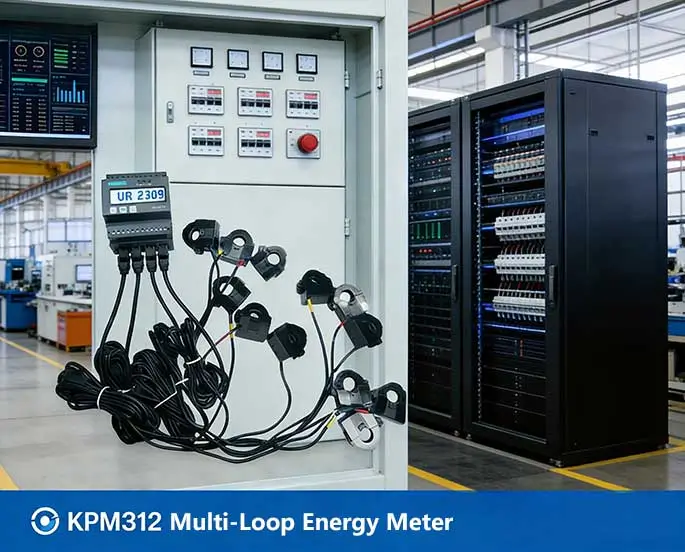
Multi-loop energy meters employ a modular, highly integrated design, allowing simultaneous connection, measurement, and monitoring of electrical parameters (such as voltage, current, power, energy, harmonics, etc.) for dozens of single-phase or multiple three-phase circuits on a single meter. It’s essentially condensing dozens of traditional electricity meters into a compact casing, making it a true “space magician” for power distribution cabinets.
Core Scenarios in Industrial Applications
Multi-circuit meters have a wide range of applications in industrial environments. Here are some of the most representative scenarios:
1. Power Distribution Cabinets and End-of-Line Power Distribution Automation
Large equipment on industrial production lines, motor control centers (MCC cabinets), and end-of-line distribution boxes contain numerous branch circuits.
Precise Monitoring: Multi-circuit meters can monitor the power consumption status of each workshop, each production line, and even each critical piece of equipment in real time.
Fault Early Warning: By monitoring anomalies such as current overload and voltage drops, early warnings are issued before serious equipment failures occur, avoiding huge losses caused by unplanned downtime.
2. Industrial Data Centers (IDC) and Refined Energy Management
Modern industrial enterprises increasingly rely on their own data centers. Data centers are well-known “power hogs,” and their row-mounted power supply (RPP) cabinets have extremely high requirements for power monitoring.
High Loop Density: Each server rack requires independent power metering. Multi-loop meters perfectly fit the compact space requirements of rack-mounted units.
PUE Optimization: Real-time measurement of power consumption by IT equipment and cooling systems provides core data support for reducing PUE (Power Usage Effectiveness).
3. Workshop Energy Consumption Carbon Efficiency Assessment and Cost Allocation
In the past, industrial energy consumption was often a vague calculation, with total electricity costs for the entire plant unable to be accurately allocated to specific products or departments.
By Line/By Product: Multi-loop energy meters refine energy metering to the section, team, and even individual process level.
Aids Carbon Inventory: Provides high-frequency, accurate underlying data for enterprises to establish internal “carbon accounts,” easily meeting supply chain green audits and national dual-carbon policy requirements.
Core Technological Advantages: Why Does Industry Prefer It?
Compared to traditional single-circuit meter solutions, multi-circuit meters demonstrate overwhelming technical and economic advantages in practical industrial applications, primarily in the following four core dimensions:
First, significantly optimized space utilization. Traditional solutions require dozens of meters to be neatly arranged for dozens of circuits, occupying substantial space on distribution panels or cabinets, and sometimes even necessitating additional distribution cabinets. Multi-circuit meters, however, require only a standard meter slot or rail position to handle data from dozens of circuits, saving over 70% of space and freeing up valuable space in industrial settings.
Second, greatly simplified wiring and installation. Traditional wiring is complex, time-consuming, and prone to errors. Multi-circuit meters employ an integrated design, using pluggable terminals or flexible Rogowski coils, resulting in a neat and orderly installation. This not only reduces on-site construction and commissioning costs by over 50% but also significantly reduces the difficulty of subsequent line maintenance.
Furthermore, highly efficient integration of communication networks. In traditional solutions, each individual meter requires a dedicated communication address and a separate communication line, making network setup extremely cumbersome. Multi-circuit meters, however, enable shared data from multiple circuits, with data from dozens of circuits uploaded to a single communication interface (such as Modbus-RTU, or more advanced 4G/LoRa wireless interfaces), significantly simplifying the topology of industrial communication networks.
Finally, there’s a comprehensive upgrade in energy efficiency analysis capabilities. Traditional single-circuit meters often have limited functionality, providing only isolated, basic energy metering. Modern industrial multi-circuit meters, however, not only calculate electricity costs but also possess advanced power quality analysis capabilities. They can capture 2nd-63rd harmonics in real time, monitor three-phase imbalance, and other in-depth data, helping companies comprehensively diagnose grid health and prevent equipment damage caused by power quality issues.
Future Trends of Industrial Multi-Circuit Energy Meters
With the evolution of Industrial Internet of Things (IIoT) technology, multi-circuit electricity meters are also constantly evolving:
Wireless and Power-Off-Demand Installation: More and more multi-circuit electricity meters are incorporating wireless communication technology and adopting open-type current transformers (CTs). This means that when renovating old factories, enterprises can complete deployment in minutes without shutting down production or cutting off power.
Edge Computing and AI Diagnostics: Future electricity meters will no longer just transmit data. With the support of edge computing chips, the meters themselves can identify abnormal current fluctuations in motors caused by mechanical wear, achieving more intelligent “predictive maintenance.”
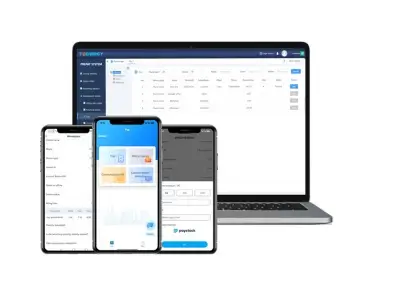
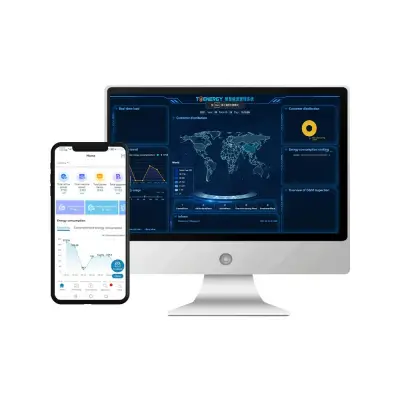
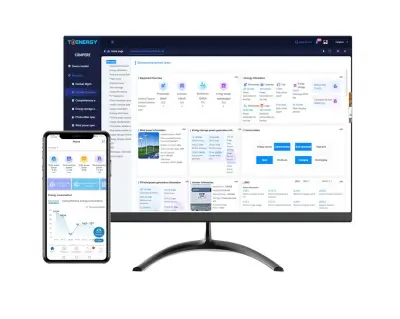
Cloud Collaboration and Energy Dashboards: Data collected by electricity meters is directly and seamlessly connected to industrial internet platforms (such as EMS energy management systems), transforming it into intuitive energy consumption trend charts, carbon emission dashboards, and cost reduction suggestions on enterprise managers’ mobile screens.
Conclusion
On the path of modern industry pursuing lean production and green low-carbon development, invisible electricity must be transformed into a “visible, tangible, and manageable” digital asset. Multi-circuit meters, acting as a “microscope” and “data gateway” for industrial electricity consumption, have enabled a major transformation in enterprise energy management with minimal space and investment costs. For any industrial enterprise aspiring to digitalization and intelligentization, this is an indispensable foundational element.