For data center operators, PUE (Power Usage Effectiveness) is a core metric for measuring energy efficiency. It’s the ratio of total energy consumption of data center equipment to the energy consumption of IT equipment. A PUE value closer to 1.0 means less wasted energy is used for cooling, lighting, and power systems, making the data center more energy-efficient. To achieve extremely low PUE, deploying smart meters and conducting real-time power monitoring is becoming an indispensable technological tool.
The “Blind Spots” of Traditional Energy Management
In the past, many data centers relied on regular manual inspections or static monthly electricity bills to assess energy efficiency. This traditional method has significant drawbacks:
Data Lag: By the time the bill is received, energy waste has already occurred weeks ago, making preventative and real-time control impossible.
Coarse Granularity: Only the total electricity consumption is visible; it’s impossible to accurately pinpoint which rack or chiller unit is consuming excessive energy.
Safety Hazards: The inability to capture power quality issues such as current harmonics and transient voltage drops in real time can easily lead to equipment failures or even power outages.
Smart Meters: The “Peripheral Nerves” of Data Center Energy Efficiency Monitoring
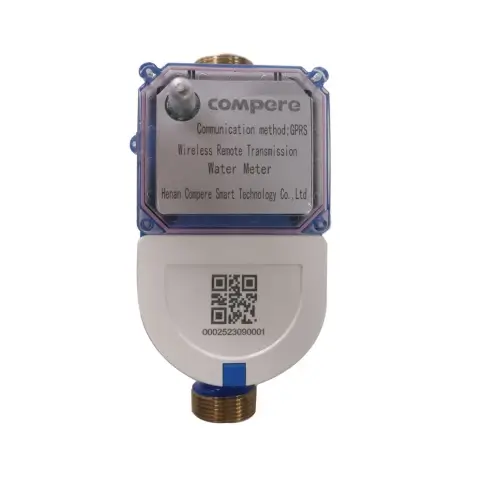
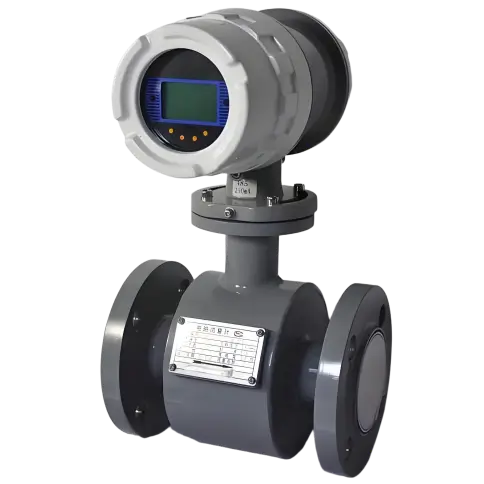
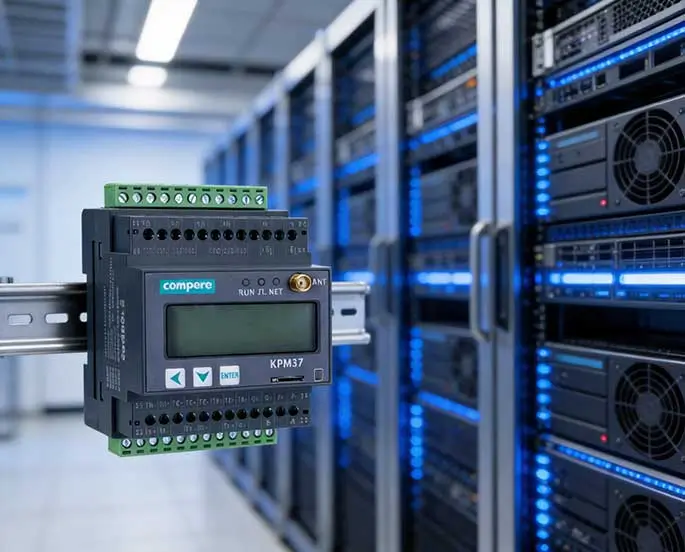
To achieve real-time energy management, the first problem to solve is “where does the data come from?” Smart meters are no longer simply “mechanical meters” that record electricity consumption; they are intelligent devices integrating microprocessors, network communication, and advanced metering algorithms.
Within the data center, smart meters are widely deployed at key nodes throughout the entire chain, acting as the “peripheral nerves” of the entire system:
Incoming Line Cabinets and High-Capacity Busbars: High-precision smart meters are deployed to monitor the total input power and power quality of the external mains power for the entire building or data center.
UPS (Uninterruptible Power Supply) and Row Headers: Smart meters are deployed here to accurately calculate the transmission losses of the power distribution system in real time, ensuring that power conversion remains within a high-efficiency range.
PDU (Rack Power Distribution Unit) and Server Spacing: Miniature smart meters can even be integrated into each PDU socket, achieving “machine strength level” or even “server level” micro-metering.
Compared to traditional meters, data center-specific smart meters possess the following three core capabilities:
Multi-dimensional Parameter Measurement: In addition to measuring basic electricity consumption (kilowatt-hours) and power, they can measure voltage, current, frequency, power factor, and voltage and current harmonics up to the 63rd order in real time.
High-Speed Real-Time Communication: Supporting industrial and IT communication protocols such as Modbus or MQTT, they can upload data to the central management system at second-level or even millisecond-level frequencies.
Event Capture and Alarm: They can record precise timestamps of logs instantly upon the occurrence of voltage drops, current overloads, or waveform distortions, helping maintenance personnel trace faults.
How Does Real-Time Power Monitoring Enable PUE Optimization?
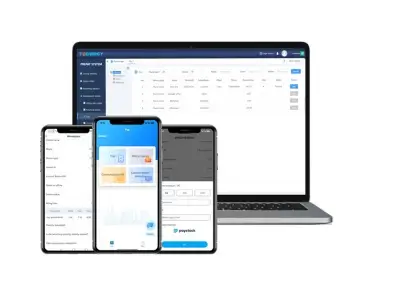
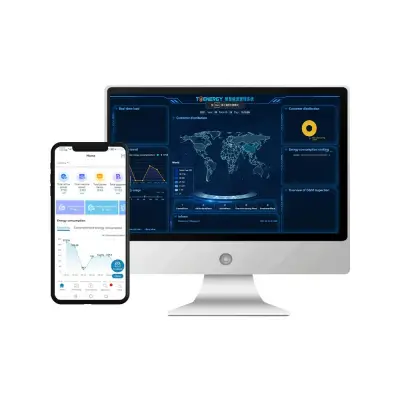
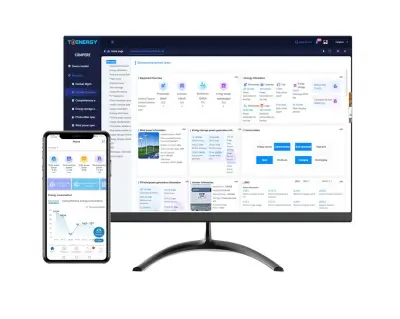
The continuous data uploaded by smart wireless energy meters, combined with central management software (DCIM) and AI algorithms, constitutes a complete real-time power consumption monitoring system. It primarily reduces PUE (Power Usage Effectiveness) through the following four core approaches:
1. Accurate Identification of “Zombie Servers” and Inefficient Loads
By continuously monitoring the power consumption of individual racks through smart meters, operations personnel can create an “energy consumption profile” of the rack. The system can easily identify “zombie servers” with extremely low CPU utilization that are constantly consuming power. By consolidating or shutting down these inefficient loads, total energy consumption can be effectively reduced, and corresponding cooling requirements can be decreased.
2. Dynamic Adjustment of the Cooling System (Achieving “On-Demand Cooling”)
Cooling systems typically account for more than 40% of non-IT energy consumption in data centers. By linking real-time IT power consumption data collected by smart meters with temperature and humidity sensor data within the data center, AI algorithms can predict the data center’s heat generation trends and dynamically adjust the operating status of chillers and precision air conditioners.
For example: When a smart meter detects a decrease in IT load and power consumption during a certain period, the cooling system will immediately and automatically reduce power to avoid “overcooling,” thus significantly lowering PUE.
3. Optimize Power Supply And Distribution Links To Reduce Line Losses
Electricity generates heat loss during its journey through transformers and distribution units. Smart energy meters help maintenance personnel monitor “three-phase imbalance,” adjust single-phase loads in a timely manner, and reduce excessive neutral current and additional losses caused by three-phase imbalance, ensuring every unit of electricity is used effectively.
4. Provide High-precision Dynamic PUE Dashboards
Based on data from smart energy meters at all levels, the system can calculate and display the current PUE, daily average PUE, and PUE trends in real time. When PUE spikes abnormally, the system will immediately trigger an alarm, prompting maintenance personnel to check for cooling failures or localized overheating.
Long-Term Benefits of Implementing Real-Time Energy Monitoring
Introducing smart energy meters and real-time energy monitoring is not just about obtaining a good-looking PUE figure; it also brings tangible business and compliance value to enterprises:
| Benefit Dimension | Specific Performance |
|---|---|
| Reducing Operating Costs (OPEX) | Directly reduces electricity expenses. Statistics show that optimized data centers can save millions in electricity costs annually. |
| Improving Power Reliability | Real-time power quality monitoring by smart meters can issue warnings before equipment downtime caused by overload or electrical faults occurs. |
| Accurate Energy Billing | For colocation data centers, high-precision smart meters enable accurate billing based on the actual power consumption of each tenant. |
| Meeting Carbon Neutrality Requirements | Provides unalterable compliance reports in the face of increasingly strict environmental policies, such as mandatory PUE targets for new data centers. |
Conclusion
Smart metering and real-time power monitoring technologies give data center operations personnel a “long-range vision,” making the flow and quality of every kilowatt-hour of electricity clearly visible. Future real-time monitoring will not only “see” energy consumption but will also be deeply integrated with automated control to achieve autonomous energy conservation in data centers.
For every data center aspiring to achieve sustainable development in the digital age, deploying smart energy meters and real-time monitoring systems is an essential step. Contact us for complete solutions.