Many managers operating large industrial parks face a major headache: the collection and management of utility fees (especially electricity). The traditional “use first, meter reading later, then payment collection” model not only turns the park property management into a “funding provider” but also consumes significant human and material resources.
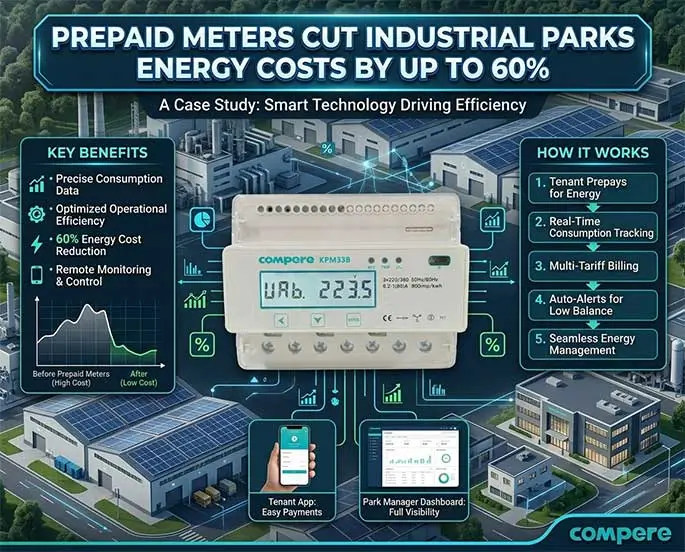
Therefore, prepaid electricity meters are gradually becoming the preferred solution for modern industrial park operators. By combining smart hardware with a cloud management platform, a complete prepaid system can reduce collection costs by up to 60%, while eliminating payment disputes and improving the park’s cash flow.
How exactly do they do it? Let’s analyze the secrets together.
💡 Core Pain Point: The Drawbacks of Traditional Meter Reading and Payment Collection
Before looking at the solution, let’s analyze the traditional business accounting. Traditional electricity bill management suffers from three major hidden costs:
High labor and time costs: Manually reading meters at each stall/factory, calculating data, printing bills, and then sending people to deliver them.
Bad debt and capital tie-up risk: If tenants delay payments due to business conditions, disputes, or other reasons, the park operator not only has to advance huge sums of electricity bills to the power grid on behalf of the tenants but may also face bad debts.
Frequent “collection disputes”: Manual meter reading is prone to errors and omissions, leading to tenant complaints and prolonged communication cycles.
These factors often make collecting electricity bills a particularly troublesome and frustrating experience for property management personnel.
🛠 How can a prepaid system achieve a 60% cost reduction?
After switching to smart prepaid electricity meters (where tenants prepay online and then use electricity, with automatic power cut-off/warning when the balance is low), the park’s financial and operational processes underwent a revolutionary change:
1. Zero Manual Meter Reading and Billing (Cost Reduction of ~35%)
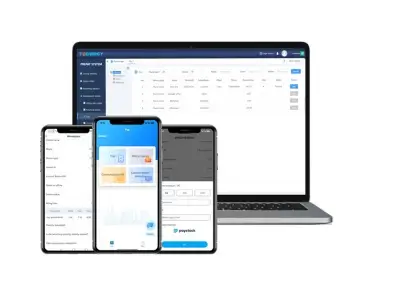
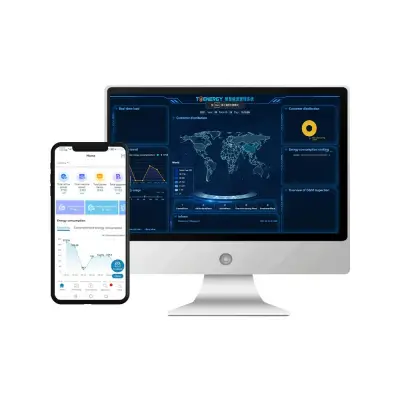
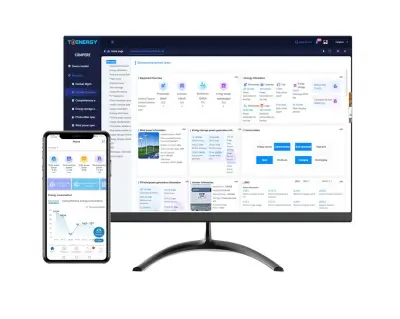
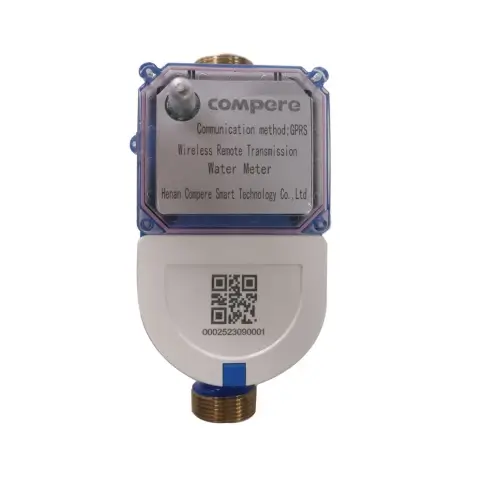
Smart prepaid meters connect to the cloud via Internet of Things (IoT) technology. The system automatically and in real-time records electricity consumption and automatically deducts payments based on the configured electricity price. The entire “meter reading-billing-billing” process is completely 100% automated, eliminating the need for dedicated meter readers and accountants in the park.
2. Automated Collection and “Zero Bad Debts” (Cost Reduction of ~15%)
Previously, collecting electricity bills required customer service personnel to repeatedly call, send letters, and even visit tenants. Prepaid meters have withstood this pressure:
Automatic Warning: When a tenant’s electricity balance falls below a set threshold (e.g., enough for only 3 days), the system automatically sends an SMS or app notification.
Self-service top-up: Tenants can top up their accounts 24/7 via mobile devices (WeChat, Alipay, or the park’s dedicated WeChat account/App), receiving instant power delivery.
Elimination of collection efforts: The system operates according to rules, completely eliminating the manpower wasted on “tug-of-war” collection between park management and businesses.
3. Reduced electricity bill disputes and audit costs (cost reduction of ~10%)
Manual billing is often not transparent enough, easily causing resistance from business tenants. The intelligent system provides tenants with a transparent “electricity usage dashboard,” allowing them to view their historical electricity usage curves and daily deduction details at any time. The data is authentic, transparent, and tamper-proof, virtually eliminating disputes and complaints caused by “unclear accounts,” and also reducing legal and customer service costs associated with dispute resolution.
📈 A Visual Comparison of Benefits Before and After the Transformation
To more clearly see the changes, we can compare the operational differences between the traditional and prepaid models using the table below:
| Operational Dimension | Traditional Postpaid Model | Smart Prepaid Model |
|---|---|---|
| Cash Flow Direction | Park advances payment → Tenants pay later (Significant time lag) |
Tenants top up first → Immediate capital recovery Zero Advance Funding |
| Meter Reading Labor | Manual on-site readings monthly; time-consuming and labor-intensive | Real-time cloud collection, 0 Manual Intervention |
| Collection Method | Phone calls, visits, demand letters (Prone to disputes) |
Automated SMS alerts; automatic disconnection upon low balance |
| Bad Debt Rate | Fluctuates with economic cycles; risk of tenant default/abscondence | 0 Bad Debt Risk |
📌 Key Conclusion
Introducing prepaid electricity meters into industrial parks may seem like simply replacing hardware, but in essence, it transforms a traditional service process that is “labor-intensive and high-risk” into a “light-asset, zero-risk” digital self-service process. This 60% cost saving will directly translate into net profit and core competitiveness for the park operator.
Optimize Your Park’s Energy Efficiency Today
Discover more insights on smart metering or get directly in touch with our technical experts for a tailored solution.