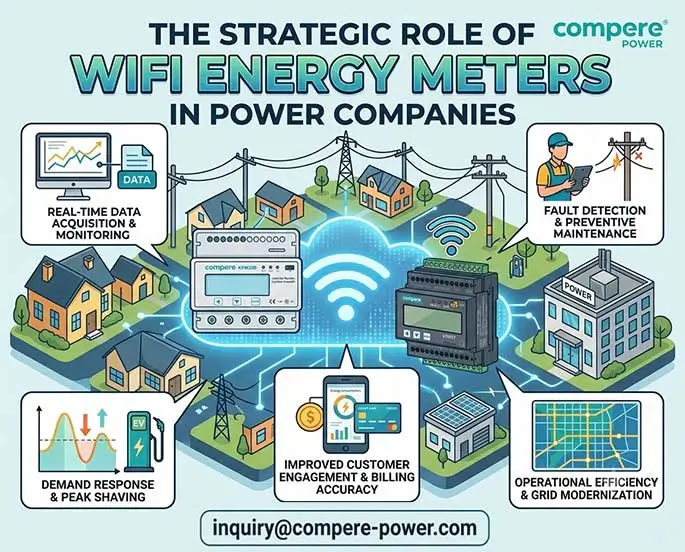
The modern utility sector is facing a critical transition. As power companies manage increasingly dense consumer bases and distributed electrical assets, the pressure to maintain grid reliability while controlling operational overhead has never been higher. Traditional metering infrastructure, reliant on manual cycles and outdated data collection methods, is no longer sufficient to meet the demands of contemporary load management and billing precision.
For utilities, the implementation of a WiFi energy meter in power companies represents more than just a hardware upgrade; it is a fundamental shift toward real-time grid visibility. By leveraging wireless telemetry, power providers can move from reactive, site-visit-heavy operations to proactive, data-driven utility management.
Why Power Companies Need WiFi Energy Meter Solutions
Modern power distribution networks are becoming increasingly dynamic. Grid operators must continuously balance supply and demand across diverse consumer portfolios while ensuring exceptional billing accuracy. The rise of distributed power assets and highly fluctuating load patterns means that legacy, mechanical billing methodologies have become severe operational liabilities. They fail to deliver the granular, instant data insights required for efficient modern operations. To achieve sustainable profitability and maximize grid reliability, utilities must transition toward a digital grid system where a robust WiFi Smart Energy Meter serves as the foundational tool for remote asset management and accurate data-based decision making.
Common Challenges Faced by Legacy Metering
High Cost of Manual Meter Reading
Relying on physical site inspections to collect consumption metrics creates a significant lag between energy consumption and billing. This legacy approach exposes power companies to volatile labor expenses, vehicle fleet overhead, and structural operational delays. Furthermore, field manual data collection is inherently slow, making rapid remote management impossible and rendering operators blind to mid-billing-cycle shifts or sudden commercial defaults. Transitioning to an automated Remote Meter Reading Solution allows grid managers to eliminate these manual touchpoints, replacing intermittent data with consistent, automated reporting.
Lack of Real-Time Energy Data
Without continuous, digitized data streams, power distribution entities suffer from systemic information blackouts. Grid operators remain fundamentally unaware of real-time electricity consumption changes, sudden abnormal usage patterns, or localized non-technical energy loss (such as power theft or unmetered line taps). This structural lack of real-time monitoring data cripples predictive maintenance workflows, delaying responses to line degradation and preventing utilities from optimizing their grid assets during peak demand windows.
Difficult Management of Distributed Locations
Electricity networks span complex geographical topologies, requiring power companies to seamlessly oversee high-density residential areas, commercial high-rises, expansive industrial manufacturing zones, and isolated, remote infrastructure sites. Managing this structural diversity is highly challenging. Distinct locations often rely on fragmented legacy systems with varied compliance frameworks. Without a centralized Electricity Distribution Monitoring System, integrating these disparate data sources into a unified grid strategy is inefficient, expensive, and error-prone.
Complex Installation Requirements
Transitioning to electronic data collection has historically introduced physical bottlenecks. Conventional wired network systems carry prohibitive industrial wiring costs and demand extensive, highly invasive structural alterations during installation. Conversely, a Wireless Energy Meter Solution utilizing existing local network routing delivers seamless deployment flexibility, lower overall communication investment, and significantly shorter rollout times, making it ideal for retrofit projects.
Complete WiFi Energy Meter Solution for Power Companies
A resilient utility deployment bypasses complex multi-layered IT architectures, relying instead on a linear, highly reliable data-to-dashboard workflow that optimizes end-to-end asset visibility across four practical steps.
- Step 1: Electricity Data Measurement: The solution initiates at the physical edge. Advanced industrial-grade smart WiFi energy meters are installed directly inside localized electrical panels, commercial distribution boards, residential complexes, and factory sub-stations to precisely measure real-time voltage, track line current, evaluate active/reactive power factors, and securely log long-term energy usage.
- Step 2: Wireless Data Transmission: Once captured, edge metrics instantly reach centralized control centers via the integrated WiFi communication module. This eliminates extensive structural control wiring, enabling rapid remote data uploads and continuous, automated information transmission across all distributed monitoring locations.
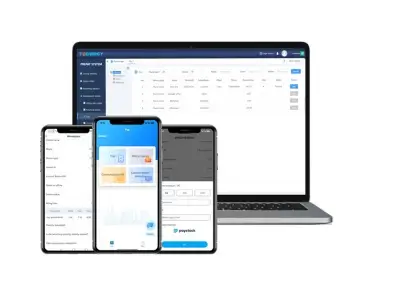
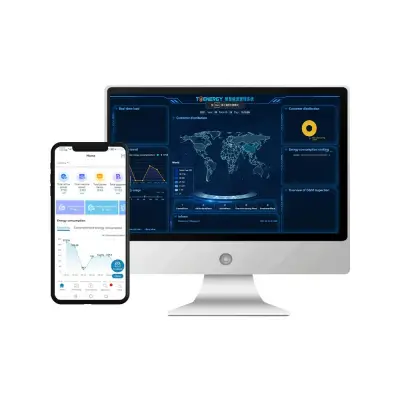
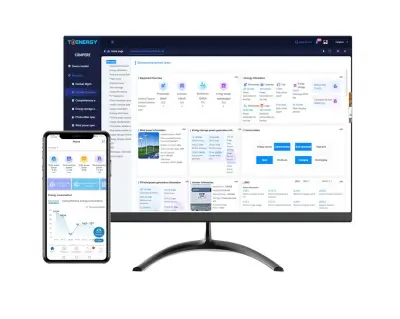
- Step 3: Energy Data Management: Raw data transmitted across the network is ingested by a centralized, enterprise-grade Utility Energy Management Solution. This software suite converts incoming binary packets into actionable grid intelligence through dynamic data visualization interfaces, comprehensive consumption analytics engines, and immutable historical archives.
- Step 4: Operation Optimization: In the final phase, utilities turn historical and real-time data into strategic operational value. Grid engineers utilize automated consumption profiling to instantly identify abnormal usage spikes, improve maintenance efficiency, reduce technical line losses, and optimize broader energy distribution schedules to match empirical load requirements perfectly.
What Equipment Is Needed for WiFi Energy Meter Projects?
WiFi Smart Energy Meter
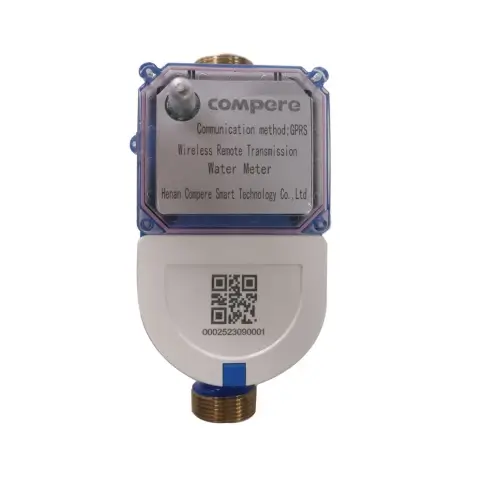
The primary core hardware layer consists of specialized digital electricity meters tailored to specific network architectures. Utilities deploy single phase energy meter units for standard domestic residential tracking, while three phase energy meter or multi-function energy meter devices are utilized for high-load commercial facilities, industrial plants, and transformer substations.
Communication Module
Embedded natively within each hardware chassis is an industrial-grade WiFi communication component. This module supports secure wireless encryption standards to maintain total data integrity and features high-gain integrated or external antenna paths designed to guarantee reliable transmission and robust data throughput even when deep inside shielded metallic electrical enclosures.
Energy Monitoring Platform
The software layer requires a scalable cloud or local server architecture running a specialized Remote Energy Monitoring System. This environment provides continuous energy analysis engines, live system health monitoring dashboards, automated utility billing report generators, and real-time alarm management tools that instantly notify technicians of anomalies.
Data Management System
At the enterprise tier, a data management system acts as the core database that archives historical profiles, synchronizes subscriber records with physical assets, and models multi-site grid topologies to assist executive teams in making informed grid expansion and capital infrastructure upgrade decisions.
Applications of WiFi Energy Meters in Power Companies
Residential Electricity Management
In high-density residential developments, power companies deploy single-phase WiFi units to replace manual meter-reading routes entirely. This transition establishes automatic, error-free billing schedules, provides residents with transparent mobile access to their own daily consumption habits, and allows utilities to dynamically enforce time-of-use (TOU) pricing models to shave peak demand stresses.
Commercial Building Monitoring
Commercial structures such as multi-tenant retail malls, large corporate office high-rises, and major hospitality complexes require flexible, sub-metered power architectures. Multi-function three-phase meters track discrete commercial consumption across individual tenant spaces, providing building operations with granular data to optimize energy distribution and streamline monthly cost allocation.
Industrial Power Monitoring
Industrial manufacturing plants and heavy factories consume immense blocks of power and pose severe inductive load risks to distribution grids. Deploying specialized multi-function smart meters allows power companies to monitor high energy consumption users in real time, preventing grid destabilization by tracking power factors, harmonics, and sudden peak demand transients.
Remote Electricity Management Projects
Rural communities, outlying telecommunication base stations, and isolated agricultural pumping facilities present extreme access challenges for manual meter readers. An IoT Energy Monitoring Solution bypasses these geographical constraints. By utilizing local wireless infrastructure, utilities can monitor distributed locations from hundreds of miles away, eliminating expensive field service trips.
WiFi Energy Meter Application Benefits
| Target Sector | Core Equipment Deployed | Primary Operational Challenge | Quantifiable Value Delivered |
|---|---|---|---|
| Residential Electricity | Single Phase WiFi Meter | High manual reading labor costs; billing lag times | 100% automated collection; instant error-free billing |
| Commercial Buildings | Three Phase / Multi-Function Meter | Complex sub-tenant energy allocations; high peak loads | Granular departmental cost assignment; dynamic load optimization |
| Industrial Power | Multi-Function Energy Meter | Dangerous high-consumption spikes; power factor penalties | Real-time demand thresholds; total visibility |
| Remote Infrastructure | Wireless Energy Meter Solution | Extreme geographic isolation; high vehicle dispatch costs | 100% remote asset monitoring; zero physical site visits |
Frequently Asked Questions
Q1: How can WiFi energy meters help power companies reduce operating costs?
A1: WiFi energy meters automate data collection by transmitting real-time consumption metrics directly to utility billing systems over existing networks. This eliminates the need for physical on-site inspections, drastically cutting field labor, vehicle fleet overhead, and administrative costs associated with manual data entry or error corrections.
Q2: What equipment is required for a WiFi energy monitoring solution?
A2: A complete deployment requires industrial-grade single-phase or three-phase WiFi Smart Energy Meters, embedded high-reliability wireless Communication Modules, a secure local network routing path, and a centralized Energy Monitoring Platform or Data Management System to aggregate, analyze, and visualize incoming telemetry.
Q3: Are WiFi energy meters suitable for retrofit projects?
A3: Yes, they are highly suitable. Thanks to standard DIN-rail mounting capabilities and wireless communication profiles, these meters integrate seamlessly into pre-existing electrical infrastructure without requiring extensive data wiring overhauls or structural wall modifications, significantly reducing project deployment timelines.
Q4: Can power companies monitor multiple locations remotely?
A4: Absolutely. The enterprise-grade Data Management System centralizes data streams originating from millions of distinct, geographically isolated meters—spanning residential sectors, commercial complexes, and remote industrial sites—into a single, unified administrative dashboard.
Ready to Modernize Your Utility Distribution Network?
Modernizing utility distribution networks requires a partner who understands both the electrical hardware and the software infrastructure needed to make data actionable. Whether you are aiming to reduce technical line losses, improve billing accuracy, or roll out large-scale demand-side management, finding the right technical approach is essential.
For power companies looking to optimize their monitoring infrastructure, our team offers engineering-backed guidance on selecting the right deployment hardware and software architecture. We invite you to reach out for a consultation to discuss your power monitoring projects, obtain a free professional consultation, receive a fully customized on-site solution design, or get one-on-one guidance from our technical specialists. Contact our team at [email protected] to start a conversation with our engineering team today.
Looking for more comprehensive technical details or procurement guides on wireless metering? Please refer to our featured article: WiFi Energy Meters: Remote Real-Time Monitoring, Seamless Integration With EMS/Cloud/App.